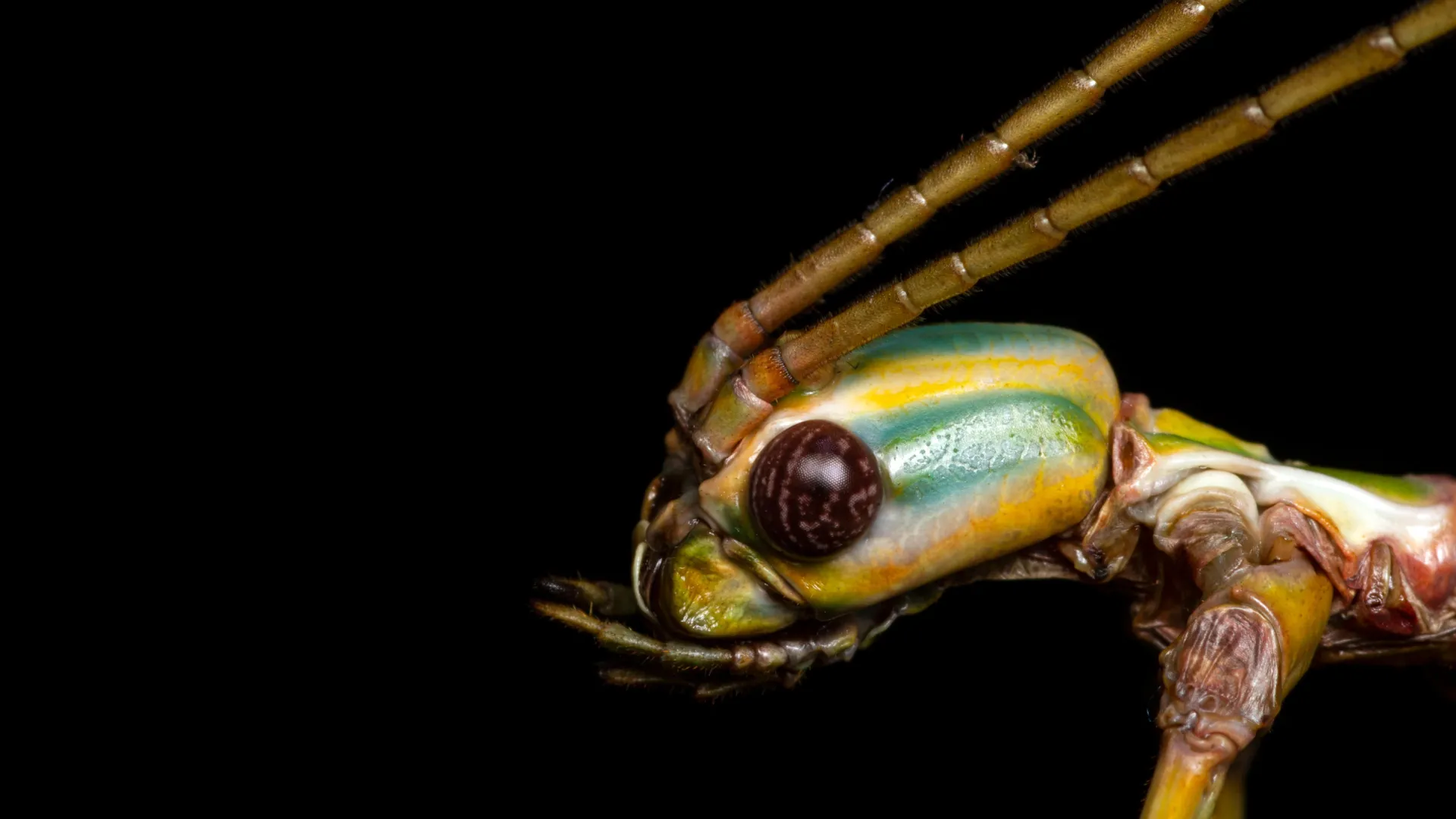
Scientists have identified two previously unrecognized species of large stick insects in Australia, revealing that even in some of the country's most closely studied environments, new species are still waiting to be found. A University of Sydney research team reexamined Australian members of the stick insect genus Anchiale and discovered two new species. One produces unusual eggs with a distinctive lidlike structure.
The researchers also restored a third species that had gone unrecognized for decades. Their work shows that insects previously classified as just two species actually represent five separate species. Together, they occur from northern NSW along coastal Queensland and into tropical northern Australia.
Scientists reached these conclusions despite a large amount of existing information about Australian stick insects. More than 1000 citizen science observations have been submitted through iNaturalist and the Atlas of Living Australia, and the insects have also been studied scientifically for decades. Even so, the researchers say much of Australia's insect diversity remains undocumented.
Braxton Jones of the Aola Richards Sydney Insect Hub at the University of Sydney said the discoveries demonstrate how much scientists still have to learn about insect biodiversity. "Taxonomy is often a bit like detective work. Even among some of Australia's most photographed and frequently reported insects, we're still finding species that have escaped scientific recognition," said Dr.
Jones, a Postdoctoral Research Associate in the Molecular Ecology, Evolution and Phylogenomics Laboratory. A Stick Insect Misidentified for Decades One of the study's biggest surprises involved a large stick insect that had long been familiar to both scientists and insect enthusiasts. Researchers combined DNA analysis with museum specimens, field surveys, citizen science observations, and studies of insects raised in captivity.
The evidence showed that the insect had been incorrectly identified for decades. It is now recognized as a separate species called Anchiale robusta. The findings are published in Austral Entomology.
Extract — continue reading at the source.


