The United States’s love for black gold began with the accidental discovery of oil in the Ohio countryside. As of 2023, the United States is both the largest producer and consumer of oil, each day extracting some 23 billion barrels and guzzling 20 billion. It's become a meme at this point that if black gold is discovered in even the remotest location, American fighter jets aren't far behind to ensure whatever government there is friendly to US economic interests.
But the first time America met crude oil, she was rather indifferent to its existence. Before petroleum made the world go round, salt was one of the most coveted natural commodities. Without refrigeration, salt was crucial to preserving meat, fruit, vegetables, and dairy products, yet accessible deposits could be difficult to find, especially for frontiersmen moving inland from the salty sea.
One popular technique across the Ohio River Valley was digging into the earth for briny water which could then be evaporated, leaving the delectable salt behind. That's exactly what Silas Thorla and Robert McKee did in 1814 on the edge of Caldwell, Ohio. They found their salt water, but also this odd, viscous black substance floating on top: petroleum.
Opposite how many might feel today, the oil was more of a nuisance to them that interfered with the procurement of the briny water they really wanted. So the two used wool blankets to soak up the oil and then thought up solutions of what to do with it. The two were aware of its combustibility, but it created too much odorous, sooty smoke to be used as fuel in lamps.
So instead it was bottled and marketed as the miraculous "Seneca Oil," which could cure rheumatism, measles, and more. The duo produced approximately a barrel worth each day. Unintentionally extracting natural gas comes with its own problems, though, and for Thorla and McKee, that was the brine water and oil shooting up 40 feet in the air once a week or so.
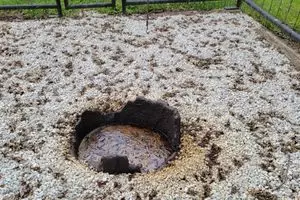
As was common, salt wells were manned 24 hours, and there is at least one account of a lantern or a burning coal used during the night shift setting the well ablaze and sending a fireball into the sky. Although the original 1814 well was covered up, Thorla and McKee's 1816 well remains, along with its sycamore casing. Ohio proudly claims it as the country's first oil well, even if petroleum was just a byproduct of the operation.
Extract — continue reading at the source.