Thousands of people displaced by a powerful earthquake in eastern Indonesia awaited much-needed aid on Monday as they camped out at schools, police stations and government offices, with many stuck outside. The 7.7-magnitude quake early on Saturday killed 53 people and injured more than 100. Rescue officials have said there are no reports of people missing.
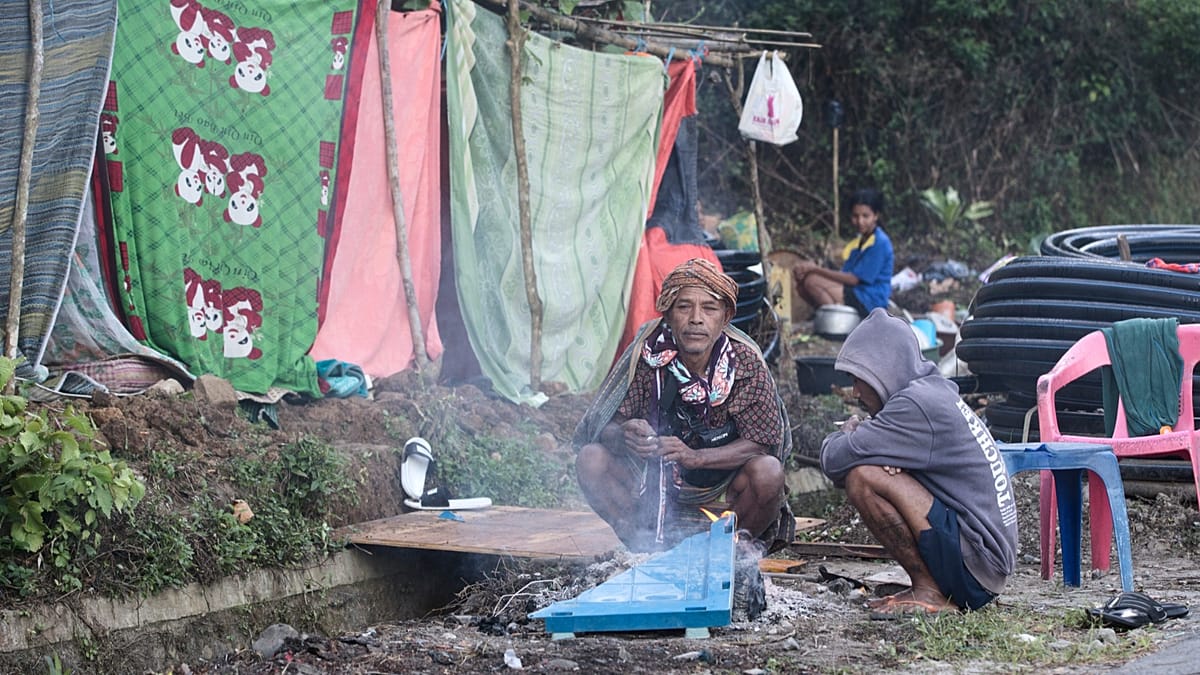
However, the number of people unable to return to their homes had risen to 12,800 by Monday morning, dispersed among several towns on Flores island, Berton Suar Pelita Panjaitan, spokesperson for the National Agency for Disaster Countermeasure (BNPB) national disaster agency, told the news agency. Many Flores inhabitants slept outside for a second night in a row, afraid to go home as hundreds of aftershocks rumbled through the area. "Our houses are no longer liveable, because many have collapsed and are full of cracks, so we can't go inside anymore," Mbay resident Junaidin said outside his self-made tent that was sleeping about 30.
"We only go back home to get water, clothes, pillows, and then we...spend the nights here." Many Flores residents have traumatic memories of another 7.7-magnitude quake that hit the island in 1992, triggering a tsunami and killing about 2,500. "We're on our own here," said Junaidin, who like many Indonesians has one name. He expressed frustration with a perceived lag in the arrival of aid while the nation celebrated Independence Day with pomp and ceremony in the capital Jakarta.
"As for help from the government, there hasn't been any; no tents, no medicine, no food, no drinking water, nothing," said Junaidin. "Please open your eyes, government. We are your people, we are part of you.
So please look after us." The Indonesian Air Force said it was bringing 13 tonnes of emergency aid airlifted in two Hercules transport planes and a Boeing. It was also deploying helicopters to bring emergency supplies directly to survivors in isolated communities, the Antara state news agency quoted the commander of El Tari Air Base in Kupang as saying. The aid included food, clothes, clean water and emergency medical equipment.
The military has deployed personnel to help with distribution in key hubs. For locals, the provisions cannot come soon enough. Just the clothes on our backs.
Extract — continue reading at the source.