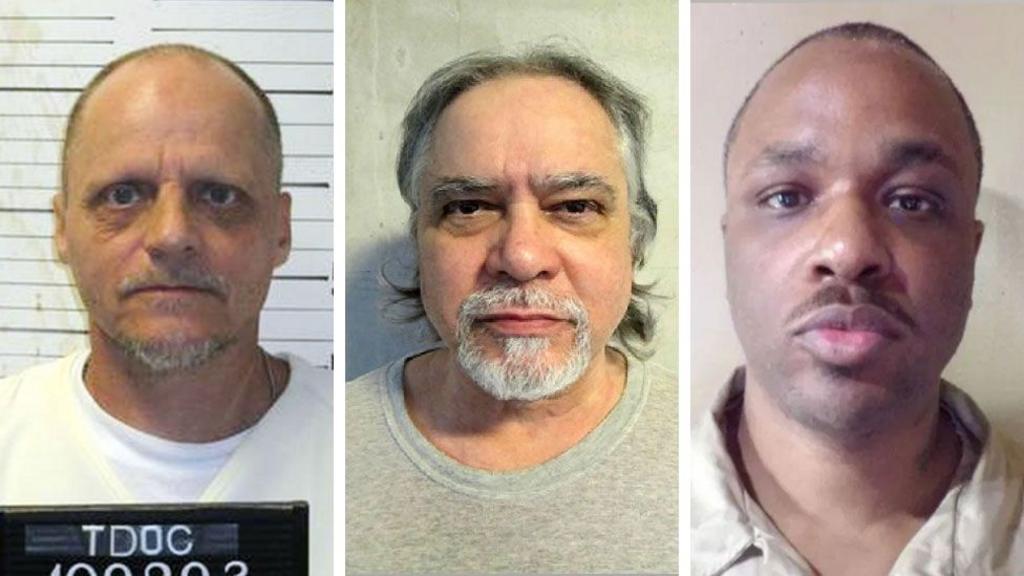
It's been 16 years since three people were executed on the same day in the US, but later on Thursday, three men convicted of murder in different US states will all face the death penalty. The planned executions of inmates Anthony Darrell Hines, 66, Jeremy Williams, 41, and Carlos Cuesta-Rodriguez, 71, in Tennessee, Alabama and Oklahoma, respectively, are indicative of a steep rise in executions across the US. Last year, in 2025, there were more than four times as many people put to death as there were in 2021, even as juries, and the American public at large, became increasingly wary of its use.
So what's driving the increase and are the US public in step with the trend? President Donald Trump has long been a major supporter of the death penalty, describing capital punishment as "an essential tool for deterring and punishing those who would commit the most heinous crimes and acts of lethal violence against American citizens". In 2020, during his first term, he ended a nearly two-decade moratorium on the federal death penalty, by ordering 13 executions over a six month period.
While the moratorium returned under President Biden, on the first day of Trump's second term in 2025, he signed an executive order that re-instated the death penalty. No federal executions have been carried out since he signed it, however. In the US, both the federal government and local states authorities can order executions.
Under Trump's administration, the Department of Justice has also expanded protocols to include additional manners of execution, such as by firing squad, and readopted lethal injections. The agency said in April that it has also streamlined internal processes to expedite death penalty cases. Trump's executive order also encouraged states to seek the death penalty for every federal crime when a law enforcement officer is killed, and instructed the attorney general to ensure that states have an ample supply of drugs for lethal injections, facilitating the states' ability to carry out capital punishment.
But his true impact won't be known for several years, said Justin Mazzola, deputy director for research at Amnesty International USA, which opposes the death penalty. "Because of the length it takes for the actual case to happen, and then also all the appeals that are built in once there is a conviction," he said. There were a total of 47 executions across 11 states in 2025, a marked increase from the 25 executions carried out in 2024.
But about 40% of the deaths were in one state, Florida, making the Sunshine State the biggest factor contributing to the US's rise in executions. Just over halfway into 2026, 12 of the 19 executions occurred in Florida. That, experts say, is because of one man: Republican Governor Ron DeSantis.
Extract — continue reading at the source.