Emergency vehicles line a snow-covered road during search-and-rescue operations involving hunters in northwest Colorado on October 14 and 15 ( /Courtesy) Korin Pusillo spent part of her first elk hunt clawing up a mountainside in northwest Colorado on her hands and knees. It was October 14, and Pusillo, 39, was in Bears Ears, a remote area near Steamboat Springs. Rain had soaked the ground before turning to snow, leaving slick mud beneath the fresh accumulation.
Every attempt to climb sent her sliding backward. It was hard to get our bearings, and I think even experienced hunters would have been surprised by how quickly the weather turned,” Pusillo told Outside. Pusillo was tracking elk with her boyfriend, his brother, and their father, who had hunted the area for decades.
As snow and fog obscured the landscape, and fallen trees blocked familiar routes, the group struggled to find its way back to camp. Their close call came during a busy stretch for Routt County Search and Rescue, the SAR squad that patrols the area. The volunteer team reported three SOS calls involving hunters within 14 hours on October 14 and 15, as Colorado’s first rifle elk season opened just as the region’s first significant snowfall arrived, according to an October 15 statement on Facebook.
The first call came at 2:59 P.M. on October 14, when rescuers were asked to help find an overdue hunter near Dunckley Pass, a roughly 9,800-foot mountain crossing southwest of Steamboat Springs. With more than six inches of snow already on the ground, Colorado Parks and Wildlife officers and sheriff’s deputies found the hunter shortly after dark. At 7:43 P.M. another hunter became separated from their group near Bears Ears, about 20 miles north of the town of Hayden.
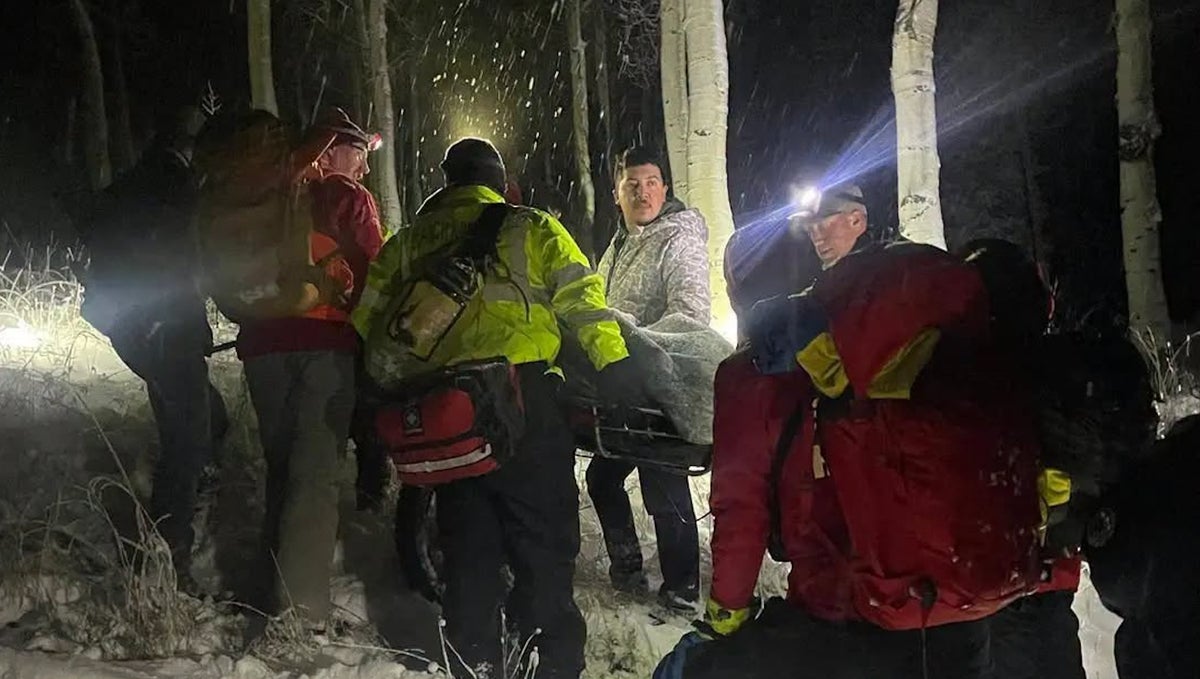
The hunter called 911 just before their cellphone died, providing rescuers with coordinates. Incident commander John Williams told Outside in an email that snow-covered roads made the drive to the staging area nearly three hours long. Crews then hiked downhill to reach the hunter, who was too cold to walk uphill.
Rescuers wrapped the hunter in a hypothermia wrap and, with help from bystanders, hauled them nearly 1,500 feet uphill through eight inches of snow on a wheeled stretcher. Williams believes wet clothing and exhaustion contributed to the separation. Early October 15, a third hunter suffered serious injuries in a tree strike in the Bears Ears area.
Extract — continue reading at the source.