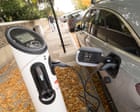
Three-quarters of the 20 top-selling plug-in hybrid electric vehicles (PHEVs) in the UK cannot use rapid chargers, research has found, amid concerns that many are essentially “petrol cars pulling round a heavy battery”. The cars, which can run on electric batteries as well as combustion engines, have been promoted by carmakers as a way to cover long distances in a single drive – unlike fully electric cars – while still reducing emissions. But only 26% of the vehicles sold across the top 20 models, which include the Jaecoo 7, the Ford Kuga and Hyundai Tucson, are able to use rapid chargers with powers of 50kW or more, according to analysis by the industry body, ChargeUK.
These chargers can quickly top up a car battery – for example at a motorway service station – adding a significant amount of range in 20 to 30 minutes. Cars that cannot use them are limited to much slower charging speeds, meaning drivers wanting to recharge mid-trip may face a wait of several hours. Hybrid owners may instead choose to rely on their petrol engines.
Shane Brennan, the chief executive of ChargeUK, said: “A plug-in hybrid electric vehicle that is never plugged in is a costly petrol car pulling round a heavy battery. PHEV drivers unable to charge on the public charging network quickly fall into patterns of being petrol reliant. It is a spectacular own goal to be seduced by a mythical ‘PHEV compromise’.” Repeated studies have found PHEVs pump out significantly more planet-heating pollution than official figures show.
Despite this, the government last year allowed manufacturers to sell more of them towards their EV targets. PHEVs were the fastest-growing type of car sold in the UK last year, with 227,000 registered – up almost 35% on 2024 – according to official data. A further 180,000 have been sold so far this year.
The top 20 models sold also include the BYD Seal, the MG HS and the BMW 3 Series, none of which can use rapid chargers. In a recent consultation on the zero emission vehicle mandate, the government said PHEVs were driven on electric power far less than official figures suggested. The report said the method used to calculate emissions savings “significantly overestimates electric driving, as in real life many drivers charge infrequently, meaning real world CO2 emissions are higher than official figures”.
However, it is expected to weaken targets for pure EV sales even further when a consultation on changing the mandate closes in October, after a period of intense lobbying from the car industry. Last week, Nissan suggested it could withhold a £170m investment in its factory in Sunderland if the UK does not weaken the rules. None of the top 20 models can use ultra-rapid chargers, the fastest tier on the network, capable of adding significant range in a matter of minutes.
Extract — continue reading at the source.