In a rock shelter in Kakadu national park in the north of Australia is an image of a being the Bininj people call Namarrkon. His flesh bleached away to reveal the bones beneath, he wears stone axes on his head, elbows and knees, and wields a great band of lightning that runs from his ankles up, over his head. Namarrkon’s journey from the Arafura Sea to the Arnhem Land escarpment helped shape the landscape, according to the dreamtime stories of the Bininj.
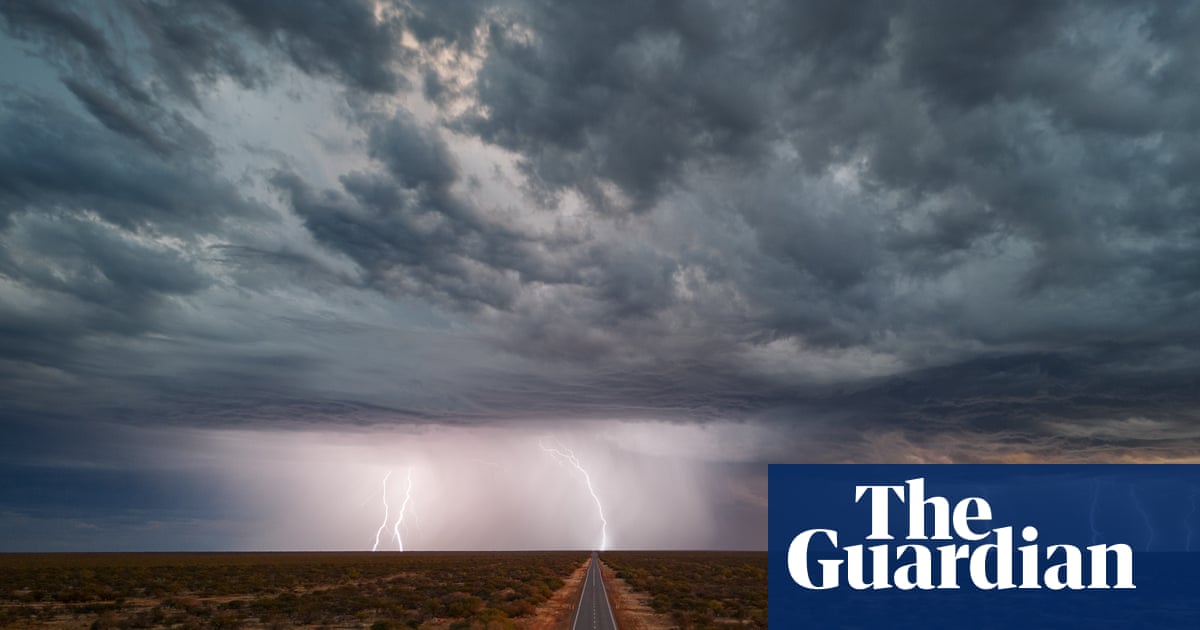
And in the great storms that arc and rumble across the landscape during the buildup and the wet season, it is Namarrkon who splits the clouds with his stone axes to create the thunder and lightning and release the life-giving rain. Around the world there are an average of 60 lightning flashes a second, some extending more than 800km. Each flash can release up to seven gigajoules of energy, the equivalent of 1.67 tonnes of TNT, fleetingly heating the air around it to about 30,000C, five times hotter than the surface of the Sun.
This constant discharge of energy plays a vital role in regulating Earth’s electrical field and the ionosphere. It helps drive the nitrogen cycle by cracking open nitrogen molecules in the atmosphere and making them available to plants, aiding in the production of ozone, and helping break down greenhouse gases such as methane. And it underpins the cycles of fire that shape the ecologies of forests, savannahs and grasslands across the planet.
Lightning, as the story of Namarrkon captures, is an integral part of life on our planet. Yet as the planet heats up, not just lightning’s role in these systems but lightning itself may be changing. And the consequences of this could be severe.
In July more than 48,000 lightning strikes ignited massive wildfires in Canada and the north-west United States, destroying homes and casting a pall of smoke over cities across North America. During last summer’s British heatwave, nearly 30,000 lightning strikes hit south-east England in a single day. Already, globally around a quarter of a million people are struck by lightning every year, resulting in about 24,000 deaths.
In Australia alone lightning kills five to 10 people a year and injures about 100. The awesome power of lightning is written deep into human cultures around the world. Frequently it expresses a kind of duality, conjuring beauty as well as terror: from the earliest-known poet, the priestess Enheduanna, describing her goddess as having a “glance like striking lightning” to gods whose domain includes both storms and agriculture in ancient Mesopotamian, Maya and Aztec cultures.
Extract — continue reading at the source.


