Now, researchers have developed a way for tiny implantable devices to send electrical signals through the body’s own tissues. The approach could offer a low-power way for implants to work together, with one detecting a symptom and another delivering treatment, the team reports September 24 in Science. Currently, getting devices to communicate through tissue comes with trade-offs.
Some medical devices, such as insulin pumps linked to glucose monitors, use Bluetooth, which relies on radio signals. Receiving those signals requires power even when a device is only listening, increasing the need for battery power and making devices harder shrink. Radio signals also weaken as they travel through body tissue, limiting how far apart communicating devices can be.
The new network called SWANS, the Smart Wireless Autonomous Networking System, works differently. A wearable external hub or implant generates an electric pulse that produces a small current in the surrounding tissue. Tiny implants can detect those electrical signals while using almost no power when they are only listening.
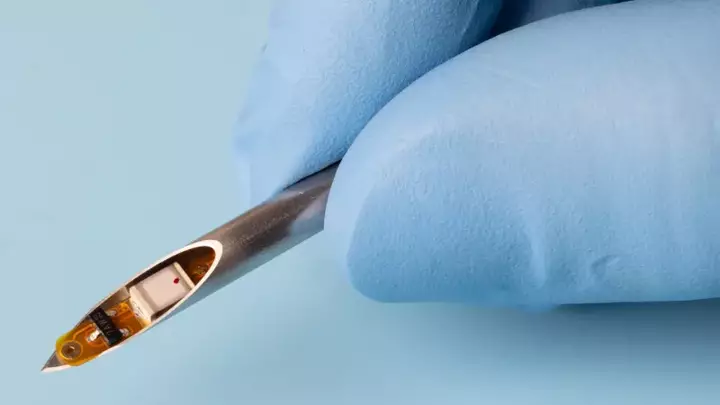
And without large batteries, those implants can be small enough to inject through a syringe. To demonstrate how the network works, the team attached motion sensors to the front legs of rats. When the animals moved their front legs, the system’s external hub sent signals through their bodies to neurostimulator implants in the sciatic nerves, causing muscles in the back legs to contract.
The synchronized limbs weren’t really the point. The experiment was designed to show that signals could travel through the body, linking different kinds of devices, says Alex Abramson, a biomedical engineer at Georgia Tech in Atlanta. It was “a proof of concept showing that you can really connect this system to anything.” Abramson says a network of smart implants could automatically deliver a drug or stimulate a neuron exactly when needed to treat complex conditions like Parkinson’s disease.
Simple signals can be sent from one implant to another, while an external hub can coordinate more complex networks of sensors and devices, possibly using artificial intelligence. Before the new network can be used in humans, researchers will need to show that the electrical signals do not cause unintended problems like heart rhythm disruptions. Such issues have not turned up in the experiments in rats yet, but the technology will need to be tested over longer periods of time and in larger animals, Abramson says.
Extract — continue reading at the source.