In May of 2022 I was invited to speak at an international conference called Flyover Fictions. Hosted by the American Studies program at the University of Innsbruck, in the Austrian Alps, the conference considered the concept of “flyover country” not as a geographical designation so much as a metaphor for cultural hierarchy, identity, and marginalization, perceived or real. Scholars gave presentations on all sorts of things: a Camelot-themed campground in the Quad Cities, the reality of the Unabomber’s cabin vs. the popular conception of it, and Straight Tik-Tok, which is, it seems, where you end up if the algorithm decides you should receive boring content.
The conference led to a 2025 anthology—Flyover Fictions: Polarization in U.S.-American Culture, Media, and Politics—for which I wrote an epilogue in the form of a short story. Called “Watchmaking” and concerning a roadside gun found by a teenage boy and his aunt, the story would become the first chapter of my new novel, West of Loveland. What follows are excerpts of the talk I gave in the Palais Claudiana, Innsbruck, on the closing evening of the Flyover Fictions conference.
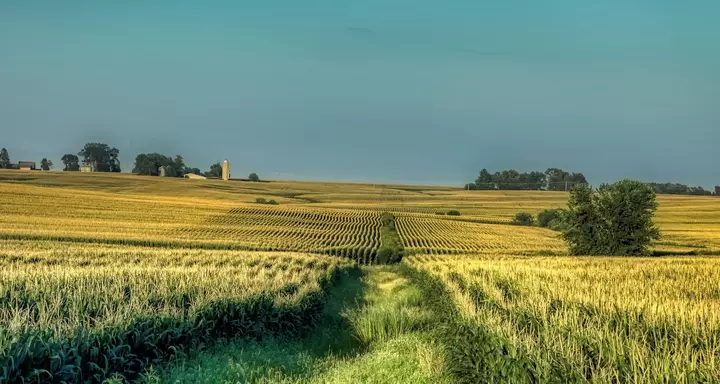
In the phrase flyover country, the imagined subject is the one flying over (the person in the airliner, drinking gin and tonic in the glow of one screen or another, wondering what sort of terrible situation would actually make the oxygen masks drop down…scarcely aware of the land and lives going on below). But I want to adjust the terminology a bit, to say flownover country, shifting the perspective to the ones on the ground, because that’s who I was, growing up, the one on the ground, the one being flown over. My family lived in a rural town of a little over 200 inhabitants, surrounded by thousands of acres of farmland dedicated to the growing of corn and soybeans and raising of farm animals—pigs, cows, horses, chickens, even the occasional alpaca.
Being flown over on those summer nights of my childhood didn’t make me feel insignificant. Instead I felt a mysterious sense of possibility. The town had three churches (Baptist, Methodist, and Catholic), two taverns, a grocery store, a hardware store, where my father worked and later my mother did too, a railroad depot, where my father had worked before he worked for the hardware store, a gas station, a grain elevator, where I myself would work as a teenager, a hatchery, a farm implement dealership, and a barbershop.
At night, however, there wasn’t a lot to do if you were too young to drink in the taverns. But there was little or no light pollution, as there were not many lights, and one of the things you could do was lie on the grass and look at the stars and see them clearly. So that’s what I did, on lots of summer nights.
Of constellations I only knew Ursa Major and Minor, the Big and Little Dippers, but I could see the moon and stars and the airplanes passing miles overhead, and satellites sometimes, tiny lights that looked like distant stars moving steady across the sky. I even saw a UFO once, a lighted saucer passing over our house and disappearing behind a row of grain bins on the edge of town. I went looking for it the next day, finding no trace.
Extract — continue reading at the source.