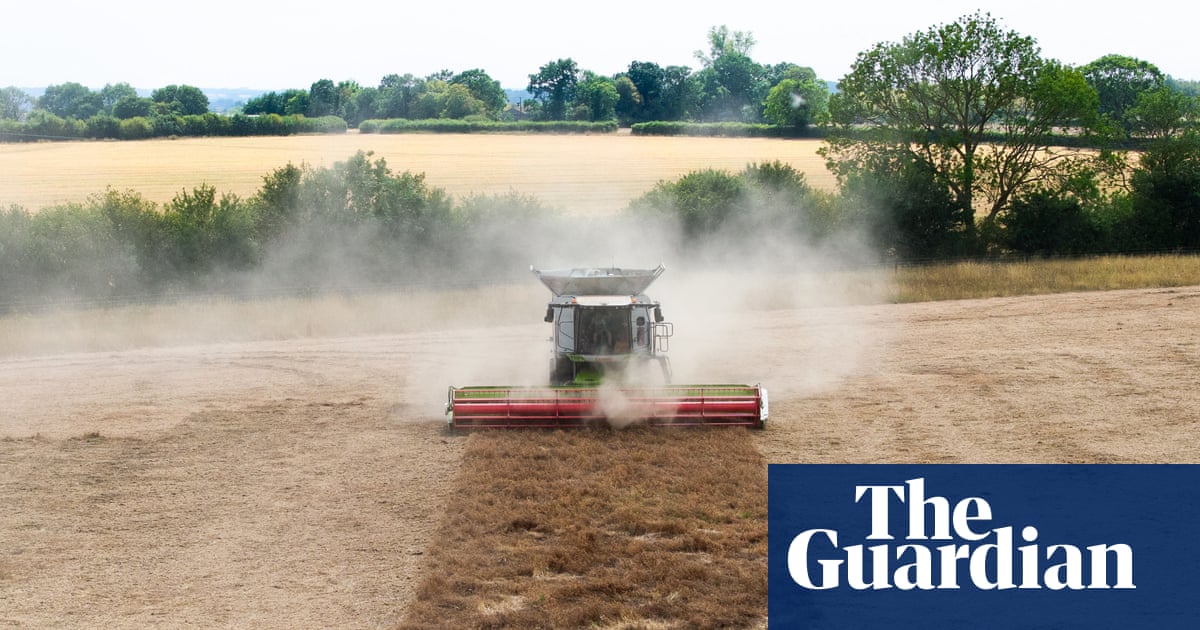
Ponds and collection tanks, drought-resistant crops and a certain rodent. As the climate crisis brings more extreme weather to Britain, farmers are experimenting with new tactics to tackle drought – and flooding. The string of heatwaves and drought conditions experienced across vast swathes of Britain this summer has brought a series of challenges for food producers, particularly those growing crops more suited to the UK’s traditional climate.
Hot and dry weather has resulted in the earliest UK cereals harvest in at least 20 years, according to the Agriculture and Horticulture Development Board. The lack of rainfall has led to cauliflowers looking “suntanned” – with a yellow colouring instead of white, while cucumber plants have produced misshapen fruit and broccoli is undersized, forcing the UK to import more vegetables than usual this summer. While many farmers have installed reservoirs to store water for periods of drought, these can be costly, require planning permission and are sometimes not sufficient to cope with long dry spells.
But some farmers are turning to more novel solutions as they struggle to nurture crops and cattle in the heat. In south Cambridgeshire, Martin Lines has already finished his harvest, a month earlier than usual, after navigating the second hot, dry and windy summer in a row. On his own farm and across the network he leads, farmers are improving the health of their soils, to allow them to hold more water, as well as creating water storage to save rain.
Lines believes farmers should assess their annual water needs and how much rainfall they can store, through rainwater harvesting, where large tanks are connected to gutters on farm buildings. Most rivers have digital flow sensors now, so the moment there is excess flow that is going to go out to sea, farmers should be messaged to say ‘turn your pump on’,” he says. In some areas, farmers are experimenting with changing the system so water is stored on their land instead of being pumped into rivers and out to sea.
This can help cope with flooding in the winter and during periods of drought while increasing resources for wildlife. West Pikefish Farm, run by the Smith family, has historically grown apples near the River Teise near Maidstone in Kent. It is using an old orchard, grubbed up because it regularly flooded, to create ponds, scrapes and other wetland features that fill with water in the winter and feed into a larger winter lagoon.
The land can still be grazed and is poised to be a traditional orchard in future. The lagoon will store 4m litres of water for summer irrigation that has been filtered of silt by the neighbouring wetlands. The set-up also helps manage flooding.
Extract — continue reading at the source.


