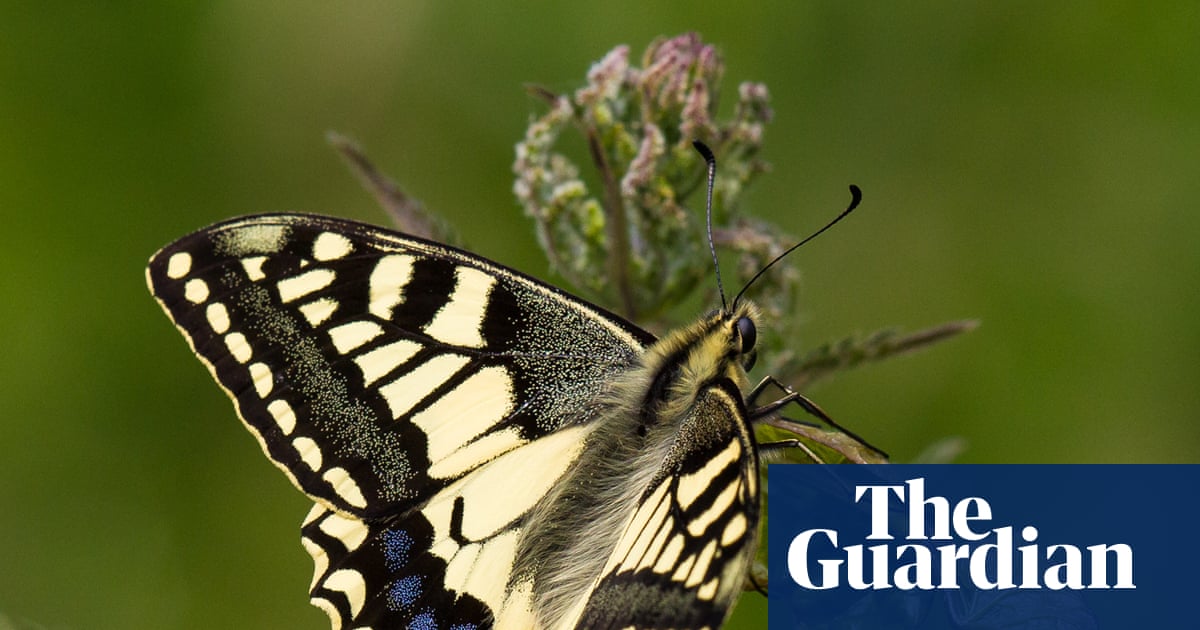
Vaccines for ash trees, skin treatments for newts and gene-edited swallowtail butterflies are among 14 tax-funded projects from the UK’s “invention agency” aiming to accelerate nature’s ability to adapt to the climate crisis. The £54m accelerated adaptation programme from the UK’s Advanced Research and Invention Agency (Aria) – a public body that funds high-risk, high-reward tech projects – aims to investigate applications of biotechnology that can speed up wild species’ evolution and help them to adapt to new threats such as global warming and disease. The 14 teams announced on Monday will receive a share of an initial £30m in grants over the next two years.
They will develop tools to protect native British wildlife species, including the English oak tree and critical pollinators such as the buff-tailed bumblebee, said Yannick Wurm, the director of the accelerated adaptation programme at Aria. The world’s natural environments are changing so rapidly owing to the climate crisis and human pressures that many species can no longer adapt quickly enough, said Wurm, a professor of evolutionary genomics at Queen Mary University, London. The projects aim to work alongside conventional nature conservation measures, such as protected reserves, to give environmentalists a new set of “precision tools” that Wurm compares to mRNA vaccines for humans.
Aria is the brainchild of Dominic Cummings, the former chief adviser to Boris Johnson, who said it would fund “crazy” ideas that could “restore Britain’s place as a scientific superpower”. The publicly funded body has attracted criticism for its research into controversial geoengineering techniques and grants that have given millions in UK taxpayer money to US tech companies and venture capital firms. Matt Clifford, Aria’s chair, was forced to stand down this month over what one senior MP called a “clear conflict of interest” after taking a job with Anthropic, the developer of the AI chatbot Claude.
One team announced on Monday, led by researchers at the University of Exeter, will use Crispr-Cas9 gene-editing on the swallowtail, a butterfly on Britain’s red list of endangered species, to increase its resistance to insecticides used widely on farms. Another project developed by Rothamsted Research, the 180-year-old agricultural research facility in Hertfordshire, will edit the genes of long-lived tree species such as oaks to reproduce in months rather than decades, meaning they can rapidly develop adaptive responses to drought and invasive pathogens. Environmentalists across the planet have debated using increasingly powerful biotechnology and gene-editing techniques to aid conservation.
At the International Union for Conservation of Nature’s (IUCN) world conservation congress last October, more than 90 NGOs raised concerns that these technologies will irreversibly alter natural systems with unpredictable effects. The ban was narrowly rejected after 250 scientists signed an open letter to highlight the potential benefits of synthetic biology, which could allow small islands to eliminate invasive mice that threaten more than 100 birds and reptiles. Instead, the IUCN adopted its first global policy on synthetic biology, including a set of stringent criteria for proposed solutions.
This IUCN policy has been one foundation of Aria’s ethical policy, said Marie-Claire Cordonier Segger, the chair of the programme’s ethical and social responsibility advisory committee. Although the projects are intended for the wild, none of the experimental solutions will be released during the programme, which will last until 2030, said Cordonier Segger, a professor of international law at the University of Cambridge. Chris Thomas, founding director of the Leverhulme Centre for Anthropocene Biodiversity at the University of York, said the projects that Aria is funding offer potentially valuable tools at a time when many species and ecosystems face drought, pathogens and other threats.
Extract — continue reading at the source.