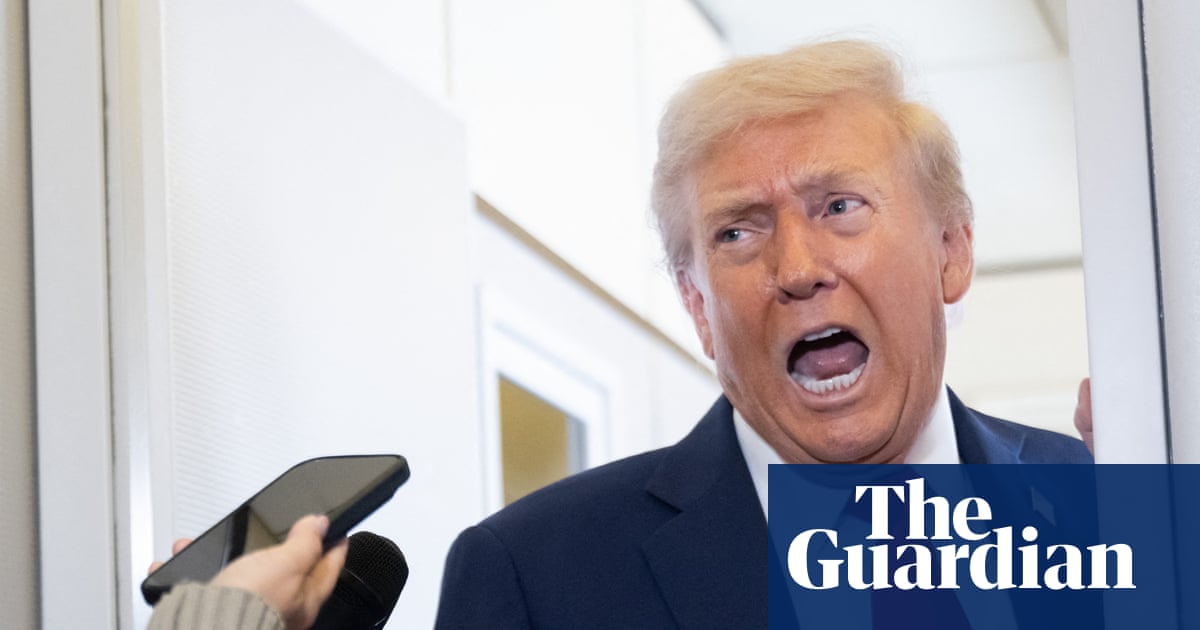
The Trump administration has raised “serious concerns” over Downing Street’s plan to force YouTube and other digital platforms to hand more prominence to established broadcasters, warning the move risks “facilitating censorship”. In a pointed intervention, the US government said the proposals to boost traditional media outlets in social media algorithms could “establish a template that authoritarian regimes could invoke to justify more control over online content”. It also warned it could undermine “independent journalists” and amount to “extraterritorial censorship of protected speech by Americans online”.
The statement, made via the US embassy in London, raises the stakes in the plans to give the likes of the BBC, ITV and other established media more visibility on increasingly dominant digital platforms. Ministers, regulators and public service broadcasters have suggested new rules are needed to counter growing misinformation online as people increasingly turn to less regulated online platforms such as X, YouTube and TikTok. In a consultation this year, the UK government said it would consider legislating should the platforms not act to prioritise trustworthy content.
However, Washington claimed such a plan risked effectively removing the content of “independent journalists” over established outlets. The US government would likely consider such a measure as facilitating censorship.” The administration has asked what safeguards will be in place to ensure “any biases and preferences of UK government officials and third-party organisations” do not influence the plan in ways that disadvantage “independent or minority-viewpoint journalism”. A spokesperson for the Department for Culture, Media and Sport said: “We welcome engagement and responses to our media green paper.
We believe strongly in free expression and fair competition, and any action we take will ensure these are protected.” Insiders say any measures would only affect the UK. The US complaint highlights its readiness to fight for the largely US-based tech companies that run the world’s largest digital platforms. Donald Trump also has a long record of attacking and bypassing the established media, regularly accusing major outlets of “fake news” and biased coverage.
He often tries to reach supporters online. The US president is still engaged in his lawsuit with the BBC over an episode of Panorama in which it spliced together one of his speeches. The BBC has apologised for the edit, but stated the show did not defame Trump.
Social media companies have previously been sceptical about artificially boosting the prominence of traditional media, arguing that it goes against the principle of creator content. Online content creators have compared the proposals to state control and fear their content would be pushed down the rankings as a result. Simon Squibb, a UK YouTube creator, said he was encouraged that his concerns were shared by an “entity that I think politicians will listen to”.
Extract — continue reading at the source.