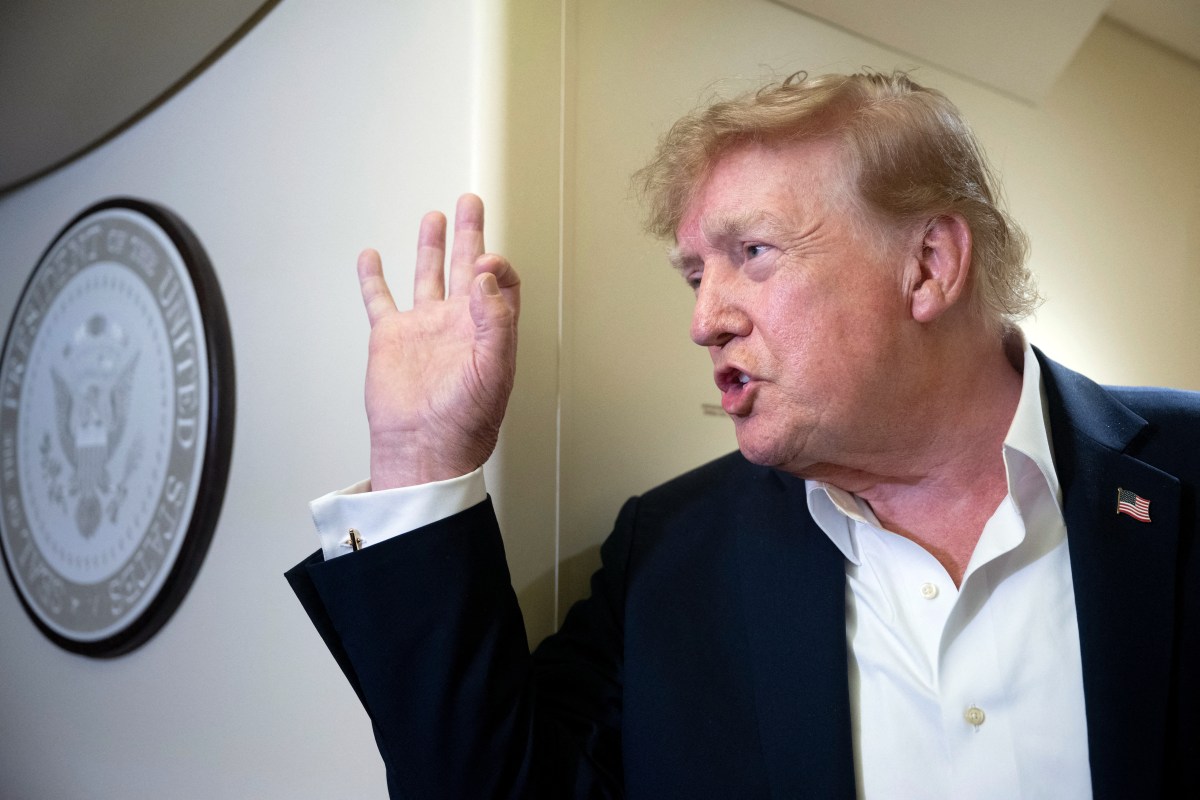
President Donald Trump has developed a strange way of treating America's friends. The mercurial president threatens and humiliates them and toys with their territorial integrity, while lavishing affection on rival strongmen and ideological fellow travelers who have figured out that the quickest route to favor is through his galaxy-sized ego. It raises the question: is Trump putting the unity of the West itself at risk, and will it be too late to fix it when he finally leaves the world stage?
In the space of a few weeks, Trump has suggested the U.S. might reconsider its position on the Falkland Islands, pleasing his Argentinian friend Javier Milei at Britain's expense, and then, visiting Ireland, declared he would "love" to see Irish unification, which "may as well happen now." The Falklands’ residents overwhelmingly wish to remain British (99.8 percent), while Northern Ireland is part of the U.K. under a constitutional settlement whose delicacy has occupied statesmen for generations—while the landmark 1998 Good Friday Agreement was a major American diplomatic achievement under President Bill Clinton. The timing makes this extraordinary: the nationalist leaders of Scotland, Wales and Northern Ireland, meeting in Cardiff, are coordinating demands for separation from Britain, even as the American president has landed, intentionally or otherwise, alongside those who would dismantle the country. Yet Trump treats such questions as chips in his personal political casino, to be moved around according to which despot he likes, which government offended him and perhaps what occurred to him five minutes earlier.
Britain is hardly alone in discovering that friendship with the U.S. looks paper thin. Around Europe, especially, Trump has been supporting "euroskeptics" and is openly celebrating political forces that would weaken or disband the Union. When the far-right Alternative for Germany surged to 44 percent of the vote in Saxony-Anhalt this month, crushing Chancellor Friedrich Merz's Christian Democrats, Trump could scarcely contain his delight on Truth Social, attributing the result to Germany's "absolutely horrible Immigration rules and regulations" and proclaiming that the movement, whose proposals include easing up on remembrance of the Nazi era, would "Make Germany Great Again." Allies are horrified at this?
That’s a feature, not a bug. Canada, in some ways America’s closest ally over the years, with the longest peaceful border, has been subjected to Trump's tariffs, threats and extraordinary hostility—including repeated posting of maps showing it as part of the U.S. So Prime Minister Mark Carney is heading to Strasbourg this week to address the European Parliament as his government explores deeper economic and security integration with the European Union—instead of the one that Canada and the U.S. have enjoyed.
This is self-imposed damage on the American project to lead the free world in stability and prosperity, backed by all post-World War II presidents. The interesting question, therefore, goes well beyond Trump's rudeness, narcissism or impulsiveness, subjects that have by now received enough attention to fill several presidential libraries. What remains after he is gone?
While policies can be reversed with the stroke of a pen, countries that think they’ve learned a lesson about American reliability cannot be ordered to unlearn it. Trump treating his election victory as a permanent American rejection of the liberal world order risked turning a political event into a self-fulfilling global prophecy. Carney’s approach is looking less premature by the day.
Extract — continue reading at the source.