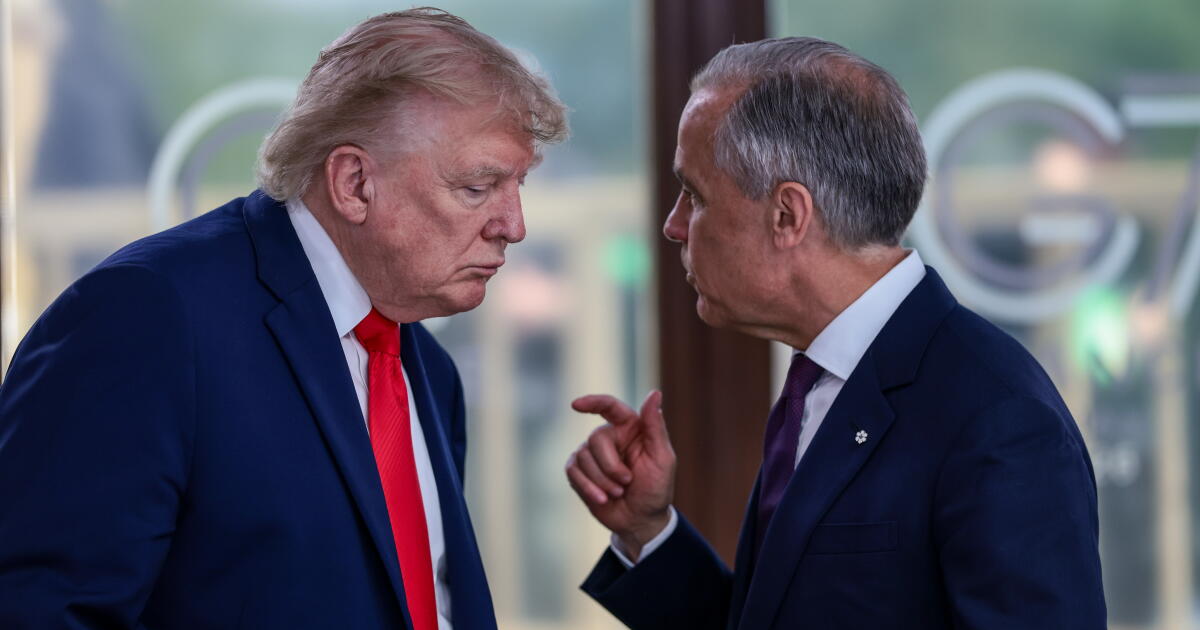
WASHINGTON — President Trump’s trade war with Canada could intensify the headwinds Republicans are navigating ahead of the November midterms, with its effects poised to reverberate in northern battleground states with crucial Senate races. With the election less than six weeks away, Republicans are facing an increasingly bleak outlook, as new polls this week showed voters favoring Democrats by as much as 12 points amid widespread cost-of-living anxiety and low approval for Trump. The escalating beef with Canada — Trump attacked the country anew on social media Wednesday — stands to heighten voters’ economic worries and add to the GOP’s political challenge in dead-heat races, analysts said.
It’s not helping,” said Rusty Hills, a University of Michigan public policy professor and onetime chair of the Michigan Republican Party. The president’s unpopular policies on the war in Iran, the economy and data centers have already handed Republican candidates the tough task of appearing responsive to Americans’ frustration with cost-of-living issues without alienating Trump and his voter base. The trade war, said Lance Dutson, a Maine Republican media strategist, puts “another log on the fire” of the affordability issue.
The tariffs have appeared unpopular in recent polling, including among a majority of independent voters. Though they are not expected to dramatically increase consumer prices, they could affect voters’ perception of the economy — and even small economic impacts on certain industries, such as auto manufacturing in Michigan, could have an effect in very close midterm races, experts said. Trump’s new import bans on some Canadian goods are set to begin next week, a response to retaliatory tariffs Canada levied earlier this month.
Trump argues that Canada has “been ripping off” the United States and that tariffs will help domestic manufacturers. On Wednesday, the president inaccurately claimed on Truth Social that Canada is allowing “millions and millions” of immigrants into its country. Already showing up in their numbers.
Five of the nine states most likely to decide Senate control border Canada — Alaska, Ohio, Michigan, New Hampshire and Maine. Two more, Texas and Iowa, also do substantial trade with Canada. Democrats must retain their Senate seats including New Hampshire and Michigan and flip four of the other states to win a majority, a tall task.
As the landscape worsens for Republicans, however, some are testing how much they can distance themselves from Trump. Only 14% of independents said they supported additional U.S. tariffs on Canada in a late August Ipsos poll. And in Michigan, 68% of independent voters disapprove of the tariffs, a poll this month from the Washington Post and Schar School found.
Extract — continue reading at the source.