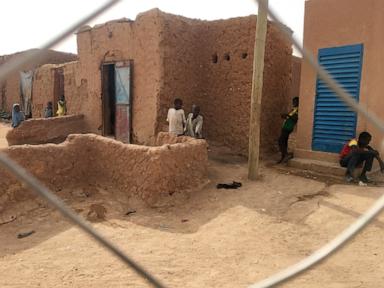
Mary Peltola’s campaign to represent Alaska in the US Senate has taken her to parts of the massive state’s interior that are inaccessible by road and on the frontlines of the cost-of-living crisis she hopes will make her the first Democrat to win the seat in nearly two decades. She has been to towns where paper towels retail for $40, a half gallon of oat milk goes for $21 and the cost of a new freezer can be quadruple what it is in the state’s largest city, Anchorage, simply because it’s so complicated to get there. Along the Arctic Ocean, she’s heard of communities where power bills have climbed to $1,500 a month because they rely on generators for power and the Iran war has pushed the cost of diesel to new heights.
Alaska, a right-leaning state that’s about twice the size of Texas but the third least-populous in the country, has always been among the more expensive places to live, and the price increases in the state’s rural areas haven’t necessarily been felt to the same degree in the more populous cities and towns. Yet the state’s Democrats believe circumstances have aligned for them to win a slew of competitive elections in the 3 November midterms. The Senate seat currently held by two-term Republican Dan Sullivan is a top prize.
Outside groups have poured in tens of millions of dollars into supporting both candidates, and last week Donald Trump made the long journey from Washington DC to the conservative Matanuska-Susitna valley to rally voters behind Sullivan, who has trailed in some recent polls. If she gets in, you’re screwed,” the president told a packed sports center in Wasilla, which is best known outside the state as being the home town of Sarah Palin, the Republican former vice-presidential nominee. On the campaign trail, Peltola and Sullivan have dueled over who would do a better job lowering costs for Alaskans, and also representing its vital fishing and oil and gas industries in the US Capitol.
There have been mutual accusations of allegiances not to a state known as “the last frontier” but to special interests in the Lower 48, while Sullivan has accused Peltola of denigrating Alaskans after a report that she mistreated her staffers. The incumbent has his own unique vulnerability in the form of a similarly named Republican challenger who made it through the state’s top-four primary, and could split his support. And while polls open on 3 November, the outcome may not be known for days – Alaska has always taken a long time to count its ballots, and its use of ranked-choice voting in the Senate contest could result in an even lengthier wait for the final result.
Since becoming the 49th state in 1959, Alaska has only once supported a Democratic candidate in a presidential election – Lyndon B Johnson in 1964. But its politics are nuanced – bipartisan majorities currently control the legislature and the frontrunner in the governor’s race is a Democrat. In the race for the state’s lone US House seat, the party has coalesced behind the independent candidate Bill Hill to take on Begich.
We are a great example in this state of how government should work,” Hill, who is receiving support from the Democratic Congressional Campaign Committee, said in an interview. A former state lawmaker, Peltola rose to prominence in 2022 when she won a special election to replace Don Young, the long-serving Republican congressman who died at 88, and became the first Alaska native in Congress. She was elected to a full term later that year, then lost re-election to Begich in 2024.
Extract — continue reading at the source.