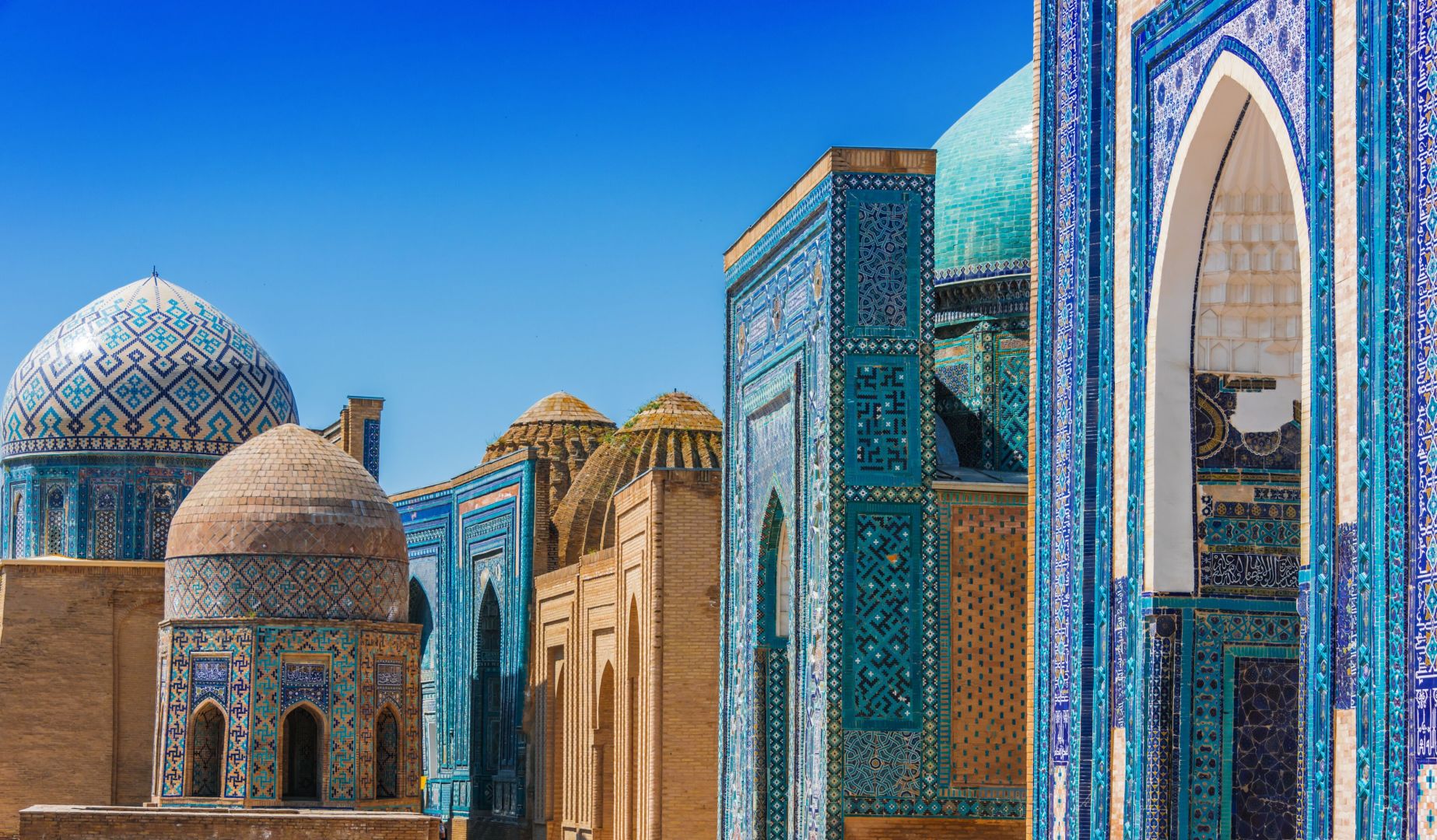
US Secretary of State Marco Rubio is due to travel to Samarkand on 18 and 19 October for talks with his Central Asian counterparts, as Washington prepares to deepen its engagement with a region that has long sat between competing spheres of influence. Rubio’s visit for a C5+1 meeting, bringing together the United States and the five Central Asian republics, comes as Donald Trump is expected to make history next year by becoming the first sitting US president to visit Central Asia. If the journey goes ahead, the choice of Samarkand would carry significance far beyond the symbolism of a presidential photo opportunity.
For centuries, the Uzbek city was one of the great crossroads of the Silk Road, linking China, Persia, India and Europe. Its monuments embody a history in which the Islamic world was not simply a passageway between civilisations but a centre of scholarship, science and intellectual exchange. That history could give a Trump visit an unusually resonant setting.
The turquoise-domed buildings of Registan Square are madrassas – Islamic schools – rather than mosques. Their presence offers a reminder of a period when scholars working across the Islamic world made fundamental contributions to mathematics, astronomy and other fields of knowledge. Algebra and algorithms, for instance, carry linguistic and intellectual legacies from the medieval Islamic world, while Muslim astronomers developed sophisticated systems for observing and mapping the heavens.
A US president standing in Samarkand would therefore be doing more than appearing against one of the world's most recognisable Silk Road backdrops. The image could signal a recognition of the historical links between Central Asia and the wider Islamic world – and of a region whose strategic importance is again increasing. Central Asia has become increasingly important as the geopolitical landscape surrounding it changes.
The five states – Kazakhstan, Kyrgyzstan, Tajikistan, Turkmenistan and Uzbekistan – are seeking to expand their economic and diplomatic options while navigating relationships with Russia and China and developing closer ties with other powers. Washington, meanwhile, has an opportunity to engage with the region on its own terms, from trade and critical minerals to transport routes, energy and regional security. The challenge will be turning symbolism into substance.
A presidential visit to Samarkand could generate striking images, but the region's governments are likely to judge Washington by what follows: investment, trade, connectivity and a sustained diplomatic presence. The Silk Road was never simply a road. It was a network of exchanges connecting distant societies and allowing ideas, technologies and goods to travel across borders.
Extract — continue reading at the source.