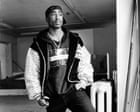
For years, US law enforcement officials blamed their failure to solve hip-hop star Tupac Shakur’s murder on the lack of cooperation from key witnesses, and on gang members’ “snitches get stitches” culture. But testimony in a much-delayed murder trial, which concluded this week, almost 30 years after Shakur’s death, highlighted just how much law enforcement officials knew about the shooting, and how early. On Monday, a Southside Compton Crips gang leader and drug dealer, Duane “Keffe D” Davis, was convicted for orchestrating Shakur’s killing.
Davis told investigators in 2008 that it was his nephew, Orlando “Baby Lane” Anderson, who pulled the trigger. Anderson died in an unrelated shooting in 1998. The lack of resolution in Shakur’s murder had resonated painfully not just with the artist’s own family and friends, but with many Black Americans.
Even though Shakur was one of the most famous Black men in the world, a star whose movements attracted enormous media attention, his killing remained officially unsolved for almost three decades, said Jody Armour, a law professor at the University of Southern California. And indeed, witnesses in the trial put a new spotlight on allegations of police corruption and incompetence, the mixed motivations of investigators, and law enforcement turf wars that went on for years behind the scenes of the homicide investigation. Though it would take Las Vegas police 27 years before they made their first arrest in Shakur’s murder, testimony at Davis’s trial revealed that police received information almost immediately about what prompted the killing, and who might be behind it.
Surveillance footage played at the trial showed Shakur, the Death Row Records founder, Marion “Suge” Knight, and their associates, some affiliated with the Mob Piru Bloods, assaulting Anderson at the MGM hotel in Las Vegas, an attack that Davis would later say prompted him and his nephew to seek revenge on Shakur. Reggie Wright Jr, the former head of security for Shakur’s record label, testified that in the hours immediately after Shakur was shot in Las Vegas, he made multiple phone calls to a police lieutenant in Compton, California, warning him that Shakur and Knight had “got into it at the MGM with some guys from the Southside Crips” and “There’s going to be trouble in Compton.” The immediate communication between the Death Row Records security chief and the Compton police on the night of Shakur’s shooting was no surprise: Wright Jr had been a Compton police officer until he retired earlier that year, and he was calling his father, Reginald Wright Sr, then the head of Compton’s gang unit. The elder Wright quickly passed on the information about Shakur’s Las Vegas shooting to then-Compton gang homicide detective Robert Ladd, who testified that police in Compton immediately braced for retaliatory violence on their streets.
The violence that exploded over the next 10 days – three killings and 10 attempted murders, including a shooting that left a 10-year-old girl in critical condition – left Ladd convinced that the information Compton police had received about who shot Shakur had been accurate. In response to the violence in Compton, Ladd testified, police “rounded up” a large number of local gang members on both sides of the conflict in October 1996, including Anderson, Davis’s nephew. They also invited the Las Vegas police to interview the arrested men.
The alleged gang members were “all the players that we heard about that were involved in the shooting of Tupac Shakur”, with the goal “to try to help Las Vegas PD with their investigation”, Ladd testified. Compton officers also collected a large number of firearms, hoping to find the weapon used to murder Shakur, he said. While Las Vegas sent two detectives to Compton and they did interview Anderson, nothing came of the interview, Ladd testified.
Extract — continue reading at the source.