The fall of Bashar al-Assad has freed Syria from decades of Iranian hegemony. But the vacuum left by Tehran is already drawing in a new set of regional powers. Turkey, Saudi Arabia and Qatar are all moving to shape Syria’s political, economic, and security future—with Ankara increasingly positioned to translate its influence at the expense of U.S. national security policy.
The Israeli army strikes at the Abu al-Duhur airbase in Idlib, northwestern Syria—with the stated aim of preventing a potential Turkish troop deployments that Israel said would violate an agreed security status quo—serve as a stark reminder of the fragile contested landscape in post-Assad Syria. For years, Israeli strikes in Syria were largely aimed at preventing Iranian military entrenchment. This time, the power Israel sought to keep out was Turkey.
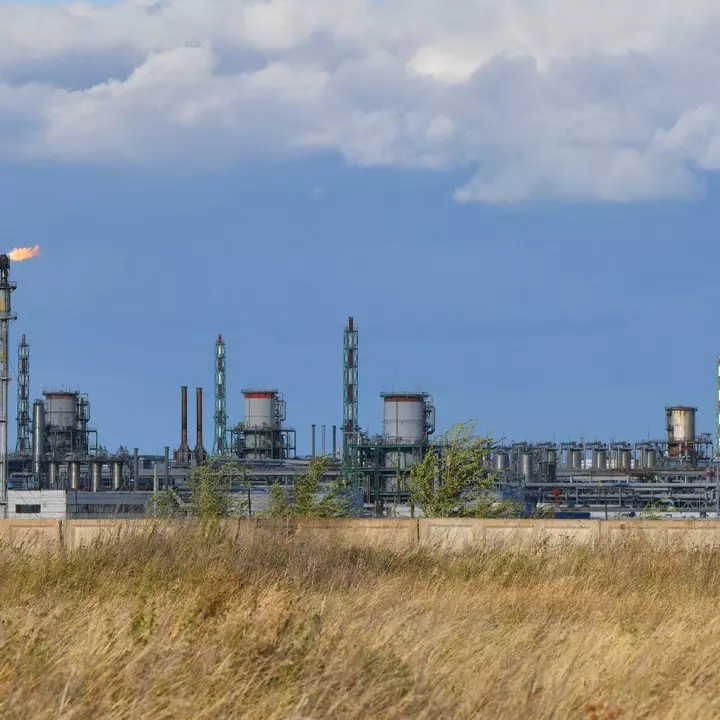
Under Assad’s reign, Tehran poured billions into a so-called “Marshall Plan” for Syria to solidify its influence over the country. Secret embassy documents revealed that Iran viewed Syria’s reconstruction as a $400 billion opportunity, with plans spanning power plants, oil projects and religious soft power. Those ambitions crumbled in December 2024, when Syrian opposition forces seized Damascus and ended the Assad family’s 53-year rule over the country.
Yet the alternative that filled the power vacuum left by Assad’s ousting is considerably worse. Earlier this week, the Trump Administration formally removed Syria from its state sponsor of terrorism list. This represents an extraordinary milestone for the current Syrian President Ahmad al-Sharaa, a former al-Qaeda affiliate commander under the nom de guerre Abu Mohammad al-Julani that the U.S. placed a $10 million bounty for his arrest that was rescinded in December 2024.
While Assad was careful to hide Iranian influence—in large part not to inflame Syria’s predominantly Sunni Muslim majority that resents Iran’s Shia Muslim regime as an occupying power—al-Sharaa does not hide Turkey’s overt and growing presence. Turkey shares a 560-mile border with Syria and backed the rebels, including the Hay’at Tahrir al-Sham forces now led by al-Sharaa who toppled Assad. Although al-Sharaa declared that he does not want Syria to be a puppet of Tehran, his new government has become deeply intertwined with Ankara.
Turkish diplomats were the first on the ground, embassies reopened and Turkish-backed forces deployed into Kurdish areas of the country. Kurdish fighters who fought alongside the American forces against the Islamic State terrorist group are now being unwillingly absorbed into the new Syria, sparking a sense of U.S. betrayal and uncertain future under the influence of Turkey. Turkish President Recep Tayyip Erdoğan has invoked rhetoric praising the Ottoman Empire, determined to revive Turkey’s influence over lands it once occupied.
Extract — continue reading at the source.