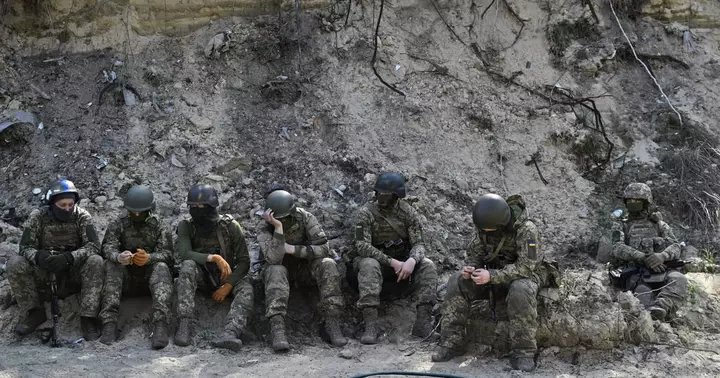
KYIV — Jordan O’Brien has fought for Ukraine since Russia’s full-scale invasion began, including during the 2022 liberation of Kherson and the 2024 incursion into Russia’s Kursk region. But after years of service, O’Brien says he would warn other foreigners against joining up, citing the bureaucratic problems he has faced. O’Brien, a New Zealander, complained about red tape and a state apparatus that appears to have little understanding and compassion for people volunteering to fight for a foreign country.
If that isn't fixed, Ukraine may have a harder time attracting desperately needed recruits, hampering its effort to continue resisting Russia. As of August, the defense ministry said some 16,000 foreigners from 72 countries were serving in the Ukrainian armed forces, giving crucial help to a 900,000-strong military that is chronically short of recruits. The volunteers are facing a looming deadline.
The Ukrainian parliament last year passed a law mandating that foreigners serving in the military have to file paperwork by Nov. 10 to get temporary residence permits. That clashes with the official recruitment information given to foreign volunteers, which says their contract "is the basis for legal long-term stay in Ukraine." “Even though I can prove I was serving in the Ukrainian army, they still make it impossible for us foreigners; none of them have any respect for people who fight for Ukraine, and they treat us like illegal aliens,” O’Brien said. The Ukrainian military ombudsman's office has fielded more than 300 complaints this year from foreign volunteers and their families related to granting combatant status, early termination of contracts at the soldier’s request and ensuring timely medical care.
In a report for the Washington-based Center for European Policy Analysis think tank, an American volunteer said that neither he nor most of his comrades had received their UBD — the document confirming combat participation that opens the door to veteran status in Ukraine. Part of the issue is due to an uneven transition from paper identification to digital military IDs that has left out many foreign volunteers. A study by the Ukrainska Pravda newspaper earlier this year found that language barriers are a big problem, especially for Spanish-speaking Colombians who constitute the largest group of foreign service members.
The study also found that if a veteran has been discharged from the Ukrainian forces, they can sometimes face deportation. Last month, the defense ministry started a working group aimed at improving terms of service, legalization and treatment of foreign soldiers and their families. The Ukrainian parliament is also working on legislation to simplify and extend deadlines to legalize the stay of foreign fighters in the country and lift other bureaucratic burdens.
Kalenchuk argued that legalization problems are not widespread, but did say there are vulnerable categories of service members — for instance, those who lost their passports while serving, including citizens of Russia, Belarus and South Africa. Ukraine opened its doors to foreign volunteers like O’Brien in the first hours of Russia's full-scale invasion in 2022, when the country's survival was at stake, said Meaghan Mobbs, president of the R.T. Weatherman Foundation, an NGO helping war veterans and their families.
Extract — continue reading at the source.