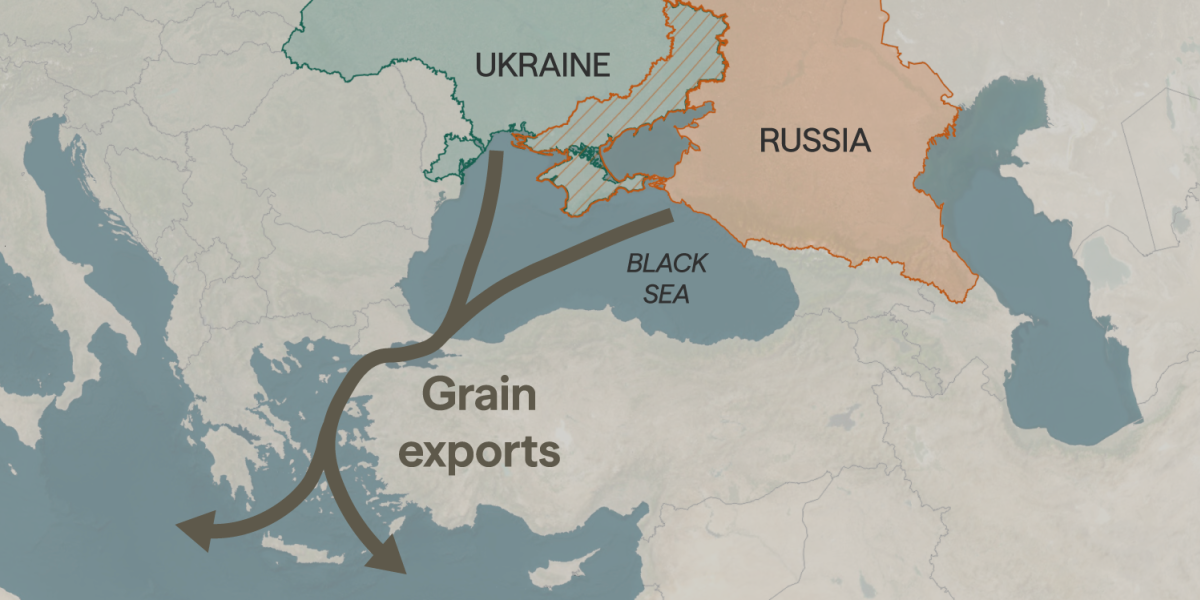
Ukraine’s struggle to restore grain exports through the Black Sea carries consequences far beyond its national borders. As one of the world’s leading agricultural exporters, the country plays a significant role in supplying wheat, corn, barley and sunflower oil to international markets. The restoration of maritime shipments would support global food security while delivering substantial economic benefits to Ukraine, whose agricultural sector remains a vital source of export revenue, employment and foreign currency.
The scale of Ukraine’s agricultural capacity illustrates the importance of this issue. According to the United Nations Food and Agriculture Organization (FAO), Ukraine’s cereal exports for the 2025/26 marketing year were forecast at approximately 40 million tonnes, including 23 million tonnes of corn, 14 million tonnes of wheat and 2.5 million tonnes of barley. These figures demonstrate the country’s importance to international agricultural trade.
Grain occupies a central position in the global food system. Wheat provides a staple ingredient for bread and other essential foods, while corn serves as a major input for animal feed, food processing and industrial production. Sunflower oil also represents an important source of edible oil for millions of households.
Consequently, disruptions to Ukrainian agricultural exports can create pressure throughout the international food supply chain. Import-dependent countries face higher procurement costs, while millers, food processors and livestock producers encounter rising operating expenses. These pressures eventually reach consumers through higher prices for bread, cooking oil, meat and other basic products.
The impact becomes particularly significant in developing economies, where households devote a substantial share of their income to food. Egypt and several Asian and African countries rely on internationally traded wheat to support domestic consumption. For these markets, reliable supplies from the Black Sea help governments manage procurement costs and maintain affordable food distribution.
Recent disruptions have already intensified concerns among international grain buyers. reported in August 2026 that Chicago wheat futures had risen by more than 17% since July amid escalating attacks on Black Sea grain infrastructure. Alternative suppliers, including Argentina, Australia and the United States, offer valuable additional capacity, although longer shipping distances and higher transport costs can increase the expense of replacing Black Sea supplies. These developments illustrate a fundamental feature of agricultural markets: export capacity matters as much as harvest volumes.
Extract — continue reading at the source.