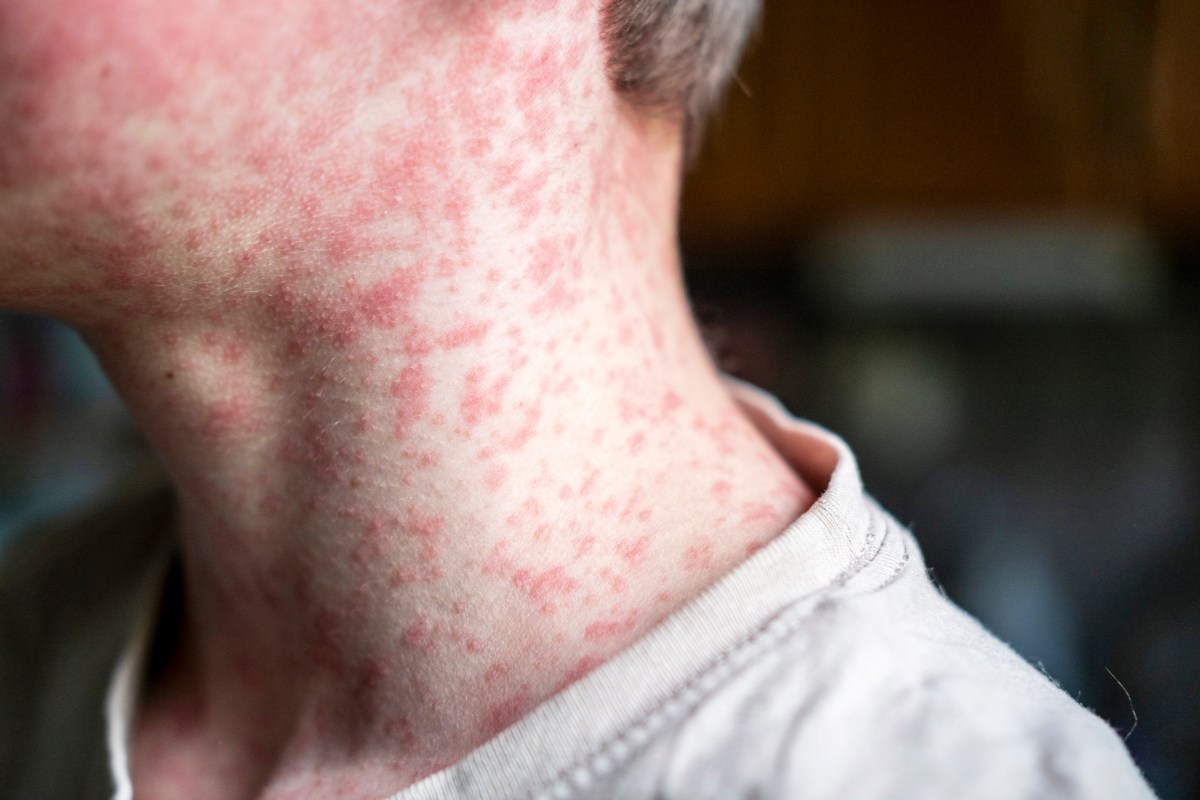
The United States could finish 2026 with as many as 6,500 confirmed measles cases, infectious disease experts told Newsweek, as vaccine skepticism fuels outbreaks in under-vaccinated communities and threatens the country's measles-elimination status. Amesh Adalja, a senior scholar at the Johns Hopkins Center for Health Security, predicted that the country would end the year with “roughly 6,000 to 6,500 confirmed cases." “This is a return of the primitive,” Adalja told Newsweek, “a disease we eliminated a quarter-century ago, back by choice.” The United States had recorded 4,080 confirmed cases this year as of October 8, already 78 percent more than the 2025 total of 2,289 cases. The highly contagious virus was declared eradicated in the U.S. in 2000 after the measles vaccine was developed decades earlier.
Measles-associated death counts this year differ between federal and state figures. The CDC has reported two deaths nationally, while Pennsylvania has confirmed five measles-associated deaths, including two infants, an 18-year-old and a 40-year-old woman. A sixth death reported by a county coroner remains under state review.
William Schaffner, a professor of preventive medicine at Vanderbilt University Medical Center, agrees that the U.S. is on pace to reach 6,000 to 6,500 cases in 2026. Peter Hotez, dean of the National School of Tropical Medicine at Baylor College of Medicine in Houston, said he will watch whether the number of cases continues to rise. Pennsylvania reported 1,222 confirmed cases across 42 counties as of October 14, including 86 new infections since October 9.
The state also reported 225 hospitalizations and five confirmed measles-associated deaths. A sixth reported death in Franklin County is being investigated but has not yet been added to the state's count. Adalja, who lives in Pennsylvania, said he expects “virtually every county in the state to be affected.” Only four of Pennsylvania’s confirmed cases involved vaccinated people, representing less than 1 percent of its total.
State officials have said two doses of the measles, mumps and rubella (MMR) vaccine are 97 percent effective at preventing measles. South Carolina followed with 670, then Utah with 535. New York Governor Kathy Hochul issued an executive order earlier this month "declaring a State Disaster Emergency in response to the growing number of measles cases across rural areas of New York and neighboring states." As of October 3, New York State has seen 108 confirmed measles cases, including seven in New York City, according to the governor's office.
Measles requires approximately 95 percent immunity to prevent sustained transmission, Adalja said, and the national kindergarten MMR coverage has fallen below that threshold. Federal data released in August showed that national MMR coverage dropped to 92.4 percent and exemptions reached a record 4.2 percent. Experts warned that national averages can obscure communities with considerably lower vaccination rates.
Extract — continue reading at the source.