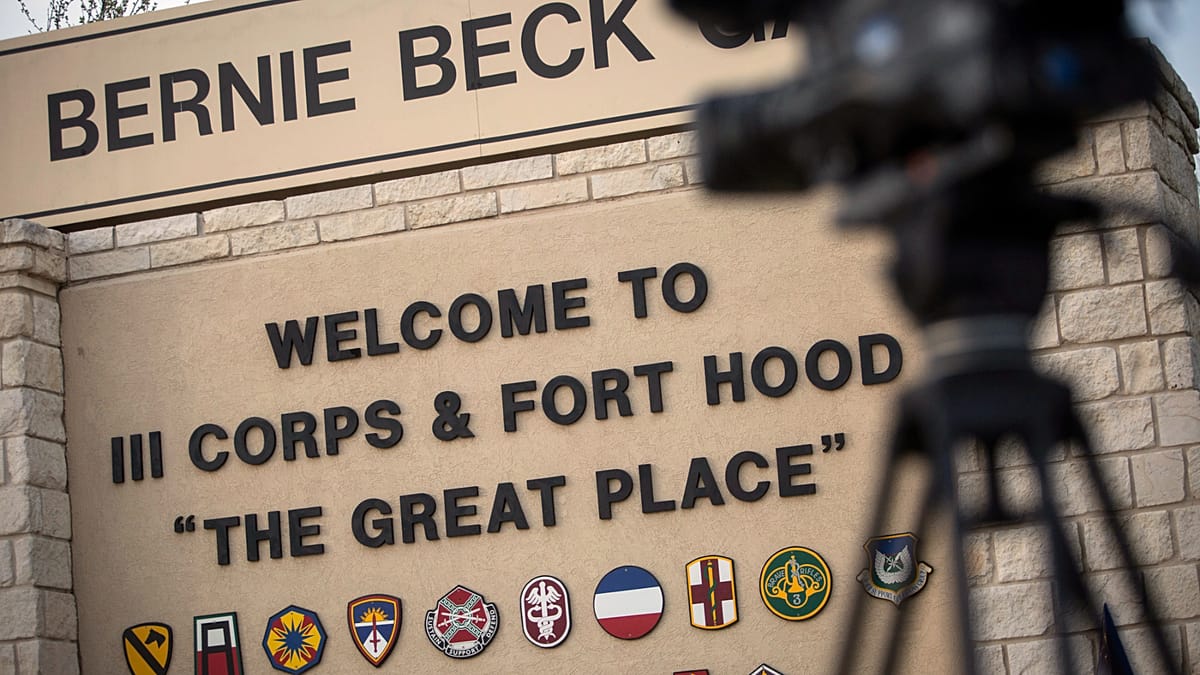
"We are going to make sure that people are able to watch it, that it's public", this is how US Defence Secretary Pete Hegseth announced the "public" execution of convicted military base shooter Nidal Hasan. "People need to understand that...there's serious consequences for these types of things", said Hegseth. Nidal Hasan, a US Army psychiatrist, shot dead 13 people and injured 32 others at Fort Hood, Texas, in 2009.
His execution by firing squad will be livestreamed; it will be the execution by the US military since 1961, and the first it has carried out by firing squad since World War II. "I kind of like the mentality we had in World War II, which was win, which was understand when the enemy attacks you, you need to stand your ground", Hegseth said. Officials in the Pentagon clarified Thursday that the execution would be livestreamed and that more details would follow.
The revelation from Hegseth about the public nature of the execution — let alone one as violent as a firing squad — has raised further questions about how the death penalty is carried out in the US, especially after the botched lethal injection of Christa Pike in Tennessee. "He is going to get a firing squad of soldiers, as it should be", said Hegseth. In an interview with right-wing influencer Jack Posobiec, the Pentagon chief was asked if Hasan had made any final request.
We'll see him on December 3", Hegseth said — the day Hasan is slated to die. Hasan could choose to resist execution and file a habeas petition — a legal request to review the legality of a detention — in civilian court, which could significantly delay the execution, experts said. "It frankly might outlast the current administration, and who knows if the next one will have the same penchant for executions", said Eugene R.
Fidell, a visiting lecturer at Yale Law School specialising in military law. Deborah Denno, a death penalty expert and law professor at Fordham University, said livestreaming an execution could make the process "much more transparent" and inform the public about all that capital punishment entails. Those are benefits that she said would be useful at a time when Pike’s botched execution has raised fresh questions about the manner by which criminal defendants are put to death for their crimes.
"I think it could possibly be a good idea because it would be transparent and the public would be fully aware that it’s happening", she said. When many states have had difficulty carrying out lethal injections due to difficulty accessing drugs or finding medical professionals willing to participate in executions, firing squads are coming to be seen as a less inhumane alternative, said Brenner Fissell, a professor at Villanova Law and vice president of the National Institute of Military Justice. "Firing squads can be a quicker, cleaner, more precise way to execute a prisoner", he said.
Extract — continue reading at the source.