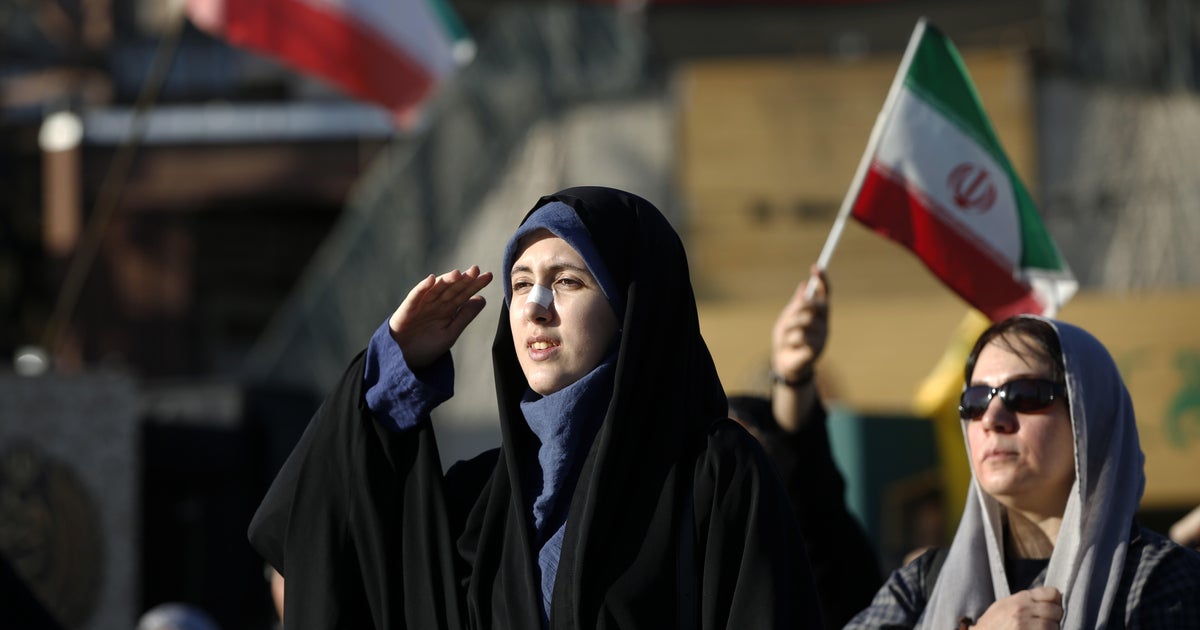
Iran has "lost complete control" of the Strait of Hormuz, Secretary of State Marco Rubio said Wednesday, adding that Tehran's economy was "in total and complete freefall." "The Straits of Hormuz are open. There's almost as much oil flowing out now as there was before this conflict began. So they've lost complete control of the Straits," Rubio told reporters during a visit to Athens.
He argued that as a result of "crippling" sanctions, the Iranian economy was "about to reach a place few countries in the world have been." Every dollar received by the "radical Shia clerics" is spent on Hezbollah and Hamas, he said. "Iran cannot have a nuclear weapon, simple, period, end of story," Rubio said. "And anything they agree to that would be acceptable to the United States has to be something that ensures that Iran will never have a nuclear weapon." He argued that what Iran "was trying to do was build up a conventional capability so massive that they would become untouchable." Vice President JD Vance appeared to backtrack on U.S. demands on Iranian nuclear enrichment Tuesday, saying Iran needed to make a "meaningful" reduction of its capacity, but not suggesting it should be required to completely give up enrichment, as President Trump has previously.
Iranian nuclear enrichment has been a key issue for the White House, with the president and other top officials stressing that Iran can never have a nuclear weapon as a core objective of the war. In February, the day before the war began, President Trump said of Iran: "They want to enrich a little bit. You don't have to enrich when you have that much oil … I say, no enrichment.
They always want 20%, 30% … They want it for civil. I think it's uncivil." In April, he told CBS News that Tehran had agreed to have its enriched uranium removed from the country. In an interview with the news agency published Tuesday, however, Vance said Tehran should not "build highly enriched fuel," and they should "do something meaningful on their enrichment capacity," in what appeared to be a softening of U.S. demands.
Under the Obama-era nuclear deal, the JCPOA, which President Trump was highly critical of and pulled the U.S. out of unilaterally during his first term, Iran agreed to limit its uranium enrichment to a purity level of 3.75%, with verification by the International Atomic Energy Agency. Trump pulled out of the JCPOA, the Iranian regime steadily ramped up its program and built a stockpile of uranium enriched to at least 60%, which is a short technological step away from weapons-grade material. "If you don't want a nuclear weapon, then why do you need 60% enriched fuel?
And if you want to show commitment to not building a nuclear weapon, don't build highly enriched fuel. That's a very basic threshold issue," Vance told . "I think if they want to show a commitment to not building a nuclear weapon, they would do something meaningful on their enrichment capacity." "The goal here is to prevent the Iranians from having a nuclear weapon," he added.
Extract — continue reading at the source.