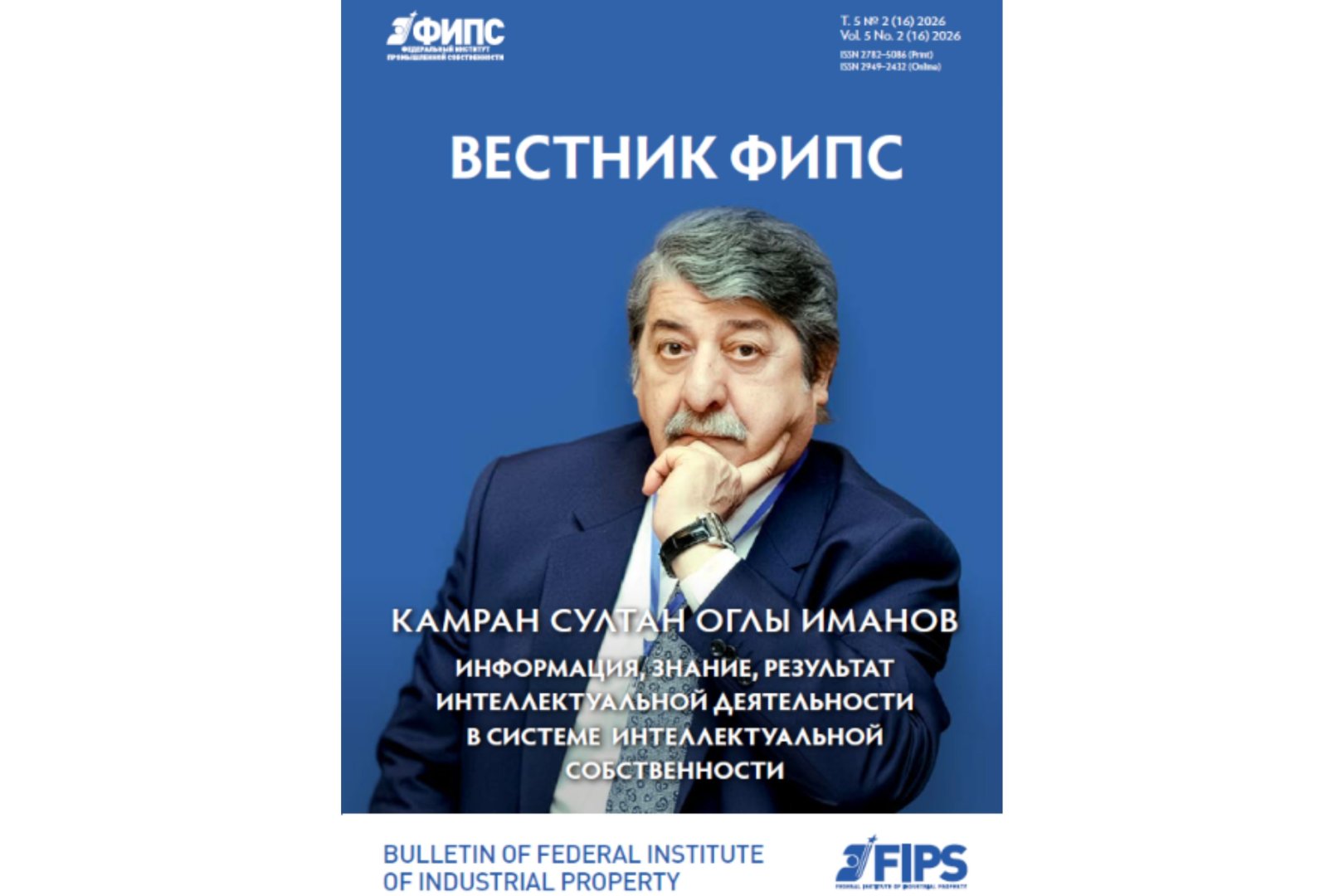
Rusiya Federasiyasının Əqli Mülkiyyət üzrə Federal Xidmətinin (ROSPATENT) “Federal Sənaye Mülkiyyəti İnstitutu” Federal Dövlət Büdcə Qurumunun 2026-cı ildə nəşr etdiyi “Vestnik FIPS” elmi-praktik jurnalının 2026-cı il sayı, Azərbaycan Respublikasının Əqli Mülkiyyət üzrə İdarə Heyətinin sədri Kamran İmanovun geniş məqaləsi. “Əqli Mülkiyyət Sistemində İnformasiya, Bilik və Əqli Fəaliyyətin Nəticələri” nəşr olunub. Bu barədə Əqli Mülkiyyət Agentliyinin açıqlamasında bildirilir. Qeyd edək ki, “Vestnik FIPS” bütün dünyada əhəmiyyətli təsir göstərən nəşrlər sırasındadır.
O, əqli mülkiyyət sahəsində elmi tədqiqatların nəticələrini əhatə edir, sənaye mülkiyyəti və patent sistemi sahəsində qabaqcıl ideyalara və tədqiqatlara kifayət qədər yer ayırır, tanınmış ekspertlərin əqli mülkiyyətin aktual problemlərinə dair məqalələrini dərc edir. Azərbaycan Respublikasının Əqli Mülkiyyət Agentliyinin İdarə Heyətinin sədri K.İmanovun jurnalda dərc olunmuş məqaləsində də bilik iqtisadiyyatının inkişafın dominant paradiqmasına çevrildiyi müasir dünyada əqli mülkiyyətin mahiyyəti, mənşəyi və dövriyyəsi ətraflı təhlil edilir.
Qeyri-maddi aktivləri (yəni bilik, informasiya və yaradıcı ideyaları) istehsalın ilkin resursları kimi səciyyələndirən müəllif onların hüquqi və iqtisadi təsnifatının bir sıra fundamental mürəkkəbliklərlə bağlı olduğunu vurğulayır. O qeyd edir ki, innovasiyaya əsaslanan sosial-iqtisadi inkişafdan irəli gələn yeni reallıqlar “intellektual mülkiyyət” (ƏM) kateqoriyasının institusional yenidən nəzərdən keçirilməsini və gücləndirilməsini zəruri şərt edir. Müəllifin fikrincə, biliyin istehsalın əsas resursu kimi xidmət etdiyi bir şəraitdə “ƏM” kateqoriyası iqtisadi və sosial-mədəni sferalarla sıx bağlıdır və fənlərarası yanaşma tələb edir.
İmanov həmçinin oxucuların diqqətini ona yönəldir ki, “ƏM” anlayışının müasir anlayışı təkcə fiziki və ya hüquqi şəxsin əqli fəaliyyətin nəticələrinə (RİA) müstəsna hüquqlarını deyil, ilk növbədə qanuni hüquqlarla qorunan RİA-nın özünü nəzərdə tutur”. Bu çox mühüm elmi tapıntıdır. O, əqli mülkiyyət institutunun mənşəyinin sistematik şəkildə başa düşülməsini nümayiş etdirir ki, bu da hüquq (hüquq elmləri) ilə yanaşı, bu institutun iqtisadi və sosial-mədəni əhəmiyyətinin dərk edilməsini tələb edir. Professor İmanovun məqaləsində məlumat, bilik, intellektual fəaliyyətin nəticələri və əqli mülkiyyət arasında qarşılıqlı əlaqənin təhlili təqdim olunur.
Müəllif vurğulayır ki, əqli mülkiyyət bilik kimi yaranır, yalnız obyektiv formaya çevrildikdən sonra hüquqi müdafiə əldə edir, müstəsna hüquqlar vasitəsilə biliyi iqtisadi mənbəyə çevirir. Bu məqalədə əqli fəaliyyətin nəticələrinin fəlsəfi və hüquqi konsepsiyaları arasındakı fərqlər, o cümlədən əqli mülkiyyət sahəsində müasir çağırışlar kontekstində “informasiya” və “bilik” anlayışları arasındakı əlaqə təhlil edilir. Bu tədqiqatın elmi yeniliyi klassik yanaşma və qeyri-səlis məntiqdən istifadə etməklə əqli fəaliyyətin nəticələri ilə əqli mülkiyyət arasında əlaqənin araşdırılmasındadır.
Müəllif əqli mülkiyyət sahəsində qarşılıqlı əlaqələrin modelləşdirilməsi üçün qeyri-səlis məntiq və qeyri-səlis neyron şəbəkələrinin metodlarından istifadənin, eləcə də süni intellekt sistemlərində tətbiqinin daha məqsədəuyğun olduğunu nümayiş etdirir. Bu məqalə “İnformasiya – Bilik – İİP – Əqli Mülkiyyət” düsturuna əsaslanaraq, əqli mülkiyyəti (ƏM) hüquqlarla qorunan əqli fəaliyyətin (ƏM) nəticələri kimi şərh edir. Müəllif ƏM-i hüquqlarla qorunan ƏM adlandırmağa üstünlük verir və bu yanaşma əqli mülkiyyət mütəxəssislərinin böyük marağına səbəb olur.
Xülasə — davamını mənbədə oxuyun.