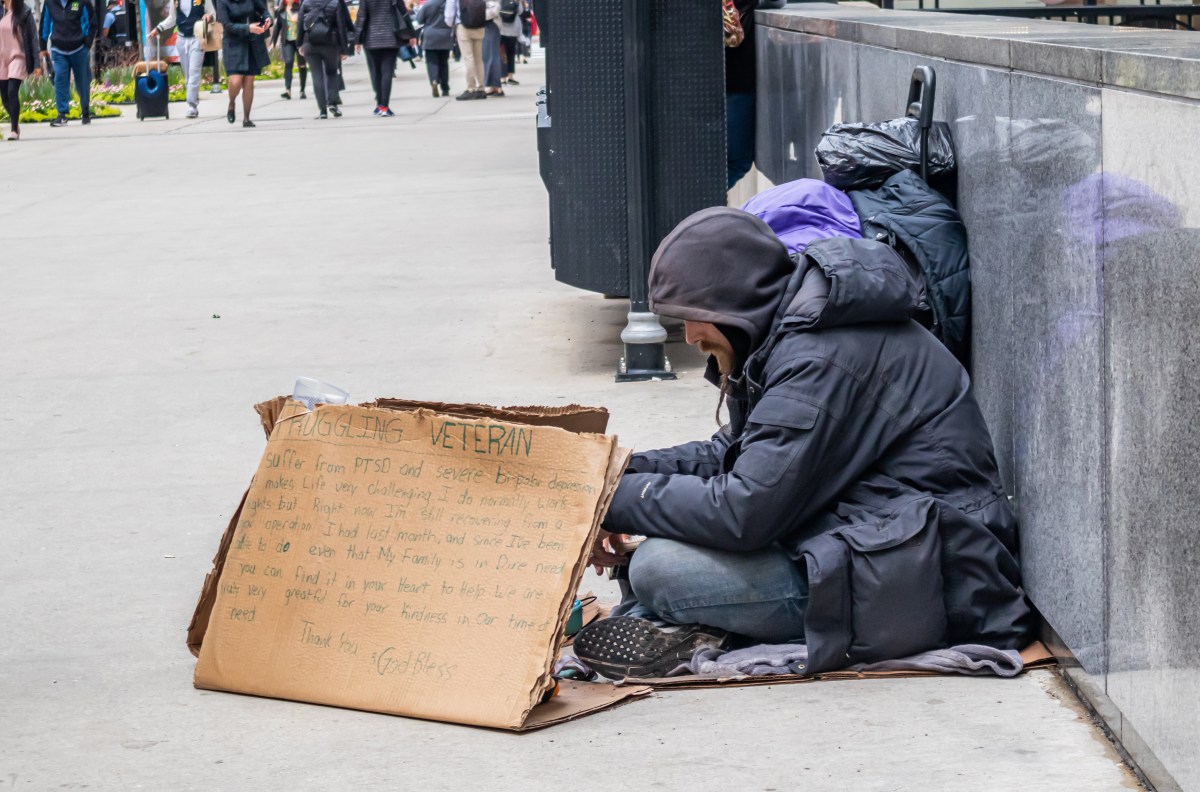
Veteran homelessness in America has reached a statistical milestone that should prompt a harder question: what will it take to make that milestone the beginning of the end, rather than simply another number we celebrate? According to the Department of Veterans Affairs, an estimated 32,495 veterans experienced homelessness on a single night in January 2025, the lowest figure recorded since the federal government began reporting veteran homelessness through the Point-in-Time Count in 2009. The number represents a 56.1 percent decline from 2010.
Yet 13,518 veterans were still experiencing homelessness without shelter. That distinction matters. A record low is meaningful progress, but it is not the same thing as an empty street.
The wider housing picture makes the challenge harder to ignore. Department of Housing and Urban Development, an estimated 745,652 people were experiencing homelessness across the United States on a single night in January 2025, including 266,320 people experiencing unsheltered homelessness. Veteran homelessness has declined substantially even as the broader housing crisis remains severe.
The question, then, is not whether government programs, charities and nonprofit organizations have made a difference. The question is whether those approaches alone can create enough housing capacity, with enough consistency, to reach the people who remain outside the system. Charitable funding is essential, but charity has a structural limitation: it depends on someone continuing to provide the money.
When the fundraising cycle ends, the operating model can become vulnerable. If we want to house veterans at a scale that matches the size of the problem, we need to think about housing as infrastructure and capital as part of the solution. That means asking a different question.
Instead of asking how much money can be donated to veteran housing, what if we asked how capital could be deployed into housing that generates enough revenue to sustain itself and finance additional housing? That is the model I have become interested in through my work in real estate and my experience as a veteran. As the founder of Global Investment Capital Group, I have spent years working with income-producing real estate and thinking about how properties can generate sustainable cash flow.
Extract — continue reading at the source.