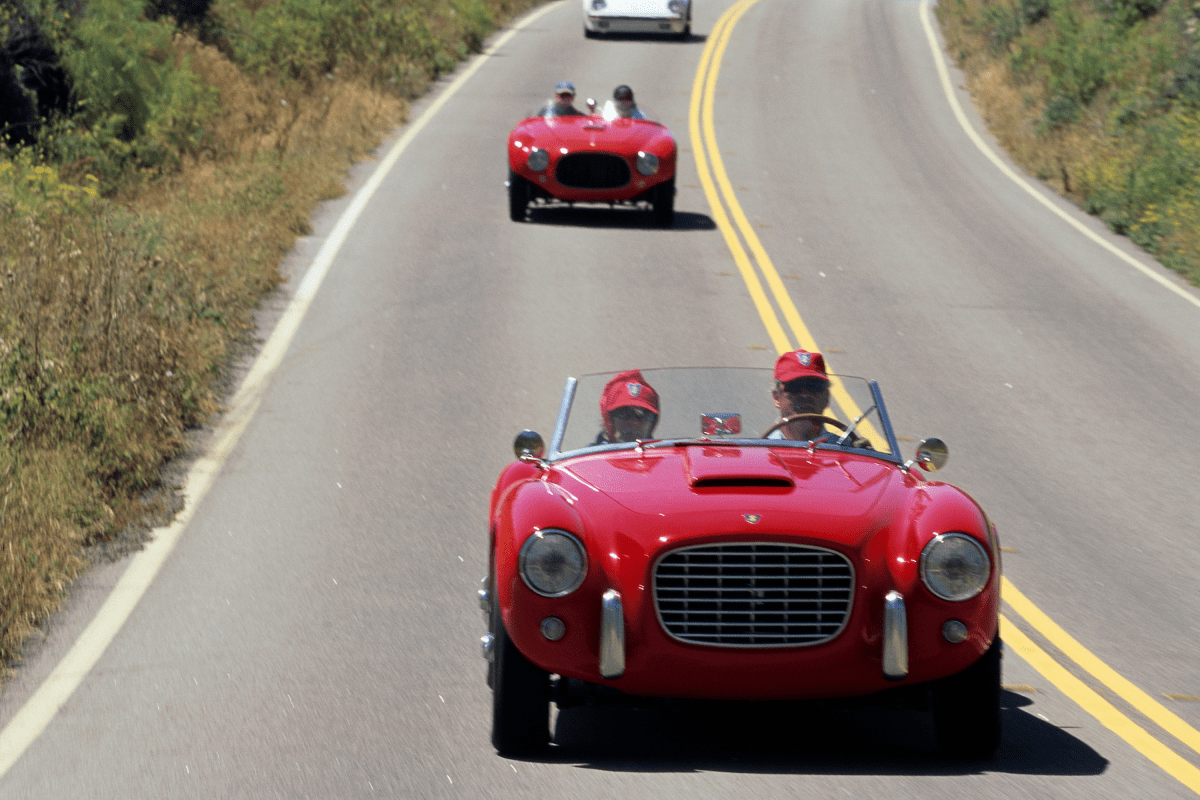
California classic car owners are one step closer to receiving relief from the state's long-running vehicle emissions testing requirements after lawmakers approved a bill known as "Jay Leno's Law," sending it to Governor Gavin Newsom's desk for consideration. Senate Bill 1392, authored by Democratic Senator Dave Cortese and coauthored by Republican Senator Shannon Grove, passed the California Legislature on August 31 with strong bipartisan support. If signed by Newsom, it would create a phased exemption from smog-check requirements for certain collector vehicles built between the 1976 and 1985 model years.
The legislation has become widely known as "Jay Leno's Law" after the famed comedian and automotive collector publicly backed the measure. The bill itself states that it "may be cited as Jay Leno's Law." Under the enrolled version of SB 1392, qualifying collector vehicles manufactured before the 1981 model year would become exempt from California's smog-check program beginning January 1, 2028. The exemption would then expand by one model year annually until 2033, when vehicles manufactured before the 1986 model year would qualify.
The proposal wouldn’t eliminate smog checks for all older cars. To qualify, vehicles must meet the bill's collector-use requirements, and owners must either carry collector-car insurance or demonstrate that the vehicle is driven fewer than 1,000 miles per year. California's existing exemption for vehicles manufactured before the 1976 model year would remain unchanged.
According to the Legislature's analysis, the measure is intended to apply to vehicles used primarily for shows, parades, charitable functions, and historical exhibitions rather than daily transportation. Supporters argue that collector vehicles represent only a small fraction of cars on California roads and are typically driven sparingly, limiting their overall contribution to emissions. "California can protect clean air without erasing our automotive history," Cortese said in a statement following the bill's passage.
"A classic car that spends most of its life in a garage and comes out for a parade, car show, or charity event is not the same as a daily commuter, and our laws should recognize that." Specialty Equipment Market Association (SEMA) CEO Mike Spagnola described the vote as a landmark moment for the state's automotive community, saying the legislation would help preserve California's car culture and support businesses involved in vehicle restoration and preservation. He added that the “bipartisan victory is a product of California’s automotive community uniting to remind the state’s lawmakers of the cultural significance of our cars and trucks, and of our sacred charge to pass this shared heritage on to the next generation.” SEMA, which is also one of the bill's principal backers, said California's automotive aftermarket industry supports nearly 150,000 jobs and generates more than $40 billion in annual economic activity. Earlier this year, Hagerty, an organization that provides insurance for classic, collector, antique, and enthusiast vehicles, reported that previous attempts to expand exemptions had repeatedly stalled despite strong support among enthusiasts, making SB 1392's progress through both legislative chambers especially noteworthy.
The legislation also drew support from California's lowrider community, which submitted more than 1,700 letters backing the proposal, according to SEMA. The Fédération Internationale de l'Automobile's International Historical Commission also endorsed the measure, citing its attempt to balance vehicle preservation with environmental objectives. With legislative approval secured, attention now turns to Newsom, who must decide whether to sign or veto the measure.
Extract — continue reading at the source.