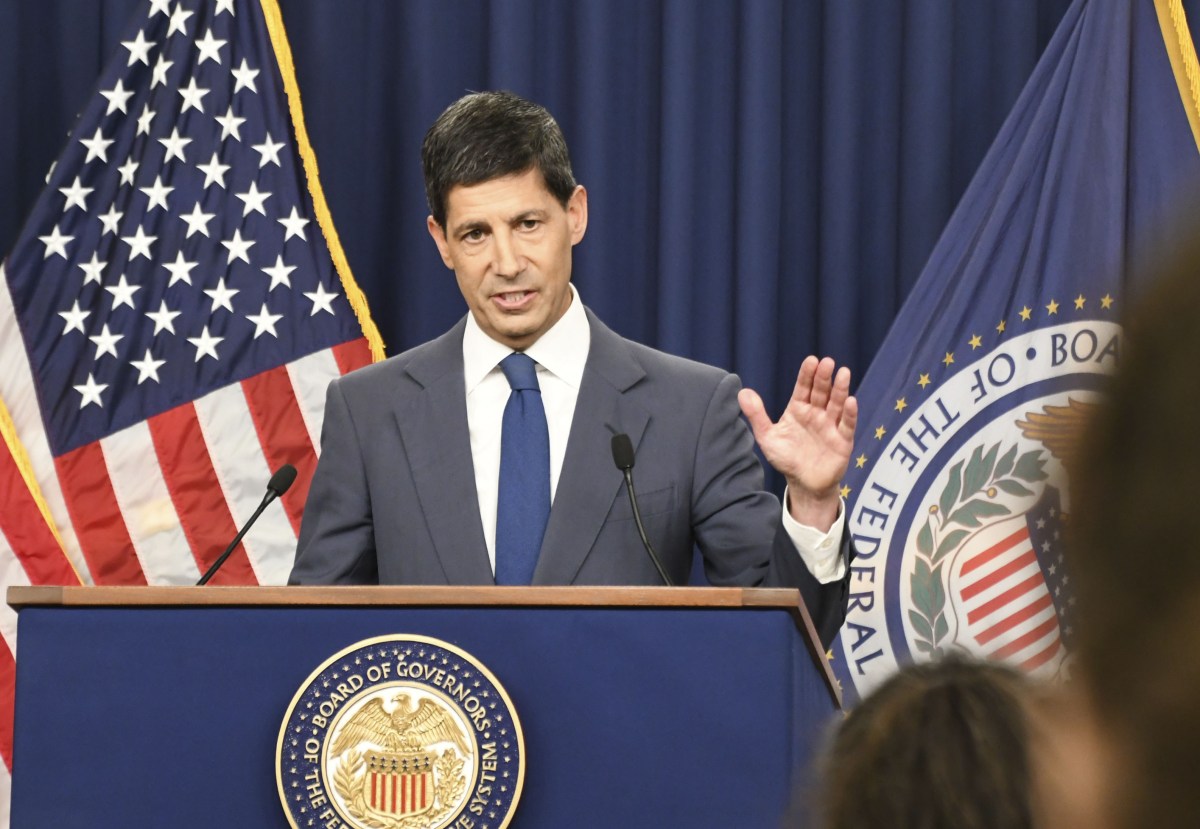
BRUSSELS — European Commission chief Ursula von der Leyen on Wednesday proposed the EU take on a stronger role in security and tackling hybrid threats, reigniting a long-running turf battle with NATO over Europe's defense. Speaking at her annual policy address in Strasbourg, von der Leyen pitched a new leaders’ crisis decision-making forum together with Canada, Norway, Ukraine and the U.K. She also floated a new urgent consultation procedure for hybrid attacks modeled on NATO’s Article 4.
Von der Leyen insisted the EU would be “strengthening work with NATO,” but still suggested Brussels would push to carve out a greater role for itself. They are ramping up every day. So, as the threat level climbs, so must Europe's preparedness,” von der Leyen said.
The security council is supposed to help the EU react more decisively. NATO itself has struggled with how to respond to Russian provocations below the threshold of direct military attack. The last time Article 4 was invoked — a formal request to consult allies due to a security threat — was by Estonia last year after three Russian fighter jets violated the country's airspace.
No other capital has invoked it since. There are few details on von der Leyen’s ideas. Earlier European security council proposals — which the EU has rejected — include the idea of capitals delegating some defense decision-making powers to a smaller group of leaders in a crisis.
An Emergency Security Protocol, meanwhile, would allow one capital to convene all fellow EU members in a crisis “to coordinate a European response, to deter further escalation and to mitigate the impact,” von der Leyen said — almost identical to NATO’s Article 4 procedure. In theory, a security council could help in “coordinating quick action” between the EU, NATO and other partners in a crisis that is “flexible across institutions,” said Giuseppe Spatafora, an analyst at the EU Institute for Security Studies. The emergency protocol, meanwhile, could protect non-NATO countries like Ireland, he said.
But the alliance insists it should take the lead on security. Not all NATO allies are skeptical. On hybrid attacks, the “EU is better placed to put in place a mechanism to react, because it has more diverse tools than NATO,” said a second senior NATO diplomat.
Extract — continue reading at the source.