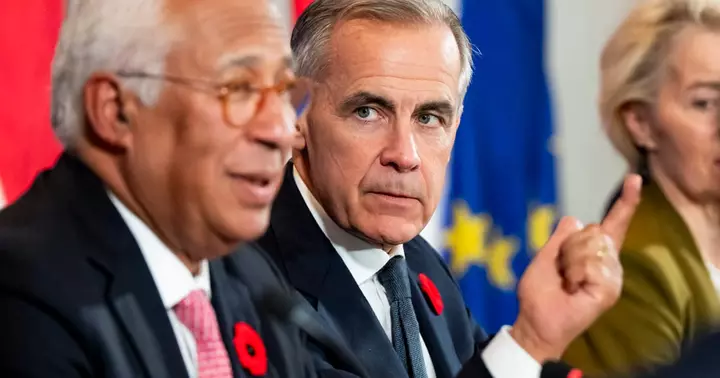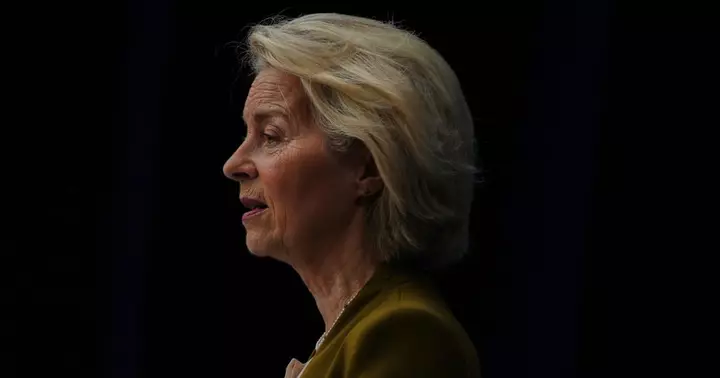
MONTREAL, Canada — European Commission President Ursula von der Leyen said Thursday she aims to bring EU-Canada relations to the “highest level possible,” touting potential associate member status in the bloc for Ottawa despite capitals having rejected the term a day earlier. Von der Leyen’s overture comes on the eve of a landmark EU-Canada summit in Montreal where she and Prime Minister Mark Carney are due to announce plans for deeper cooperation against a backdrop of rising autocracy globally and unpredictable relations with U.S. Germany has led the opposition to using the term, according to EU diplomats.
The Commission president said in her speech that talks about associate membership would focus on deeper cooperation across AI, climate and energy policy, as well as bolstering shared work between the European Commission and the Canadian government as well as “Parliament to Parliament” and “Court to Court,” a reference to the European Court of Justice and Canada’s Supreme Court. Such a status, she said, would be open “only to our closest partners outside of Europe, who are ready to open a new frontier together — and to chart the course together, to think beyond the terms of our partnership today, toward the most ambitious vision we can build.” Von der Leyen’s use of the term associate membership — which she first mentioned in September — is likely to rub some EU capitals the wrong way after a group of countries including France, Greece and Germany objected to including a reference to the term in a joint EU-Canada statement that was seen by POLITICO and is due to be published on Friday. After days of talks, EU countries opted for softer language to describe the two sides’ future relations, including the “Alliance for the Future” — the term used by the Canadian side — as well as an “even closer association ... short of full membership.” EU diplomats have told POLITICO that while capitals support the broader aim of closer ties with Canada, they are wary of offering a status that has never been proposed before and whose legal contours remain undefined.
Berlin had previously floated associate member status for Ukraine, including specific privileges such as observer status in the European Commission, but that effort was rejected. Reacting to reports that EU countries would drop the “associate member” term, Carney said on Tuesday: “The good news is it doesn’t matter about specific names or nomenclature. What matters is the difference that it will make to the lives of Canadians … and Canada as a whole becoming a more independent, more sovereign nation, so we can live our lives as we choose.” Both Carney and von der Leyen have cast this week’s summit as part of a broader effort to deepen ties at a time when both Ottawa and Brussels have clashed with the Trump administration, with von der Leyen warning in her speech about “deeper decay in the international order.” “Alliances and assumptions that have enabled our prosperity and security are changing rapidly, and each nation or region is looking at how to secure its own interests and its own independence,” she said.
Extract — continue reading at the source.