A young Walloon officer called Alphonse van Worden travels through the Sierra Morena on his way to Madrid to join the Spanish army. Along the way he has an erotic encounter with two demonic Moorish sisters, falls foul of shape-shifting apparitions and is tested by a Jewish Kabbalist attempting to use mystical formulas to control spirits and decipher the universe. All these things happen in what might be one of the least-known great novels of the European canon, an encyclopedic roman-monde written more than 200 years ago called The Manuscript Found in Saragossa.
Structured like a Chinese box, with narratives nested within narratives, the book spans a period from the birth of Jesus Christ up to the beginning of the 19th century, and evokes places ranging from the Mediterranean and north Africa to Mexico, Peru and the Philippines. Salman Rushdie once described it in the Guardian as redolent of “the most brilliant modern novels, as if it were written yesterday”, while the curators of a new exhibition in Switzerland hail it as “a western version of One Thousand and One Nights”. The fact that the book was written (in French) by a Polish count and the first fragments of it were published in 1804 in St Petersburg may explain why it remains relatively little-known in western Europe.
That its globalised vision of unfettered human intercourse was dreamed up not in the familiar western European centres of colonial power – Paris and London – but the continent’s eastern reaches, however, may also be the reason why it’s attracting new attention now. Its author, Jan Potocki (1761-1815), was born in Pików, in the Polish-Lithuanian commonwealth, but educated in Orbe, Switzerland – not far from the small village of Montricher where a newly opened exhibition at the Fondation Jan Michalski explores the books origins.“He was one of the very few Poles with a deep interest in Jewish culture as it was cultivated by rabbis in eastern Poland at the time, in what is now Ukraine,” says François Rosset, one of the two curators of The Manuscript Found in Saragossa: An Investigation into a World Novel. After his death, an inventory of his possessions at his Uładówka home revealed a silver sugar bowl with a missing lid.
There is some speculation that an ailing Potocki filed down the knob of the lid to cast the bullet that killed him, sparking outlandish theories that he believed he was a werewolf. The novel he left behind was to have an almost equally extraordinary afterlife. For many years, it circulated in fragmentary and competing versions.
Among the most widely read was the English-language Penguin edition, beautifully translated by Ian Maclean, which was based on René Radrizzani’s revised French-language edition of 1990. But the notion that Radrizzani’s version represented the most faithful text was overturned in 2002, when the exhibition’s co-curator Dominique Triaire discovered eight manuscripts that had been miscataloged in Polish archives. Potocki’s book has fervent admirers among contemporary novelists like the French Prix Goncourt winner Mathias Énard and Poland’s 2018 Nobel prize laureate Olga Tokarczuk, who has described it as part of her “literary first-aid kit”: “I open a page by chance and I draw a good dose of creative energy.
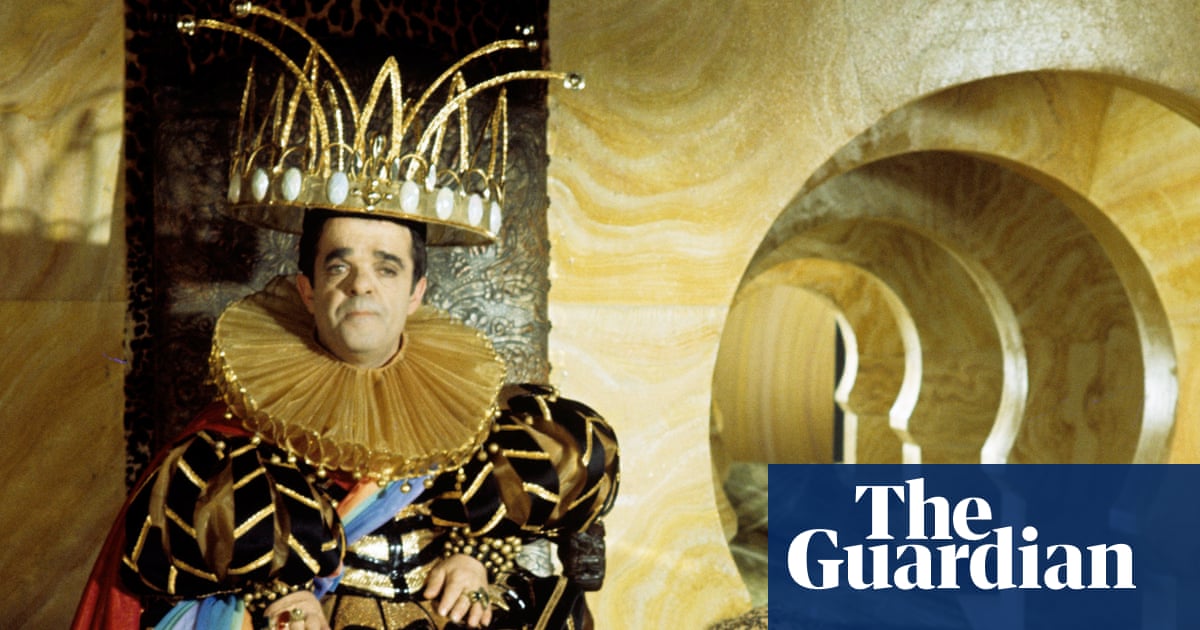
All of the vital force of literature is there in its purest state.” But it’s fair to say that because of its inherent weirdness The Manuscript from Saragossa has never managed to establish itself as a classic of the European canon in the way that other roman-mondes such as Don Quixote or Boccaccio’s Decameron have. Yet, precisely because it is so open to interpretation, its influence on visual artists has been incredibly varied. At the Swiss exhibition, a video screen shows the opening four minutes of Polish director Wojciech Has’s 1965 film adaptation of the novel, which brings all its surreal and comic qualities vividly to life, as soldiers run through the ruins of Saragossa to the strains of Beethoven’s Ode to Joy.
Extract — continue reading at the source.