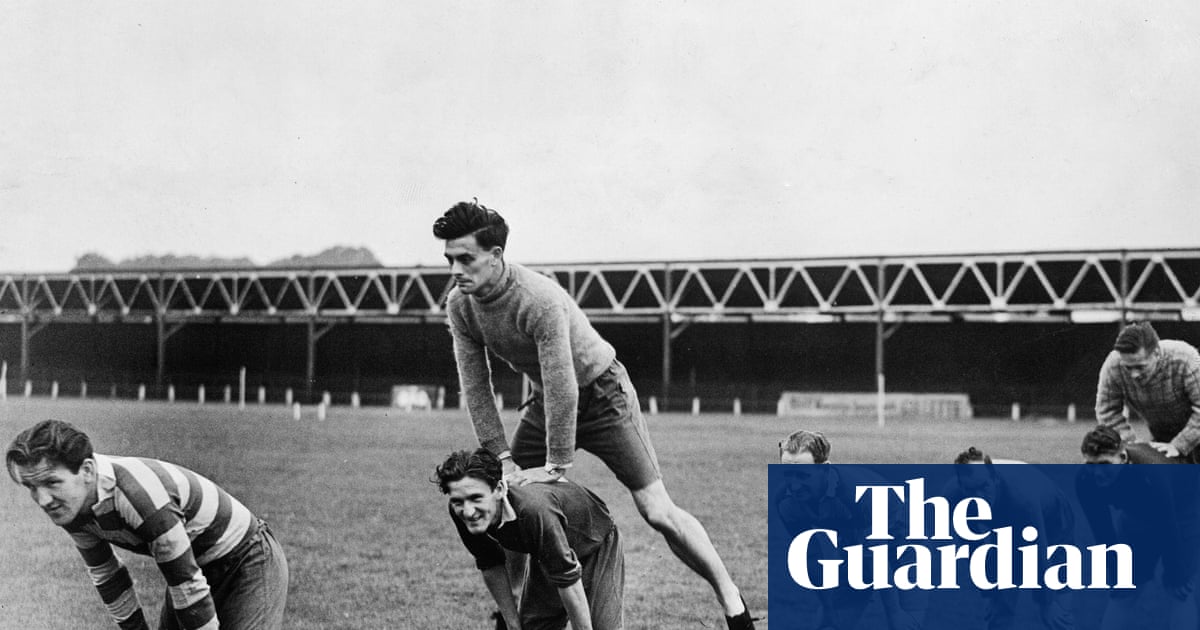
Warning: Aboriginal and Torres Strait Islander readers are advised that this article may contain the image and name of an Indigenous Australian who has died. The story has the ingredients of a Hollywood blockbuster, including Marvel star Ryan Reynolds, with a confounding ending more befitting an indie production. Its protagonist is Peter Baines, a trailblazer as a black footballer and the first Indigenous Australian to play football overseas.
Wrexham are recognised internationally having enjoyed an improbable recent rise through the English Football League. The mystery of the club’s first black player has likewise drawn increasing interest by writers and historians. Yet his true origin has eluded all.
Playing in the 1930s and 1940s for clubs including Wrexham, Oldham, Crewe and Hartlepool, Baines scored 27 goals in 35 games in one wartime season for the Red Dragons, the club bought by Reynolds and co-owner Rob McElhenney in 2021. Long before Disney’s plotlines at the Racecourse Ground, Baines was a legitimate footballing pioneer who also played and scored for Liverpool in an exhibition match as a wartime guest player. The newspapers of the time were gushing.
Baines was “a real go-ahead player” and “one of the best number eights in postwar combination football”. After Bainesscored at Anfield, it would be more than three decades until Howard Gayle, widely recognised as Liverpool’s first black player, made his debut. Gayle is celebrated for his playing career and work with Show Racism the Red Card, and was offered, and turned down, an MBE in 2016.
Baines has a different place in history. The man newspapers called Peter “Darkie” Baines died almost 30 years ago in Manchester at age 77. Australian football writer Trevor Thompson first came across the tale of Baines more than 20 years ago, barely a few years after the former player’s death.
An article from 1944 in Hartlepool’s Northern Daily Mail caught the eye of Thompson, a longtime journalist from Sydney. But it had buried the lead. That lingers in my head.” “There’s so many of these missing histories,” says Prof John Maynard from the University of Newcastle, a Worimi man and a prominent voice in Australian Indigenous history.
Extract — continue reading at the source.