UNITED NATIONS — Colombian Vice President José Manuel Restrepo said his country is embracing President Donald Trump’s push for a new security alliance across the Western Hemisphere, but drew a clear line on the role American forces would play inside Colombia, telling Fox News Digital that Colombian troops — not U.S. forces — will carry out operations against the country’s armed groups. Restrepo spoke with Fox News Digital in an on-camera interview days after joining Trump and other regional leaders at a Shield of the Americas meeting on the sidelines of the UN General Assembly in New York, where Trump called the initiative the "largest and most powerful alliance for economic and national security ever to convene in the Western Hemisphere." Trump urged members to treat what he called "narco terrorists" as common threats and impose sanctions on U.S.-designated terrorist organizations. Restrepo said he personally discussed the region’s changing political and security landscape with Trump.
The shift in Colombia comes amid a broader political realignment across Latin America, with De La Espriella’s June victory adding Colombia to a group of countries including Argentina, Chile, Ecuador, Bolivia and Panama that have moved to the right, fueled in part by voter concerns over crime, economic weakness and political instability. TRUMP ALLY 'EL TIGRE' SWORN IN AS COLOMBIA'S NEW PRESIDENT AMID CONTINENT'S RIGHTWARD SHIFT "There is a wave of freedom, a wave of democracy, a wave of free market. … There is a new momentum for the region and we have to take advantage of that momentum. That's what I said to President Trump," Restrepo told Fox News Digital.
"If we want to keep and preserve democracy in the region, the Shield of the Americas is going to be the best opportunity to do it." Asked what Trump told him, Restrepo said the president agreed and expressed respect for Colombian President Abelardo De La Espriella. "Colombia is a new partner. In my opinion, it's one of the most important partners for the United States in the region," Restrepo said.
That partnership is already being tested in the fight against drug trafficking and armed groups. WHITE HOUSE HIGHLIGHTS 'STEEPEST' EVER DECLINE IN US CASUALTIES FROM CARTELS AMID BOAT STRIKES In August, Defense Secretary Pete Hegseth said Colombia had authorized "joint military operations to destroy terrorists and terror networks" and told reporters that Washington had discussed possible joint strikes against groups including the National Liberation Army, or ELN, which the U.S. designates as a terrorist organization, and remnants of the Revolutionary Armed Forces of Colombia. "Designated terrorist organizations, with partnered governments, will be legitimate targets of the United States government," including in Colombia, Hegseth said when asked whether such operations were expected, according to .
But when pressed by Fox News Digital on whether joint U.S.-Colombian strikes remained an option, Restrepo appeared to narrow the scope of direct American involvement. "The United States helps us on security, helps us information, helps us on technology, but the public forces of Colombia are those who are going to act in those places," he said. US FORCES OBLITERATE SUSPECTED 'NARCO-TERRORIST' VESSEL IN LETHAL EASTERN PACIFIC STRIKE, KILLING 3 Asked specifically whether Colombia would have the "boots on the ground," Restrepo replied: "We will have our group, our public forces on the ground." The tougher posture comes as Colombia confronts renewed violence from armed and drug-trafficking groups.
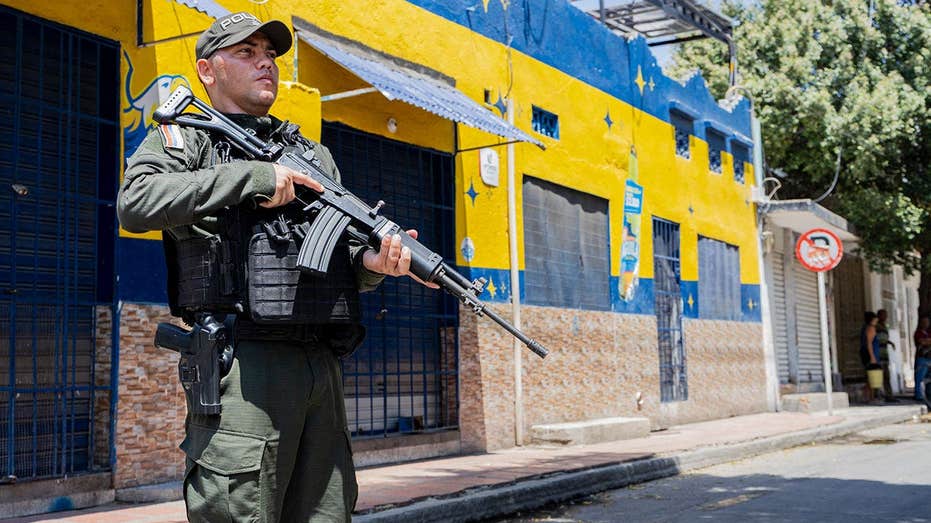
This week, De La Espriella ordered the military into Santa Marta after the Autodefensas Conquistadoras de la Sierra Nevada, an illegal armed group involved in drug trafficking, responded to the killing of one of its senior leaders with an "armed strike," threats, roadblocks and attacks that left businesses shuttered and public transportation disrupted. More than 500 soldiers and 600 police officers were deployed, according to the Colombian presidency. The new government is also seeking to reverse former President Gustavo Petro’s "total peace" policy, which pursued negotiations with several armed organizations.
Extract — continue reading at the source.