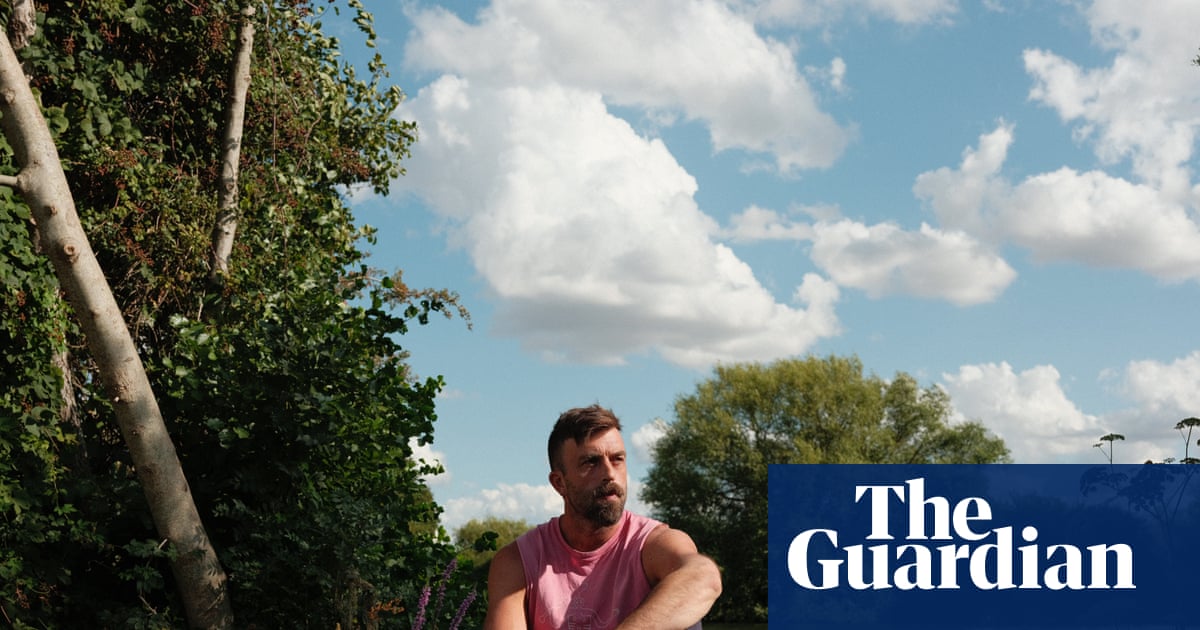
On the banks of the Thames in South Oxfordshire, the Hardwick estate has been owned by the Rose family for generations. When Sir Charles Rose, a banker, sportsman, yachtsman and aviator, sped through the lanes in his Rolls-Royce in the early days of motoring, he inspired Kenneth Grahame to create Mr Toad in The Wind in the Willows. Grahame’s character became a symbol of decadent aristocracy whose foolishness leads to the temporary loss of a fine house to weasel-socialists.
Now Toad Hall has been taken over for good and Nick Hayes, artist, writer and co-founder of the Right to Roam campaign, has had a riverside view of this striking turn of events. When Hayes, who lives on a beautiful wide-beamed barge on the Thames, became the Hardwick estate’s artist-in-residence, he discovered that Rose’s heirs are, in effect, disinheriting themselves. The estate is gradually being turned into a charity which will be run by the tenants and the alternative community that has grown up in its shelter.
The story of this peaceful revolution unfolds in his new book, The Medicine Tree, a sweeping alternative history of England that reaches across the globe for examples of colonial oppression and Indigenous enlightenment. Hayes poses some big questions. Why do English people lack a culture of connection with their land?
And how might we forge a new one? Indigenous societies have stories, songs, philosophies and religions that bind them to their terrain. Such sacred traditions are still alive in many countries and can encourage modern societies to live sustainably, resist pollution and extraction, or create assertive legal rights for nature, as established on New Zealand’s Whanganui River.
It is “an act of extreme exceptionalism to suppose that we were the only country on Earth not to have had a spiritual, mythopoetic relationship with the land,” Hayes writes. England is in desperate need of repair in terms of epidemics of loneliness, in terms of one in six species going extinct.” There was no one moment when England’s land culture was lost, Hayes argues, but “a very steady letting of England’s veins” over 2,000 years: Christianity took away animism, while myth and folklore was lost with enclosure and the agricultural and industrial revolutions. The Medicine Tree is his attempt to plot a recreation of a useful English land culture: not nationalistic, not nostalgic and not off-the-peg folklore as invented by, say, Robert Graves in The White Goddess.
Hayes was inspired by poet and storyteller Hugh Lupton’s idea of “restorying the landscape” to take one local tree, his “medicine tree”, as a symbol of his story. This soaring tree, beside the busy Thames path, turns out to be a hybrid of a (native) black poplar and an eastern cottonwood, brought to Europe from North America by French colonists. It invites a comparison between disparate cultures, not least because in both Indigenous and old European societies the poplar stood for community.
Extract — continue reading at the source.


