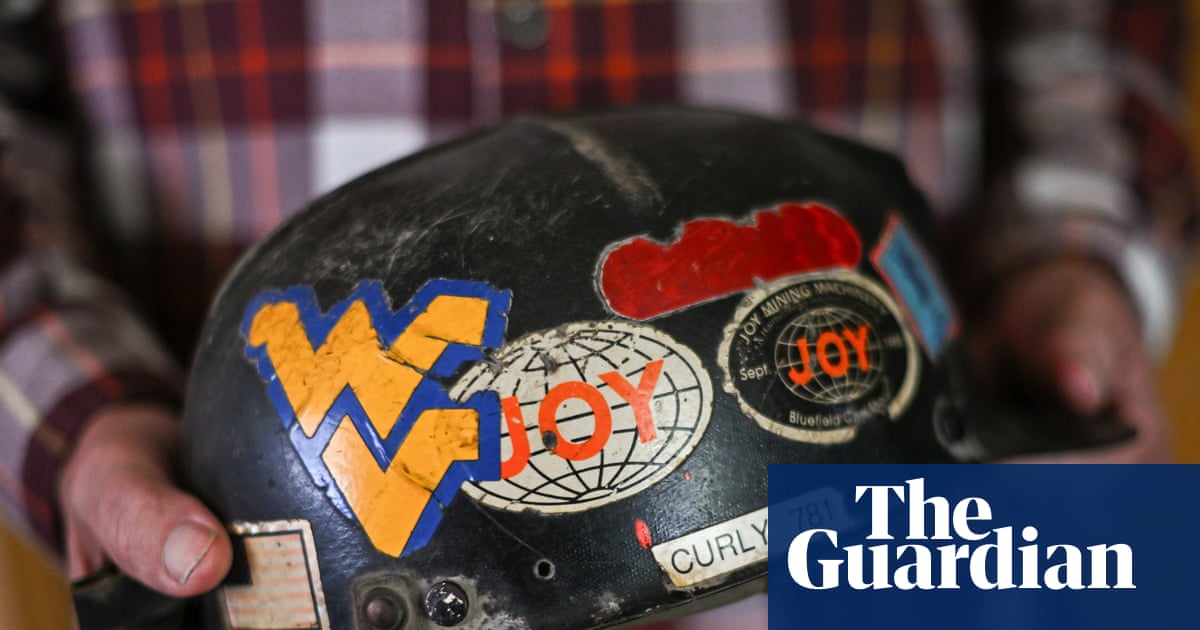
Silicosis is one of the oldest workplace hazards and public health experts have known for decades how to prevent it. Yet a new wave of workers, from Appalachian coalminers to Latino countertop fabrication workers, are developing and dying from the disease as industry fights new protections and regulators fail to defend the rules that could protect them. John Robinson’s grandfather developed black lung back when coalminers could spend decades in the mines before being diagnosed with the disease, often dying in their 60s, 70s and 80s.
But Robinson, who mined for coal in south-west Virginia, was diagnosed when he was 47. He’s part of a trend that has grown over the past two decades in central Appalachia, where more coalminers are developing black lung disease at younger ages. Something’s causing it,” Robinson said.
It’s such an outbreak right now they can’t hide it.” Around 2018, doctors throughout the US started documenting outbreaks of lung disease among countertop fabrication workers too. There were seven workers diagnosed in Colorado and another 12 cases in Texas. That same year, a 38-year-old Hispanic man in California, whose work involved grinding stone edges at a countertop fabrication company, died of respiratory failure.
Public health experts say the cause of both outbreaks is inhalation of tiny crystalline silica dust on the job and prevention involves limiting workers’ exposure through sampling and tamping down the dust to stop particles from becoming airborne. This means different things depending on the occupation. For miners, the 2024 Mine Safety and Health Administration (Msha) rule years in the making and passed under the Biden administration was supposed to address the occupational hazard.
But within months of the rule going into effect, industry groups petitioned to overturn it. When the Trump administration failed to defend the rule, the eighth circuit court of appeals stayed it and Msha notified the court that it will reconsider portions of the rule impacted by the industry challenge. The National Stone, Sand & Gravel Association (NSSGA) led the legal challenge of Msha’s 2024 silica dust rule.
The trade group represents sand, gravel and stone mining companies. NSSGA did not oppose the rule’s reduction of the permissible exposure limit from 100 micrograms per cubic meter to 50 micrograms per cubic meter per eight-hour shift, said Kerry Lynch, NSSGA’s senior director of communications. Lynch did not respond to questions about why it brought the legal challenge of the rule.
Extract — continue reading at the source.