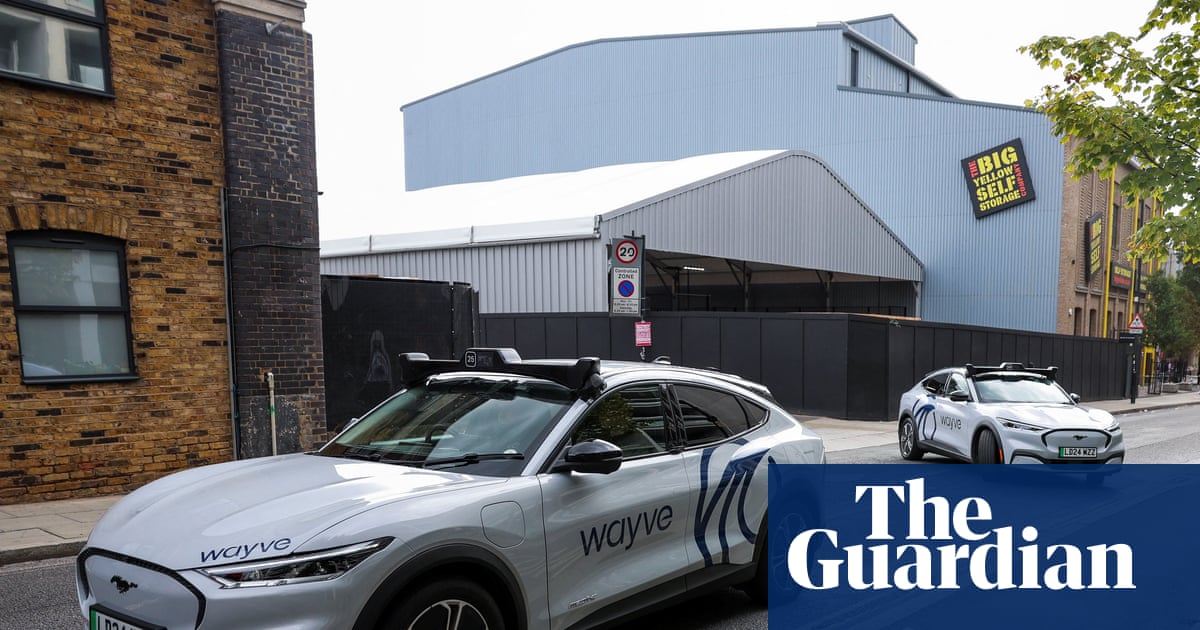
For passengers in Britain who want to try the latest ride, robotaxis are eagerly awaited: more than 100,000 are on Uber’s waitlist in London after the first UK services started in September. Others view them with trepidation. I knew change would come.
But I thought it would come with a solution for us.” London’s rollout is facing mounting opposition, from drivers fearing for their future and the capital’s politicians, with a critical report demanding Transport for London (TfL) is given full powers to permit or suspend operations. Drivers will this weekend protest outside the headquarters and depot of Wayve, which has partnered with Uber to supply London’s first autonomous cabs for hire. The direct action marks the latest salvo between unions and the global tech companies, whose driverless cars trials expanded this week to Manchester, with fears that hundreds of thousands of driver jobs could be lost.
Although only a handful of driverless cars now ply the streets, Uber has announced plans to deploy 100,000 Nvidia robotaxis worldwide starting next year, and its senior executives have talked about all new cars being autonomous by 2040. In San Francisco, Waymo’s fully autonomous cars already operate more than a quarter of all rides. The mayor of London, Sadiq Khan, and bosses at TfL have expressed unease, and the London assembly’s transport committee has called for the government to devolve authority over autonomous taxi services.
In a report published this week, the committee said there was “considerable uncertainty around many of the claimed benefits of autonomous passenger vehicles”, and fears over the impact on public transport and congestion, as well as safeguarding and accessibility for disabled passengers. The chair, Caroline Russell, said they were not convinced that London should welcome robotaxis. TfL is understood to see little benefit in the addition of robotaxi services to its crowded city streets, even if the numbers turn out to be relatively few in comparison to the wider traffic.
For the robotaxi companies, London is a tempting challenge to crack. Commercially, it is one of the biggest private hire markets in the world and a foothold in Europe; logistically, it is a tricky test bed to prove their vehicles are viable anywhere. Compared with the grid system of US cities in particular, it presents narrower, twisting and unruly streets, without the kind of rules on jaywalking that give cars priority on the road.
Under current rules, TfL licenses passenger services, but the government decides whether autonomous vehicles can operate. TfL has approved the start of Uber and Wayve’s limited robotaxi services, which retain a human safety driver in the front seat. As it stands, when it comes to fully autonomous passenger services, the Department for Transport would issue permits for robotaxis with TfL only able to grant or refuse consent, rather than regulate their usage on London’s streets.
Extract — continue reading at the source.