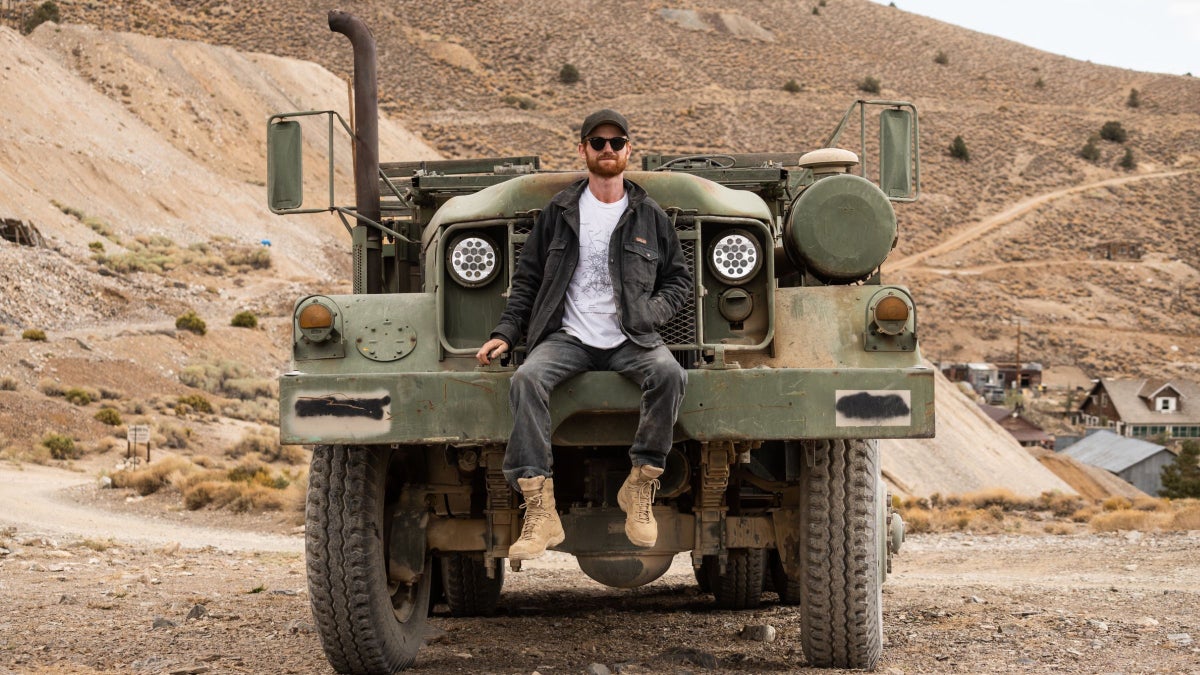
If you ever plan on riding out a pandemic in an abandoned mining town at 8,200 feet, there are a few things I’d recommend bringing: a four-wheel-drive truck, more than a few days of food, and at least some decent boots. Instead, I arrived at Cerro Gordo, California, in the middle of a blizzard in March 2020, driving a base model Tacoma, and wearing white Allbirds, a few inches of ankle showing. A quarter mile from town, my bald tires slid off the road, the truck got stuck, and I walked the rest of the way in.
Six years later, I’m still here. I’ve traded my Allbird slippers for steel-toed boots and my Tacoma for a Tundra. And most of the things that once felt absurd—like getting buried in snow in March—barely register.
My mailbox is an hour away and 4,500 feet in elevation below me. My driveway is an eight-mile dirt road that is almost never maintained. My bathroom is an outhouse where, on windy days, dust of questionable origin comes up through the floorboards.
In the winter, sometimes I wake up to the thermometer reading 17 degrees. But the strangest thing about living here, after a decade of living in cities like New York and Austin, is how quickly it stops feeling strange at all. Maybe I shouldn’t be surprised.
Thousands of people have chosen to live in Cerro Gordo over the years. In the late 1800s, it was home to California’s largest silver mine, surrounded by hundreds of buildings and thousands of residents. There were at least five hotels, seven saloons, two brothels, three general stores, multiple restaurants, barber shops, and even doctors and lawyers—but no jail.
Then the ore ran out, the mines slowed down, and people started to leave. Major fires in 1877 and 1880 took most of the buildings. Little by little, the desert began to reclaim the town and its stories.
Extract — continue reading at the source.