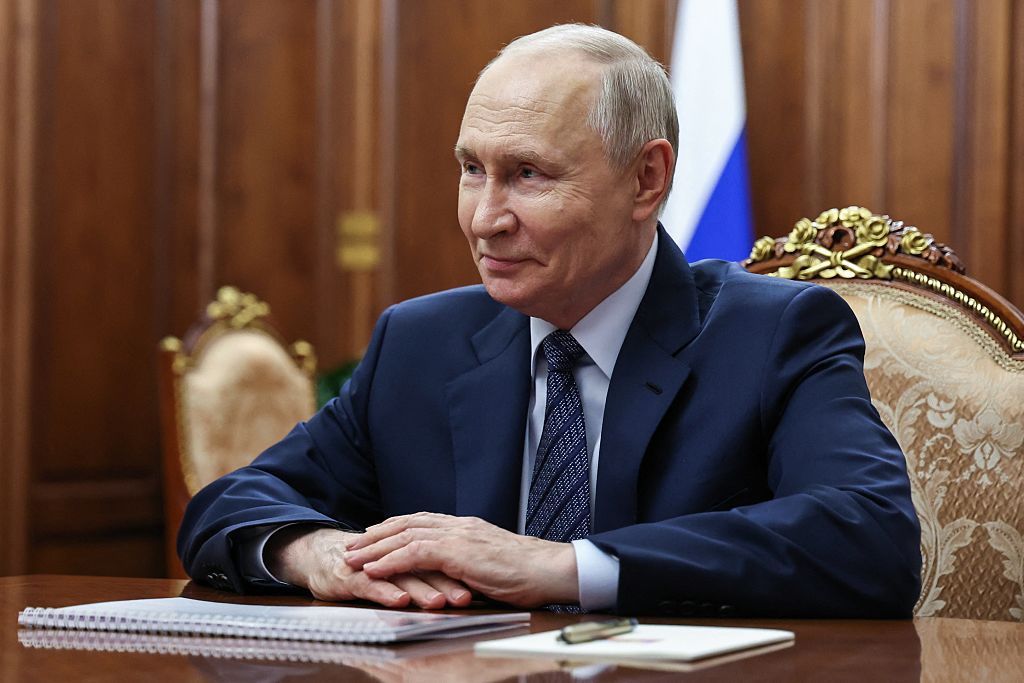
Russia's electoral commission on Monday said that United Russia, the ruling party aligned with President Vladimir Putin, is projected to win the parliamentary election that has been widely criticized as a “sham.” The Central Election Commission (CEC) reported that 95% of the votes have been counted after a three-day election that began last Friday and ended Sunday. While the final counts are not expected to be certified until later this week, preliminary figures show that the pro-Kremlin party is projected to win a record 355 seats in the country’s 450-seat Duma, the lower house of parliament, giving United Russia an even larger supermajority than its 2016 record high of 343 seats. Read More: Why the Outcome of Russia's First Parliamentary Elections in Years Is All But Assured Voter turnout was high at just over 59%, according to a briefing from the CEC.
The election is the first parliamentary poll since Russia's full-scale invasion of Ukraine in 2022, and the Kremlin has cast it as a referendum on support for what it calls a “special military operation” rather than a war. It was also, therefore, the first parliamentary election to include voters from four partly occupied regions of Ukraine—Donetsk, Luhansk, Kherson and Zaporizhzhia—which Moscow claimed to annex illegally in 2022 but does not fully control. Voting also was held in Crimea, which was illegally annexed in 2014.
Despite the vote being framed as an opportunity for citizens to express sentiments about the war, it is widely considered an illusion of choice: Russia’s supreme court last month banned the federal candidate list of the one registered antiwar party, Yabloko, from participating in the State Duma. Kremlin spokesperson Dmitry Peskov told members of the press Monday that the election showed how Russians support the country’s leader and “point to the highest level of consolidation within Russian society around the head of state.” Experts believe that the election will allow the Kremlin to continue justifying its war with Ukraine—and it could further consolidate Putin’s power. United Russia’s supermajority could embolden parliament to pass “drastic legislation” with regard to future war efforts, Szakonyi says.
Although United Russia already held a constitutional supermajority in the outgoing Duma, the larger margin could embolden lawmakers to pursue more severe measures. He says, for example, that the party could support legislation expanding military recruitment or defending “greater investment in the war effort, at the expense of healthcare, education, and domestic spending in general.” “It is highly possible that they will at least kind of build on these electoral results when they demand more from voters and citizens in the next couple months in order to win the war,” he continues. The elections could also provide political backing for a new mobilization campaign, an attempt to inject new momentum into Russia’s offensive campaign and replenish battlefield losses.
Ukraine President Volodymyr Zelenskyy said last month that he believes Russia is planning to draft an additional 300,000 troops for the war effort. We believe this will not take place in the major cities,” Zelenskyy said on Aug. 23. Two days later, at the Eastern Economic Forum in Vladivostok, Putin emphasized that there “is no scenario today that would require mobilization.” More than four years into the war, Russians are facing rising living costs amid inflation that some economists attribute partly to military spending, with the prices of several food staples in rising this year.
The country is also experiencing fuel shortages as Ukraine continues to strategically target its oil refineries and depots. President Donald Trump has criticized the tactic in recent weeks, arguing that it is impacting global fuel prices. Energy-market data over the past six months, however, shows that the ongoing conflict in the Middle East and subsequent constrictions of major oil passageways like the Strait of Hormuz is the much larger disruption to global oil and diesel supplies.
Extract — continue reading at the source.