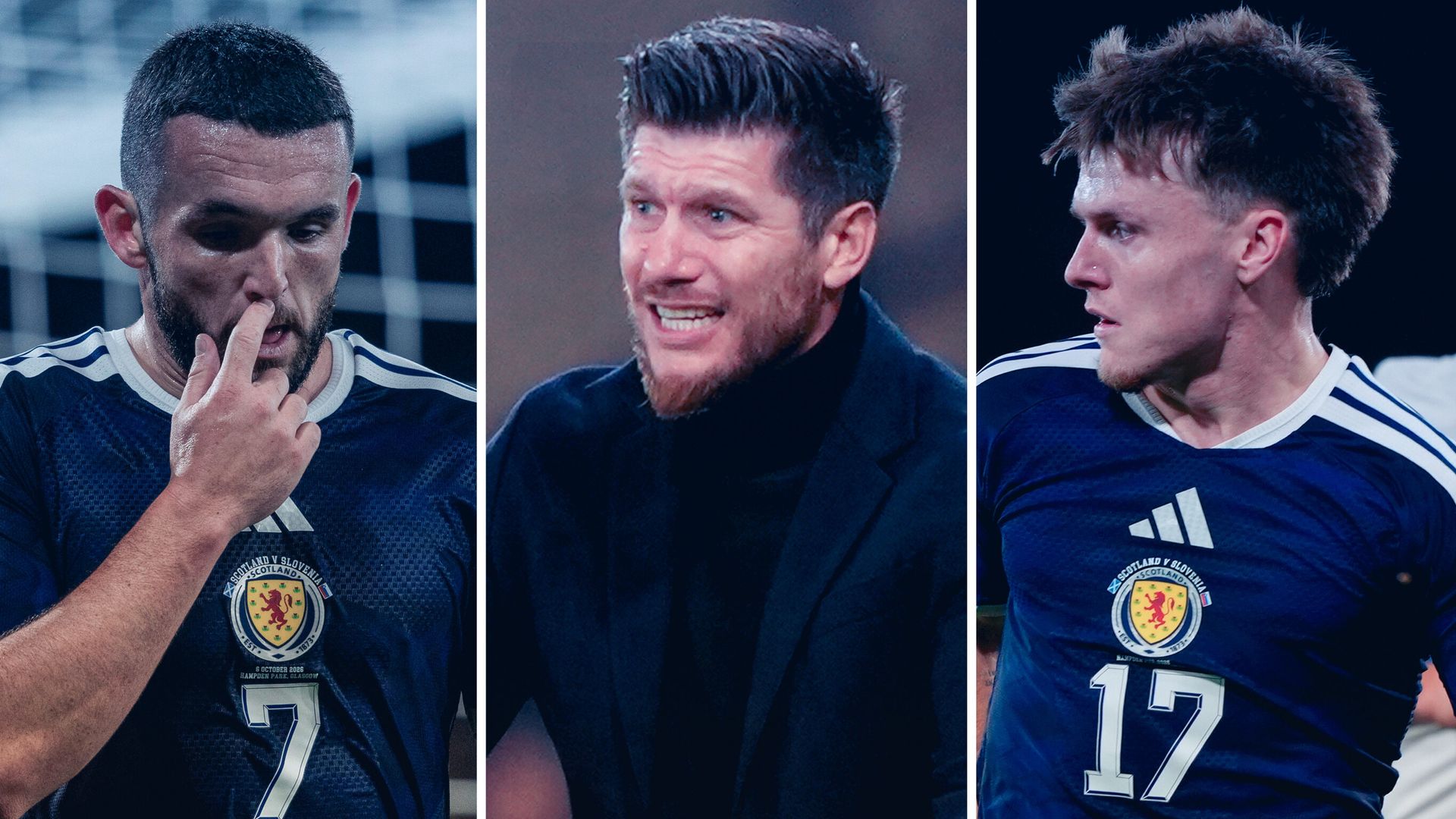
Following Steve Clarke’s resignation as national team head coach, there was a thirst from Scotland fans for change. Behind the scenes, they got revolution. On the pitch, evolution, in flashes.
Sebastien Pocognoli's football is - in essence - what he promised it to be. Front-foot, attacking and aggressive. However, perhaps not in the same way that everyone assumed when a fresh faced 39-year-old walked through the doors of Hampden Park as the Tartan Army's symbol of the modern progressive game.
Please use Chrome browser for a more accessible video player In his first camp as Scotland boss, we were privy to the good (North Macedonia away), the bad (Switzerland at home), and the ugly (Slovenia at home). Slovenia away was somehow all of the above in one game. Aside from the convoluted, yet potentially damaging, implications for seeding for Euro 2028 qualification, here are three things we have learned from Pocognoli's first four matches in charge.
The formation which served predecessor Clarke so well in the early days of his Scotland tenure was Pocognoli's preferred shape at Monaco and Union Saint-Gilloise - so this comes as no real surprise. The contention lies not in its deployment, but its functionality. On paper, it makes sense.
The squad has been starved of wingers and feasted on full-backs for almost a decade. However, with 20-year-old rising star Ben Gannon-Doak as well as Josh McPake and Findlay Curtis all included in the squad, the question was where would Scotland's creative wide players all fit in. Gannon-Doak started both of Scotland's final two matches at wing-back with captain, and now centurion, Andy Robertson operating on the opposite flank.
With a natural winger on one side and a full-back on the other, the asymmetry of the new shape should, in theory, make Scotland more elastic. Yet a lack of deep runners made them look more rigid. When the Scotland boss flipped to a back four in the closing stages of Tuesday's dismal defeat to Slovenia, Curtis and McPake immediately looked more threatening than the players they replaced as out-and-out wingers.
Extract — continue reading at the source.