We probably already have the definitive film about an artist for this decade, in Ira Sachs’s Peter Hujar’s Day. The idiosyncratic biopic makes the right choices, giving us in a sliver of time the dailiness of a working life with its gossip, money worries, and ongoing projects dwindling or cresting or inching forward. Hujar is unsure of his prospects, curious where his talent and ambition might lead, embedded in a community that may or may not take him there.
The future looms, since the viewer knows what the characters in their filmic present do not: that the friends and peers we hear about will soon be devastated by the AIDS crisis; that Hujar’s reputation will be decades in growing; and that his photographs will reveal new dimensions when the years have done their work to make them a record of a city and sensibility hardly imaginable from our moment of hyper-gentrification, gross economic disparity, and anti-immigrant state violence. Yet it’s all there, incredibly, in the fading light of Linda Rosenkrantz’s apartment, the tape recorder picking up nuances that mean everything to the sensitive pair. Creative endeavor, in the space of a few hours, flashes its many faces, arduous and sexy, fleeting and fun.
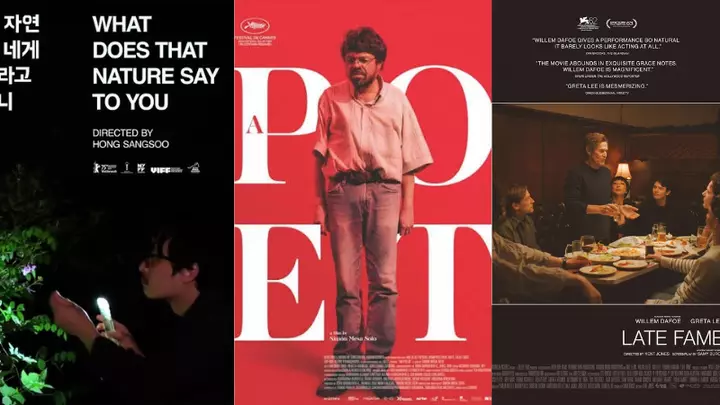
Knowing the experience might not quite measure up, I went with excitement to three films about poets over the past year: What Does That Nature Say to You, A Poet, and Late Fame. I wondered what the sudden flare of interest could mean, and what the stories would get right or very wrong. The world’s cynicism still surprises, as who would have imagined the glee with which we’d lately be encouraged to banish writing and declare it obsolete.
Poet-characters are handy for asking whether resistance to this tide is worth it. But films need familiar plots, so the protagonists—all men—go searching for connection. Along the way, they recite their poems, none exactly amazing.
Alcohol flows, rivalries scald, and humiliations pile up—a few prove transformative, while the rest are swallowed like medicine. The order in which I saw the films spiraled closer and closer to home. New York’s public life, in this particular season, is sterile and uncompelling, while the streets of its past are so freighted with nostalgia they can feel exhausted and wrung dry.
The first was South Korean filmmaker Hong Sangsoo’s What Does That Nature Say to You. It begins inside a car, parked at the bottom of a driveway. Donghwa (Ha Seongguk) is dropping off his girlfriend, Kim Junhee (Kang Soyi).
Extract — continue reading at the source.