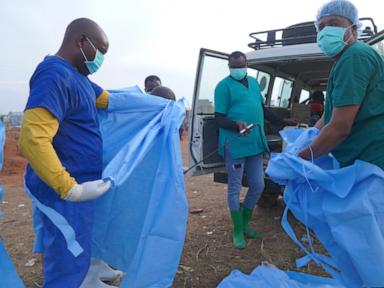
An Ebola outbreak in Congo has surpassed 5,000 confirmed cases ABUJA, Nigeria -- An Ebola outbreak in Congo has surpassed 5,000 confirmed cases, making it one of the largest outbreaks of the deadly disease ever recorded. The outbreak is caused by the Bundibugyo virus, a rare type of Ebola that has no approved vaccine or treatment. Congo’s Ministry of Health had recorded 5,021 cases, including 2,378 deaths, as of Sunday.
The outbreak is already the worst ever caused by the Bundibugyo virus and the deadliest Ebola outbreak in Congo’s history. The World Health Organization has warned that it could eventually surpass the devastating 2014-2016 outbreak in West Africa, which killed more than 11,000 people. Here’s what to know about Ebola and the outbreak: Ebola is a rare but often deadly disease caused by a group of viruses that are believed to originate in animals.
People can become infected through contact with infected animals, and the virus can then spread between people through direct contact with the blood or other bodily fluids of someone who is sick with or has died from Ebola. It can also spread through objects contaminated with those fluids. Unlike respiratory diseases such as COVID-19, Ebola isn't generally spread through the air.
People infected with Ebola don't spread the virus before developing symptoms, according to WHO. Symptoms can appear between two and 21 days after infection. They often begin with fever, fatigue, headache, muscle pain and sore throat, followed by vomiting and diarrhea.
Some patients develop internal or external bleeding. Ebola can be difficult to distinguish from other infectious diseases without laboratory testing, because many of its early symptoms are similar to those of illnesses such as malaria and typhoid. The outbreak is caused by the Bundibugyo virus, one of several viruses that can cause Ebola disease.
It's much rarer than the Zaire virus, which has caused many of Congo’s previous Ebola outbreaks and the 2014-2016 outbreak in West Africa. Bundibugyo virus was first identified during an outbreak in western Uganda in 2007. That outbreak killed 37 people.
Extract — continue reading at the source.