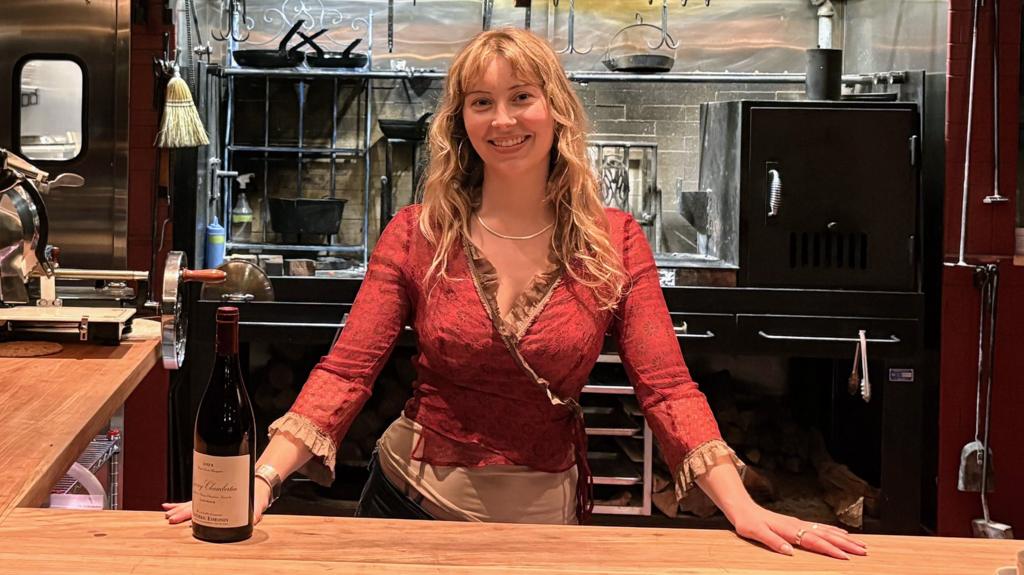
Wine waiter Caroline Kraetzer earns $40 (£30) an hour, double what most service staff in San Francisco are paid but then it costs a lot to eat at her restaurant. At a set price of $140 (£100) per person, La Cigale is one of a small number of restaurants charging higher prices so it can pay high salaries - and it doesn't allow tips. It tells customers: "What you see is what you pay.
We do not accept tips, your kind words and return visits will suffice." Kraetzer says it is good to no longer be "reliant on the generosity of strangers to pay the bills". While waiting staff at other restaurants can make a lot of money from tips, she says "you're often there two hours before service, and again when you're closing after the guests have left, so you are making minimum wage during that time". On the other side of the US, Rachel Miller, chef and owner of Nightshade Noodle Bar in the town Lynn, Massachusetts, moved to a tip-free model five years ago when they reopened after the Covid-19 pandemic.
Her motivation was to make it fairer for the kitchen staff. "The people breaking their backs and minds in the kitchen - often the least visible and the least celebrated - were taking home a fraction of what the front staff made on tips for the same hours," she says. Miller says she found it "deeply unsettling" to see higher tips going to white male staff and lower tips to everyone else.
"Tipping lets guests, consciously or not, pay people differently based on gender, race, or sexuality and I was not willing to let that decide my team's income." To pay the staff higher wages, Miller also increased prices at the French-Vietnamese restaurant. Its tasting menus now start from £102 for seven courses before 6pm, and $126 for nine courses. "Our prices are higher than a comparable restaurant's because they carry the full cost of paying people properly," says Miller.
"That is the trade, and I stand behind it." Yet not every restaurant that has switched to a tipless model has made a success of it, as sometimes customers don't appreciate the higher menu prices. Talulla in Cambridge, Massachusetts, dropped tips in 2020 so it could pay staff more equitably, only to then switch back in September of last year. "We tried to keep our non-tipping model simply by raising our menu prices 23%, but we were only able to sustain this through the winter months," says co-owner Danielle Ayer.
"Operating a non-tipped restaurant is more expensive overall," adds Ayer. This is because tips don't count as part of a restaurant's revenues, but higher menu prices do. So if a venue increases prices to pay staff more, its revenues go up accordingly, and it must pay more sales tax.
Extract — continue reading at the source.