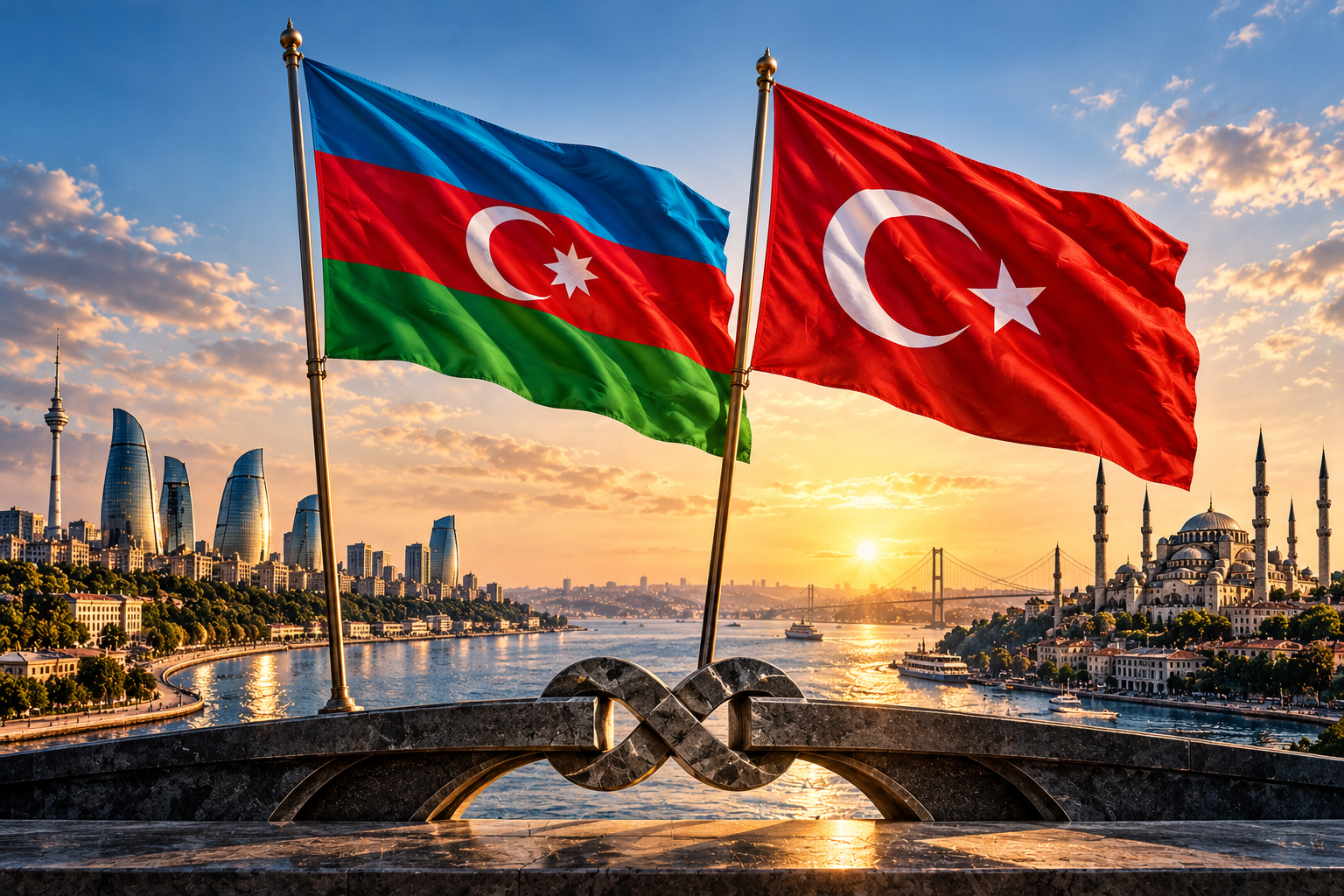
No friendship in any part of the world is characterised by such a close relationship as that of Azerbaijan and Türkiye. There is talk of brotherhood and of “one nation, two states” from the officials of both capitals. But closeness comes with its own danger.
The closer countries become, the more likely it is for them to start meddling in each other’s affairs like they were members of one family. The post came from Oktay Saral, a senior adviser to Türkiye’s president. He wrote that blocking headscarved pupils from education in Azerbaijan was “unacceptable”, sharing a post from the Turkish account Mahfil.
This, in turn, provoked a response from the New Azerbaijan Party (YAP), which came in a rather harsh tone. This response was not directed at the Turkish government as a whole but at Mr Saral and certain officials in the governing AKP. The language used was clear enough, although it was narrow in scope and the party made sure to make that known.
YAP stressed its "partnership relations" with the AKP and the "historical bonds of brotherhood" between the two peoples. Its complaint was about tone: a drift, in some Turkish media and political circles, from solidarity towards supervision. The core idea in this particular statement is concerned with grammar.
"'One nation, two states' is the motto of the alliance, and it is attributed to Heydar Aliyev," while the second part of the motto is to be understood as follows: "it implies one nation and two independent states." The term, it claimed, did not justify any domination of "its political and ideological approaches." But it would also be disingenuous to suggest that this problem of tone only appears in one particular tweet. There has always been a certain strand of commentary within Türkiye, which is sometimes associated with the political elite, talk shows, and even some social media accounts, whereby Azerbaijan is viewed as a kind of junior partner – or, more explicitly put, almost as a vassal: a younger brother who feels indebted and who needs help when it comes to his decisions concerning religion, foreign policy, and education. Such opinions may either be stated bluntly or suggested implicitly by talking about "our Azerbaijan".
It is not a widespread point of view, and there is no trace of such a position in the official rhetoric of either side. Nevertheless, a minority opinion expressed in an assertive enough way sets the tone, which, in a relationship of such intimacy, matters greatly. This is more of a reminder than a criticism of what has brought success to their partnership.
Extract — continue reading at the source.