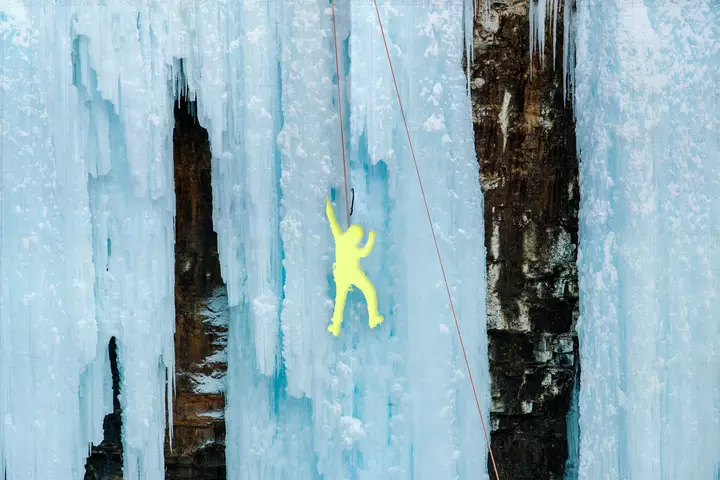
ON A LATE fall day in 2023, Laura Stilwell and her boyfriend, Marcus Wybrow, were descending the long mountain trail back to their vehicle after a day of ice-climbing among the rugged peaks west of Calgary, Alberta. Wybrow, 29, was close to reaching full certification as an alpine guide. Stilwell, 27, had some backcountry experience, but this was her first time ice-climbing.
They hadn’t attempted anything most climbers would consider difficult or risky. The point was simply to be in the mountains together, and for Wybrow to introduce Stilwell to a sport he loved. Avalanche Canada, the main organization issuing the public avalanche forecasts that backcountry enthusiasts check before heading out, wasn’t yet forecasting for the season. (It was too early in the season to warrant forecasts.) Though there wasn’t much snow along the couple’s route, the pair carried avalanche gear to be safe.” Then, as they hiked toward the trailhead, the snow suddenly cracked off the slope above and slid fast, overwhelming them in white chaos.
The avalanche mostly buried Stilwell and fully engulfed Wybrow. It threw Stilwell onto her left side; her right hand was the only part of her body that remained unburied. With that hand, she was able to clear the snow from her face so she could breathe—then started digging herself out, screaming.
She isn’t sure how long it took to free herself, but it felt like an eternity. But this story isn’t about that horrific day. It’s about what happens after.
MANY SURVIVORS OF accidents—climbing falls, near drownings, mountain bike crashes, exposure, even near misses while hiking or trail running—suffer from post-traumatic stress disorder (PTSD). Other mental and emotional injuries unique to outdoor accidents abound in these individuals too, including loss of identity and a severed connection to the natural world that once brought feelings of awe and peace. That’s all on top of anxiety, depression, and grief.
Yet we often don’t hear about this terrible aftermath, or how those suffering might find a way through it. That’s because most narratives about adventure sport accidents tend to deal with the incident itself—the factors, both human and natural, that led up to it, and what it took to survive—while shying away from the psychological impact on those involved. This is partly due to a culture at large that struggles to deal with mental health issues in general, combined with an outdoor one that has historically prized independence, stoicism, and strength.
Extract — continue reading at the source.