The White House is expanding its campaign against international workers, targeting elite study and work visa holders with restrictions and a new investigation. On Thursday, the Trump administration announced a probe into whether Stanford, Caltech, UC Davis and other universities across the country have been abusing a special visa used by international scholars and students to do research and work in the U.S. It is also suspending Microsoft, Adobe and six other tech companies from how they sponsor employees who are in the country under a highly skilled worker visa program.
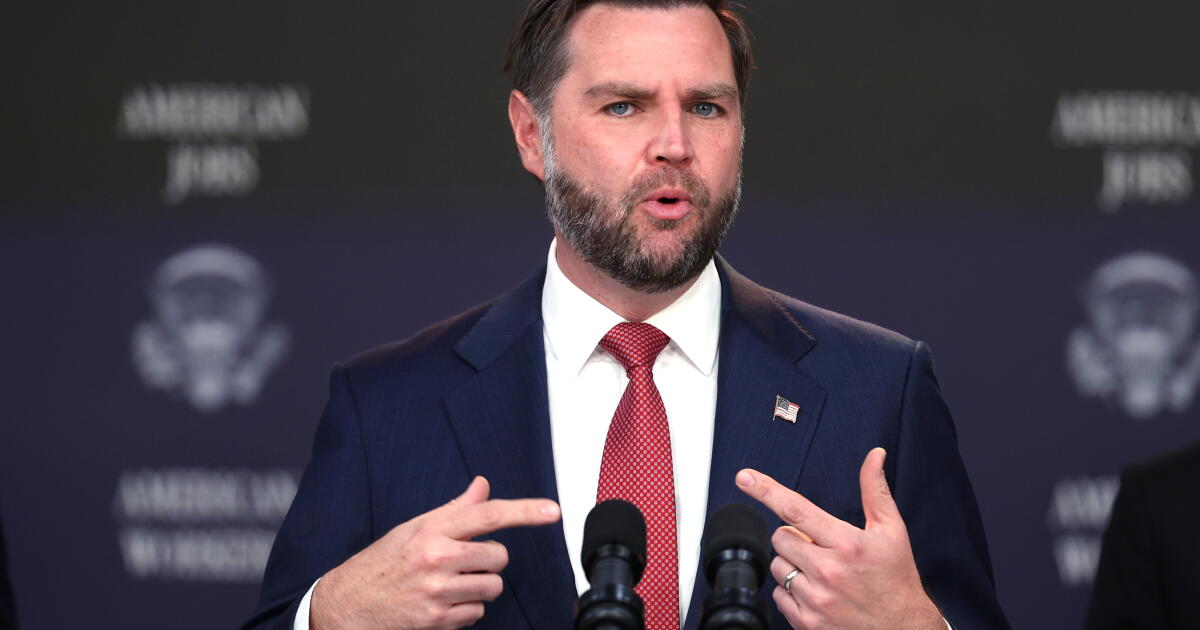
The White House’s concern is that schools and companies are too quick to bring in people from outside the U.S. The moves rattled Silicon Valley executives and California educators who see easy access to the smartest, hardest-working people in the world as one of America’s greatest competitive advantages. Vice President JD Vance said the universities being investigated are overusing J-1 visas to bring in students and researchers from abroad.
The international scholars then take jobs and grants that could go to Americans. Labor Department Inspector General Anthony D’Esposito said subpoenas have been served and “nobody will be getting a free pass because their name is carved into an expensive building.” Many universities have buildings named for foreign donors. While most of the companies targeted for the tech visa restriction were Indian, Vance called out Microsoft.
Vance said the company has abused the permanent labor certification program, which he argued has enabled Microsoft to hire international talent that is then paid less to replace American workers. The new development suspends Microsoft from applying for green cards for workers who come to the U.S. on H-1B visas and later apply to become permanent residents. American technology giants have relied on the H-1B visa program for decades to bring in thousands of skilled foreign workers they cannot find locally.
Critics have accused the program of being riddled with fraud and abuse. The administration’s power move came the same day President Trump awarded the National Medal of Technology and Innovation to two prime examples of international talent who came to the U.S. on student and work visas: Microsoft Chief Executive Satya Nadella and Tesla’s Elon Musk. Cognizant, Infosys, Tata Consultancy Services, Wipro, HCL and Capgemini were also on the list of companies that will no longer be able to apply for permanent residence status for their H-1B employees.
Microsoft defended the use of H-1B and said in a statement that it looked forward to sharing additional information with the administration. In a post, it said that of the thousands of H-1B visa applications it submitted in the last fiscal year, 80% were to extend or change the status of existing Microsoft employees. They are not new arrivals to our country,” the company said.
Extract — continue reading at the source.