On July 20, Navkiran Natt and her partner set out for the magistrate's office in New Delhi to get married. They arrived to find a tense situation, with police gathering to break up a youth-led march on Parliament. Office staff — and couple's wedding witnesses — running late due to barricades.
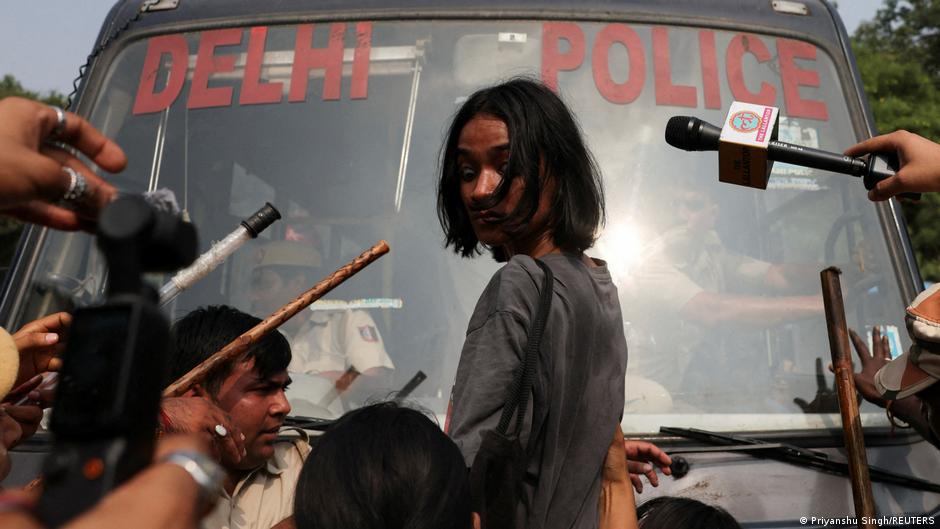
The protest movement known as the Cockroach Janta Party (CJP) had announced the march to demand the resignation of India's then-Education Minister Dharmendra Pradhan. The protesters were met with heavy resistance from security forces, who had deployed batons, tear gas shells and pellet-firing shotguns, leading to injuries and mass detentions. Less than three months later, on October 10, Natt left home early in the morning and spent the day crisscrossing the locked-down Indian capital looking for a protest she could join.
"The success of this protest is not how many people will reach Jantar Mantar," she told DW, referring to the protest site in central New Delhi. "It's that even after all this barricading and state violence, people are leaving their homes to join." The CJP began as a satirical online movement after the chief justice of India, Surya Kant, referred to unemployed young people as "cockroaches" in an offhand remark. The name is an ironic riff on the name of Prime Minister Narendra Modi's ruling Bharatiya Janata Party (BJP).
After succeeding in seeing Pradhan step down in late July, the CJP is now demanding the resignation of the country's controversy-hit Chief Election Commissioner Gyanesh Kumar, after more than 130 million names were removed from draft electoral rolls nationwide. To view this video please enable JavaScript, and consider upgrading to a web browser that supports HTML5 video With CJP leadership in judicial custody or under threat of detention, one name has fast become synonymous with the demonstrations: student leader Neha Bora, who prefers to use the pronoun they/them. Bora has run through the streets to dodge police officials, climbed barricades in the face of security personnel, shouted slogans from detention vans, and addressed press conferences alongside CJP spokespersons and others.
They are the president of the All India Students' Association (AISA), the student wing of the Communist Party of India (Marxist–Leninist) Liberation (CPI-ML). "In extremely disappointing, fearful, tyrannical times, people try to gather hope from whatever source they can … If these people are fighting, then probably we can also fight," Bora told DW. "It is a responsibility that you owe to people," they added.
The Cockroach-led demonstrations also come at a time when women and members of the LGBTQ+ community are calling for greater autonomy for women in the aftermath of the gang rape of a 17-year-old girl in New Delhi late last month, placing the issue of safety in India back into the spotlight. According to the National Crime Records Bureau (NCRB), 441,534 cases of crimes against women were registered in 2024, averaging 1,210 cases per day. Experts say these official statistics can only give a partial account of gendered violence.
Extract — continue reading at the source.