New York’s subway, from its founding, was dreamt as a public good in all senses, to provide a useful and reliable service that was also a pleasant place to be. City train stations were filled with decorative ornamentation, public art and monuments, and other luxurious touches. The act of putting art in train cars was formalized in 1985, when the MTA’s Arts & Design program was launched, initially to incorporate original pieces of art in large, capital projects.
The department has since evolved to include public art initiatives on trains, buses, and platforms—nearly every surface the MTA controls. Anyone who has taken the subway has likely come across Arts & Design’s most popular program, Poetry in Motion, which pairs poems with artwork. For me, each poem is a respite from the crowd, the commute, the bleating of advertisements.
Recently I have been reflecting on how central this program was to my conception of my city. Who’s behind this poetry? Who brought these moving, 35 words by Danez Smith to me on a sleepy morning commute?
Who knew I would be reassured by Timothy Liu on my way home after a too late night? How do such excellent poems end up on the New York City subway? I spoke with Tina Vaz, the head of the MTA’s Arts & Design team, and Matt Brogan, the executive director of the Poetry Society of America, who are the big decision makers behind the Poetry in Motion program.
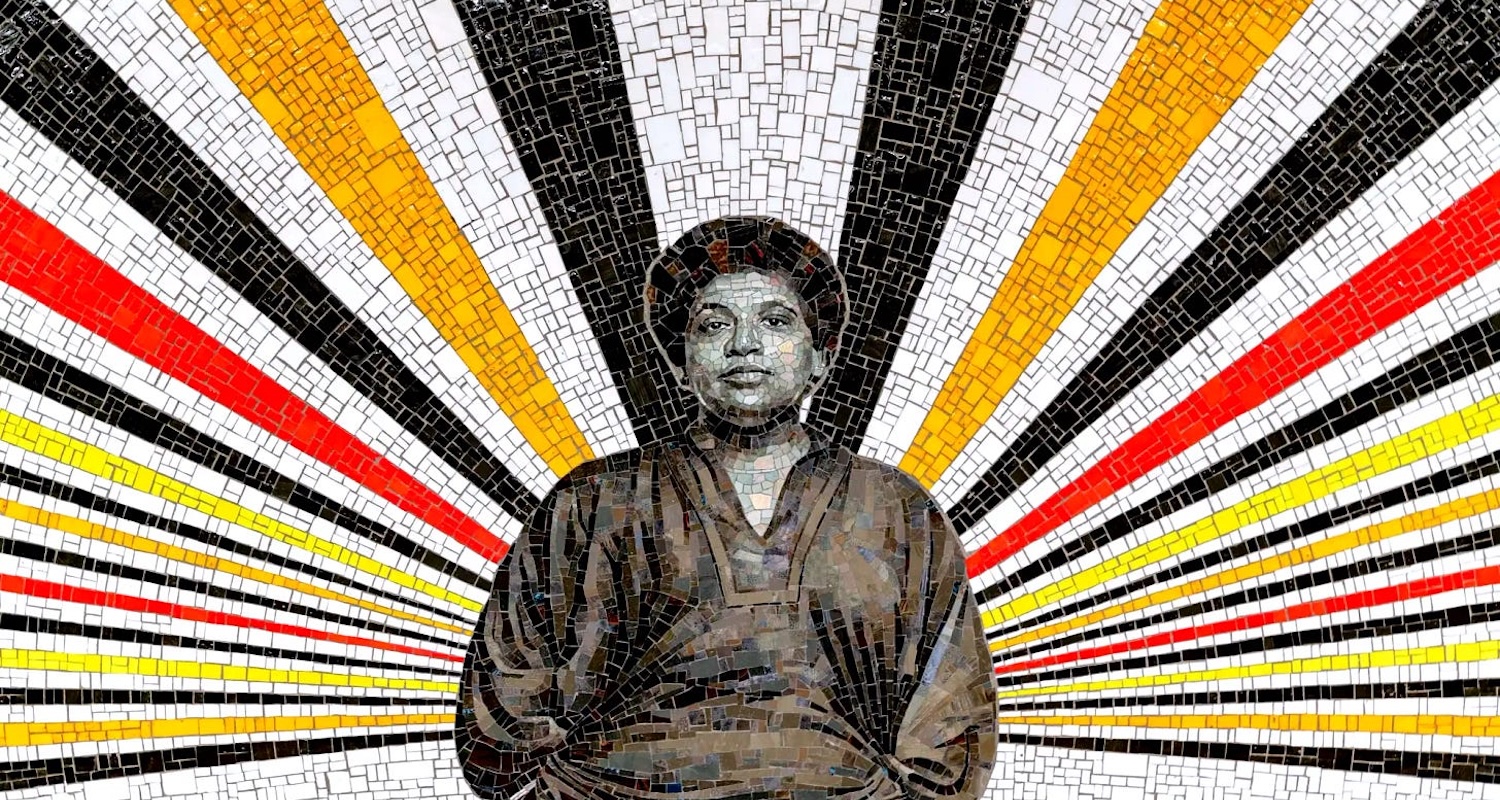
Modeled on a similar program in the London Underground, the Poetry in Motion partnership between the MTA and Poetry Society of America launched in 1992 with four poems by Walt Whitman, Emily Dickinson, William Butler Yeats, and Lucille Clifton. The program has been refreshed a few times since then, but the central idea remains the same: “To make sure that poetry feels like part of the infrastructure,” as Brogan put it. A government organization picking out poems for a readership of millions feels like the set-up to a bad joke, but the actual process behind these poems is much less bureaucratic.
It’s refreshingly analogue and, as Vaz said, a bit “intuitive.” The process starts with Brogan and the Poetry Society of America, who search their vast library of over 10,000 books. And nothing too racy, as you might expect. There is no specific kind of poem they’re looking for, though Brogan noted that the selections are generally “uplifting.” Brogan and the staff tend to gravitate toward work that might create “a sense of meaning for people, something that they kind of want to hold on to.” While it’s not a strict rule, Brogan and his team also have “a strong preference” for living poets, which is different than in London, for example, where you’ll see a lot of Shakespeare in the Underground.
Extract — continue reading at the source.