An organic chemist found dead on an Idaho church pew more than 40 years ago is being investigated over the infamous Tylenol murders, a series of seven unsolved poisoning deaths in Chicago in 1982. Several pieces of evidence could link Mathew Betkouski, who held a PhD in chemistry and struggled with mental illness, to the killing spree in which painkillers were fatally laced with fast-acting poison cyanide, according to investigators. His body was found inside Sacred Heart Catholic Church in Boise on December 4, 1982, with $1,900 in cash and a note signed with an alias, “Wm.
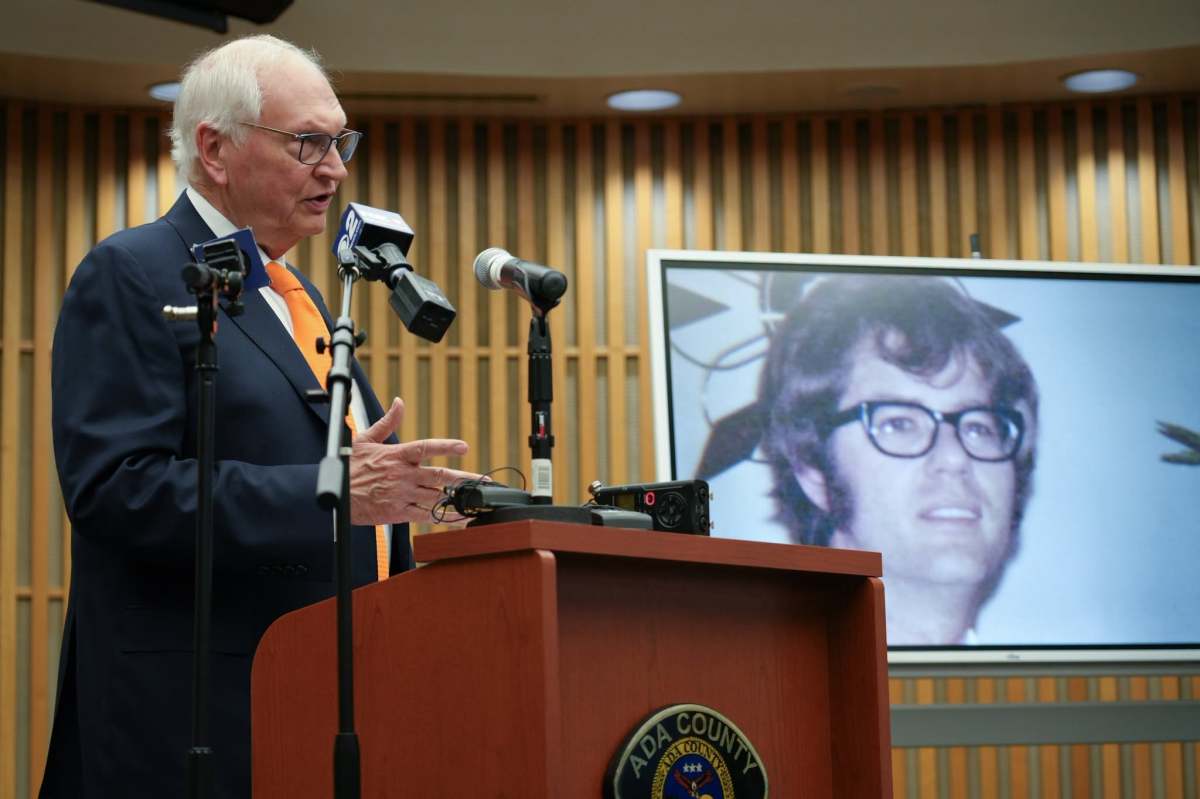
Toomey." He had taken a cyanide capsule. Yet his identity remained a mystery until now, earning him the nickname the “Unknown Wanderer." At a press conference on Wednesday, Ada County Sheriff Matt Clifford said investigators could not name Betkouski as a suspect in the Tylenol murders at this time, and could not place him in Chicago when the poisonings took place. But investigators have passed information—including some not disclosed during the press conference—to Chicago police.
Forensic psychiatrist Dr. Park Dietz, who worked on the initial investigation, went further. But I’m not bound by the same rules,” Dietz told the same press conference.
As an adult, he lived in five states, including California, Texas, New Mexico, Ohio and Florida. Investigators are now seeking cold cases involving cyanide poisoning or suspicious pill medication related to deaths from the late 1970s to the early 1980s, with a special focus between October 15 and December 4, 1982. He worked for a flavors and fragrances company in Jacksonville, Florida, beginning in 1975.
In 1979, he was hired by Lockheed Martin in New Mexico, where he worked on a NASA-related project at White Sands Test Facility. His employment there ended in March 1982. Clifford said he held a fascination with chemistry and explosives from a young age, something that Dietz said could be connected to the psychology of the Tylenol murderer.
A traumatic brain injury sustained in 1974 caused some of his existing problems to manifest in “more concerning ways than they had before,” Clifford said. In documents from the late 1970s, Betkouski wrote about possibly experiencing schizophrenia and depression, and the possibility to experience feelings of euphoria brought on by imaginary thoughts of violence. His mother died in 1979, and in 1982 he lost his job following an incident at a local pharmacy where he was attempting to obtain some pills or capsules for what he said was an experiment.
Extract — continue reading at the source.