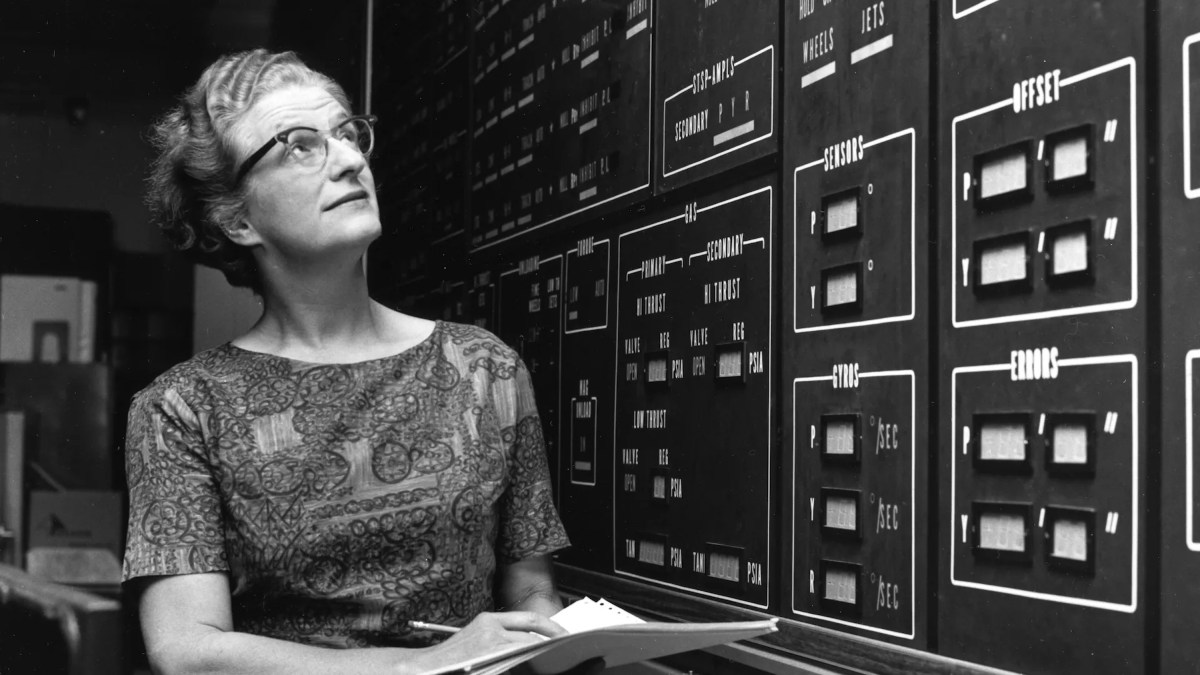
NASA's Nancy Grace Roman Space Telescope, blasted off Sunday aboard a SpaceX Falcon Heavy rocket, beginning a mission that scientists hope will unlock some of the universe's biggest mysteries. The $4.3 billion telescope is named after Nancy Grace Roman, the pioneering astronomer widely known as the "Mother of Hubble" for her role in shaping NASA's space astronomy program. Sunday's launch marks one of NASA's most significant scientific missions in years.
Agency officials say the telescope's extraordinarily wide field of view will allow astronomers to map huge portions of the universe far faster than previous observatories, complementing the work of the Hubble and James Webb space telescopes. NASA science mission director Nicky Fox said the observatory is expected to find "thousands of supernovae, tens of thousands of planets, billions of galaxies and tens of billions of stars." The telescope's discoveries could reshape understanding of how galaxies form, how planets develop around stars, and how the universe evolved over billions of years. Nancy Grace Roman was NASA's first chief astronomer and one of the most influential figures in the history of U.S. space science.
Born in 1925, she pursued a career in astronomy at a time when women faced significant barriers in the field, according to NASA. After joining NASA in the agency's early years, Roman helped establish its astronomy program and became a leading advocate for placing powerful telescopes above Earth's atmosphere, where they could observe the universe without interference from weather or atmospheric distortion. Her efforts laid the groundwork for what eventually became the Hubble Space Telescope, earning her the nickname "Mother of Hubble." Roman spent decades championing scientific research and expanding opportunities for women in astronomy.
She died in 2018 at the age of 93. The Nancy Grace Roman Space Telescope is designed to conduct wide-field surveys of the universe on a scale never before possible from space. NASA says its field of view is more than 100 times larger than that of the Hubble Space Telescope, allowing it to quickly image vast regions of the sky while maintaining comparable sensitivity.
The observatory will travel for more than three months to its destination near the second Lagrange point, a gravitationally stable location about 1 million miles from Earth that is also home to the James Webb Space Telescope. During its planned five-year mission, Roman will search for planets beyond the solar system, map billions of galaxies, investigate black holes and study the nature of dark energy and dark matter. By scanning enormous swaths of the sky, scientists hope it will reveal objects and phenomena that have never been observed before.
Contact Newsweek editors for this story: Amanda Castro and Anthony Murray.
Extract — continue reading at the source.