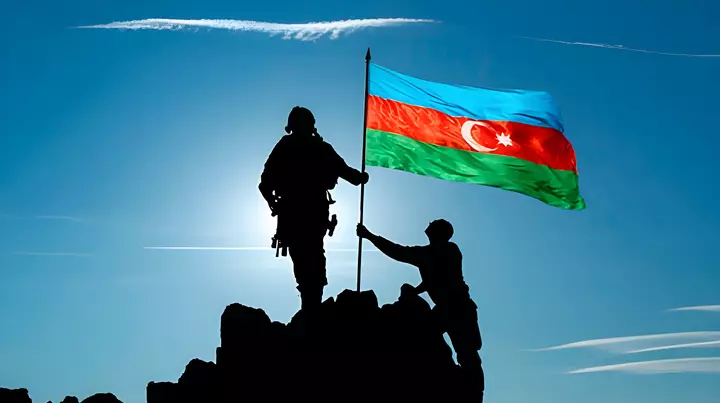
Some wars are remembered for their duration, others are remembered for how profoundly they alter the course of history. Azerbaijan's 44-day Patriotic War in 2020 belongs to the latter category. Six years after the liberation of Shusha and the country's historic victory on November 8, the conflict continues to offer important lessons about military strategy, technological innovation, geopolitical calculations and the determination of states to defend their territorial integrity.
For nearly three decades, Azerbaijan's internationally recognised territories remained under Armenian occupation, while successive diplomatic efforts failed to produce a lasting settlement. The military campaign launched on September 27, 2020, fundamentally changed that reality. Through a combination of modern military technologies, coordinated operations, long-term defence investments and strategic planning, Azerbaijan achieved a decisive victory that reshaped the balance of power in the South Caucasus.
Yet the significance of the 44-day war extends beyond Azerbaijan's borders. The growing use of unmanned aerial vehicles, precision-guided weapons and integrated intelligence systems anticipated developments that would become central to military operations elsewhere, particularly in Russia's war against Ukraine. At the same time, Azerbaijan's experience raised broader questions about the relationship between military preparedness, international alliances and the limitations of diplomatic mechanisms in resolving protracted territorial disputes.
As Azerbaijan commemorates the sixth anniversary of Victory Day, these lessons remain relevant in an international environment increasingly shaped by geopolitical competition and armed conflict. Speaking to AzerNEWS, Ukrainian military expert Vadim Tryukhan examined the parallels and differences between Azerbaijan's and Ukraine's experiences, while the broader European security perspective highlights how the outcome of the 2020 war continues to inform discussions about modern warfare, strategic preparedness and territorial integrity. When the full-scale aggression began, Ukraine had one goal: to remain an independent, sovereign state.
In the early stages of the war, Ukraine received no support from any partners. However, just a few months later—once Ukraine had demonstrated its resilience and driven the Russians out of several regions, including the Kyiv, Chernihiv, and Sumy regions—our partners became willing to help. They wanted to be part of this remarkable phenomenon: the failure of Russia—which had previously been considered the second-most powerful army in the world—to defeat Ukraine.
Nevertheless, it quickly became clear that Ukraine could not rely solely on its partners and needed to develop its own technologies." The expert particularly emphasised the importance of developing domestic military production capabilities, pointing to Ukraine's investment in drones and missile technologies as part of its effort to reduce dependence on foreign supplies. "That is precisely why Ukraine prioritized the creation of a domestic drone and missile industry. Today, Ukraine is largely independent of its partners regarding the supply of drones and missiles, though it remains dependent on them for anti-ballistic missile systems—an area where challenges persist.
Extract — continue reading at the source.