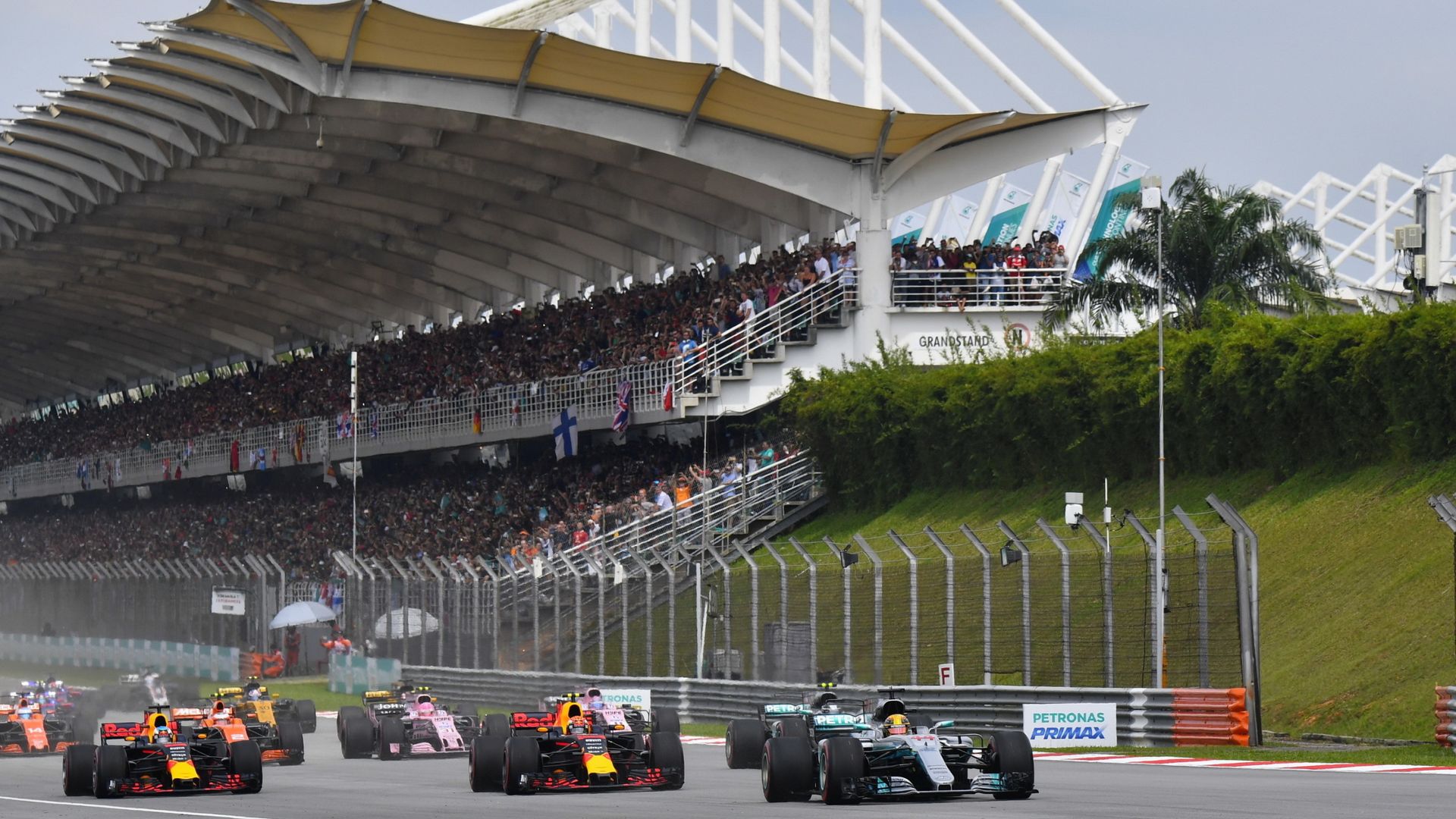
Ask a Formula 1 driver or fan anytime over the last nine years what track they would most like to see return to the sport's calendar, and there was a good chance that Malaysia's Sepang International Circuit would get mentioned. So those who have been hoping that Sepang would one day return get their wish this weekend as, for the first time since 2017, Formula 1 cars will race on the fast, flowing 3.44-mile track on the outskirts of Kuala Lumpur. We take a look at how that has unexpectedly come about and what to expect from the race weekend...
The first thing to explain is how Malaysia has ended up as the host of Bahrain's Grand Prix. The Bahrain Grand Prix at the Gulf country's own Sakhir track had been scheduled to take place on April 12 but the war in the Middle East saw both their race and Saudi Arabia's, which was scheduled for the week after, called off. But a subsequent agreement in July between the Bahrain and Malaysian governments, plus F1 and the FIA, paved the way for the Bahrain GP to still take place, albeit over 3,000 miles from its usual location, at Sepang.
It has been slotted into what was a free weekend in the schedule between last week's race in Azerbaijan and next week's in Singapore, which neighbours Malaysia. With Bahrain covering most of the cost, the event runs under the official title of the Bahrain Grand Prix in Malaysia. Please use Chrome browser for a more accessible video player "It makes sense because the relationship between Bahrain and Malaysia has been strong.
Malaysia's fantastic, Sepang's fantastic," said Sheikh Salman bin Isa Al Khalifa, chief executive of the Bahrain International Circuit to Sky Sports F1. "For us and F1 it's important that we are on the calendar. We went from 24 races to 22 then there were concern about other races so it's important for everyone, not just for F1 but the sponsors and the teams." The track - located in the town of Sepang to the south of Kuala Lumpur and close to the capital's international airport - proved a gamechanger for modern Formula 1 venues when it staged the inaugural Malaysian Grand Prix in October 1999.
It was the first F1 layout to be designed in full by Hermann Tilke, who has subsequently gone on to pen most of the sport's many new tracks, and is perhaps still his best in terms of absolute driving challenge. The 15-turn track features a combination of medium-high speed corners, two long straights and wide braking zones, offering both a stern challenge for car and driver, plus the possibility of overtaking. "The track itself has got a really nice flow to it," explains Sky Sports F1's Jamie Chadwick, who raced at Sepang in the F3 Asian Championship.
"I think the track itself is kind of one that I think all the drivers are going to enjoy. It's got a little bit of China in it, a little bit of Budapest I think in a couple of places. "You've got two decently long straights kind of into each other so the way that they'll manage the energy deployment for the racing I think will be good.
Extract — continue reading at the source.