Life as we know it actually depends on mud. International Mud Day, an effort to get children outside and more connected with the Earth, should be a celebration for everyone. Because without mud, or more precisely, the microbes within the muddy sediments found “around the world in ponds, lakes, swamps, marshes, estuaries, and oceans,” as marine benthic ecologist Stephen S.
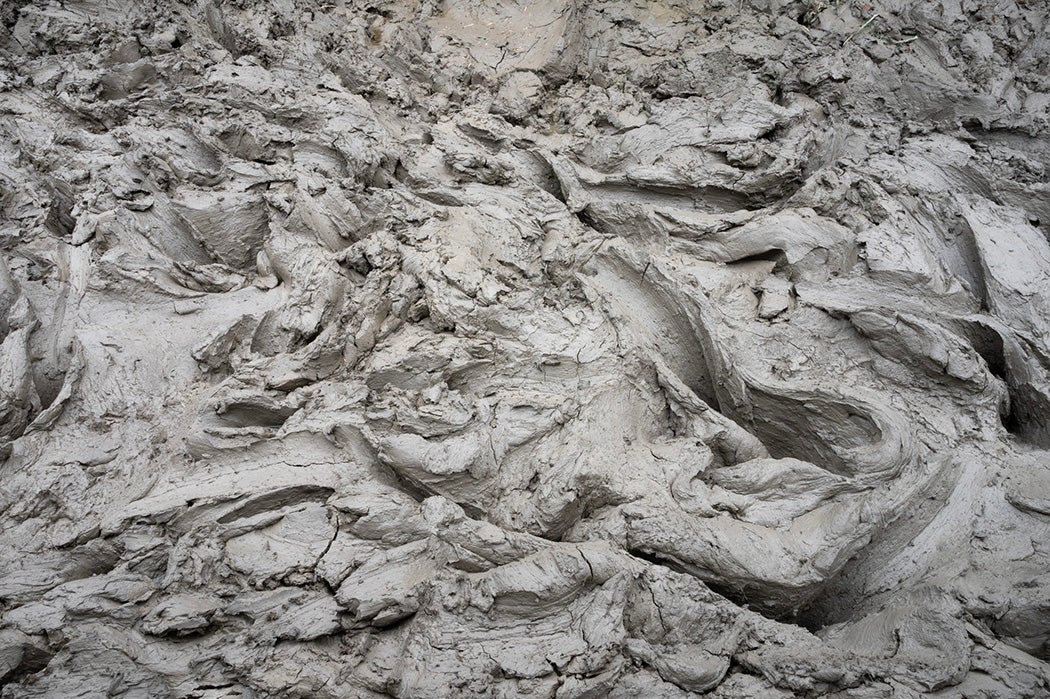
Hale puts it, we would be up an awfully dry creek without a paddle (or much of an Earth-home). In 1970, the year of the first Earth Day, ecologist Edward Deevey wrote that “mud, the essential habitat of certain essential microorganisms, is just as important as water to the economy of this planet.” He wasn’t being hyperbolic. Half a century later, commenting upon Deevey’s work, Hale writes, “the reasons muddy habitats are crucial for ecosystems and human well-being have become even more apparent.” Everybody knows mud when they see it, but here’s a reminder: muds are made up of films, silts, and even smaller clay particles, water, and 3–5% organic matter.
Mud is dirty, goopy, sticky, and thixotropic, meaning it becomes more fluid when physically agitated. This last characteristic is great for worms and bivalves that vibrate their way through it, but not so great when earthquakes cause silts and clays to slump into landslides. There’s typically little room for oxygen in the water-saturated mix that is mud, especially as you go deeper into the mire.
And it is this muddy anoxic (oxygen-free) zone where microbes thrive. They’re also significant in Earth’s history, since life started in an anoxic environment—oxygen famously being a waste product of the first phytoplankton, algae, cyanobacteria, and plants. Hale begins his long list of mud’s wonders with the chemical functions of microorganisms in mud.
These work to “recycle organic material back into nutrients for plant photosynthesis”; “drive the global biogeochemical cycles of carbon, nitrogen, phosphorus, and sulfur”; sequester carbon; and transform nitrate fertilizers into harmless nitrogen gas, helping to lessen eutrophication. Calling such fundamental parts of the Earth/life system “ecological services” is putting it mildly. Beyond the microbes, mudflats, mangrove forests, and salt marshes help protect shorelines from erosion and storm surges.
Since very few larger organisms (worms and clams excepted) can live in mud, mud makes an excellent medium for studying past climates by examining the stratified sediments at the bottom of water bodies. And don’t forget more direct human uses of mud. Clay tablets were the first known writing medium.
Extract — continue reading at the source.